
Graphs play a central role in statistics, research, and data-driven decision-making. They transform raw numerical values into visual patterns that are easier to understand and interpret. One of the most important concepts in graphical representation is the dependent variable on graph, which helps explain how outcomes change in response to different conditions.
Before exploring advanced visualization techniques, it is essential to understand how variables interact and why correct placement on a graph is critical for accurate interpretation.
Understanding Variables in Statistics
In statistics, variables represent measurable characteristics or quantities that can change. Variables are broadly classified into two categories:
- Independent variables
- Dependent variables
The relationship between these variables forms the foundation of most graphs used in research, analytics, and scientific studies.
What Is a Dependent Variable
A dependent variable is the outcome or result that is measured in an experiment or analysis. Its value depends on changes made to another variable, known as the independent variable.
For example, if a study examines how study time affects exam scores, the exam score is the dependent variable because it changes based on the amount of study time.
Dependent Variable on Graph Explained
The dependent variable on graph represents the measured outcome and is typically plotted along the vertical axis, also known as the y-axis. This placement allows viewers to easily observe how the dependent variable changes as the independent variable varies.
Understanding the dependent variable on graph is essential because:
- It shows the effect of changes
- It helps identify trends and patterns
- It supports data-driven conclusions
Difference Between Dependent and Independent Variables
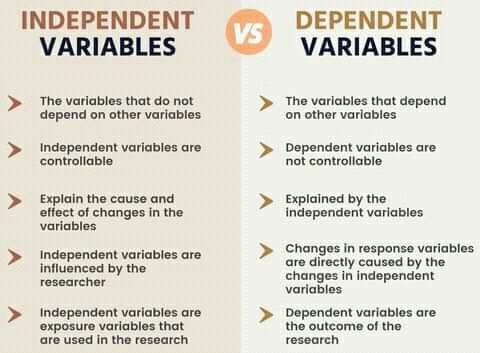
| Aspect | Independent Variable | Dependent Variable |
| Role | Cause or input | Effect or outcome |
| Graph axis | Horizontal (x-axis) | Vertical (y-axis) |
| Controlled by | Researcher | Measurement |
Correctly distinguishing these variables ensures clarity and prevents misinterpretation.
Why the Dependent Variable Matters in Graphs
The dependent variable on graph provides meaning to the visual representation. Without it, graphs become abstract and lack actionable insight.
Key reasons it matters:
- Communicates results clearly
- Enables comparison across conditions
- Supports hypothesis testing and validation
Position of Dependent Variable on Graph Axes
Conventionally, the dependent variable on graph is placed on the y-axis. This standardization helps maintain consistency across disciplines and allows readers to interpret graphs quickly.
Common Graph Types Showing Dependent Variables
Several graph types are commonly used to display dependent variables:
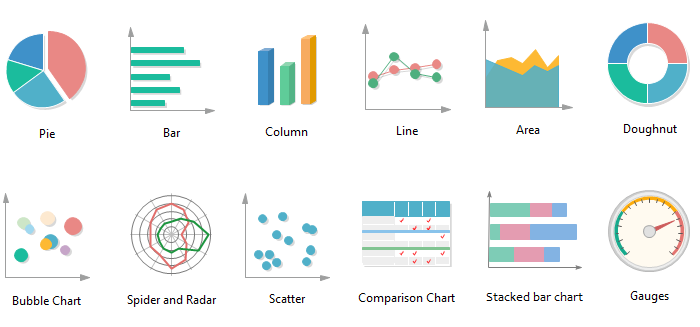
- Line graphs
- Bar charts
- Scatter plots
- Histograms
- Area charts
Each graph type highlights different aspects of how the dependent variable behaves.
Real-World Examples of Dependent Variable on Graph
Example from Education
A graph showing hours studied on the x-axis and test scores on the y-axis demonstrates how academic performance changes with effort.
Example from Healthcare
A graph plotting medication dosage against blood pressure levels clearly displays the dependent variable on graph as patient response.
Example from Marketing
Advertising spend versus conversion rate illustrates how business outcomes depend on investment levels.
Dependent Variable on Graph in Scientific Research
In scientific experiments, the dependent variable on graph often represents physical, chemical, or biological measurements such as temperature, reaction rate, or growth.
Researchers rely on accurate graphing to:
- Validate theories
- Communicate findings
- Compare experimental conditions
Dependent Variable on Graph in Business and Economics
Economists frequently use graphs to represent dependent variables such as revenue, demand, profit, or inflation rates. These visualizations support forecasting and policy decisions.
Dependent Variable on Graph in Data Science and Machine Learning
In data science, the dependent variable is often referred to as the target variable. Graphs help data scientists understand relationships between features and outcomes before building predictive models.
Common use cases include:
- Model evaluation
- Feature importance analysis
- Exploratory data analysis
Step-by-Step Guide to Plotting a Dependent Variable on Graph
- Identify the dependent variable
- Determine the independent variable
- Choose an appropriate graph type
- Label axes clearly
- Plot data accurately
- Add legends and annotations if needed
Following these steps ensures clarity and accuracy.
Interpreting Trends and Patterns
The dependent variable on graph often reveals:
- Positive trends
- Negative trends
- Cyclical patterns
- Outliers
Interpreting these patterns correctly leads to better insights and decisions.
Interpretation of Dependent Variable on Graph
Beyond basic visualization, the dependent variable on graph can be used for deeper analytical interpretation. Analysts often examine how sensitive the dependent variable is to small changes in the independent variable. This sensitivity analysis is crucial in domains such as finance, engineering, and healthcare.
For instance, in financial risk modeling, a small change in interest rates may cause a significant change in portfolio value. Here, the dependent variable on graph helps stakeholders visually assess volatility and risk exposure.
Mathematical Perspective of Dependent Variable on Graph
From a mathematical standpoint, the dependent variable is commonly represented as a function of the independent variable. In algebraic terms, this relationship is written as:
Y = f(X)
In this representation:
- Y is the dependent variable
- X is the independent variable
- f denotes the functional relationship
Plotting this relationship on a graph enables analysts to visually inspect linearity, curvature, and rate of change.
Dependent Variable on Graph in Time Series Analysis
In time series graphs, time becomes the independent variable, and the dependent variable represents the observed measurement over intervals. Examples include stock prices, temperature readings, or website traffic.
The dependent variable on graph in time series analysis helps identify:
- Long-term trends
- Seasonal effects
- Sudden anomalies
This visual inspection often precedes formal forecasting models.
Dependent Variable on Graph for Experimental Design
In experimental research, correct identification of the dependent variable on graph ensures that causal relationships are accurately communicated. Experimental graphs typically compare dependent variables across control and treatment groups.
Key considerations include:
- Maintaining consistent scales
- Clearly labeling experimental conditions
- Avoiding overlapping visual elements
Ethical Considerations in Graphing Dependent Variables
Graphs can influence interpretation and decision-making. Misrepresenting the dependent variable on graph through truncated axes or misleading scales can distort conclusions.
Ethical visualization practices include:
- Using zero-based axes where appropriate
- Avoiding exaggerated visual effects
- Disclosing data sources clearly
Dependent Variable on Graph
Multivariate Graphs and Multiple Dependent Variables
In many real-world scenarios, more than one dependent variable is analyzed simultaneously. Multivariate graphs allow researchers to compare how multiple outcomes respond to the same independent variable.
Common approaches include:
- Dual-axis graphs (two dependent variables on separate y-axes)
- Faceted or small-multiple plots
- 3D surface plots
These visualizations are widely used in economics, engineering simulations, and machine learning diagnostics.
Scaling and Transformation of Dependent Variables
Sometimes the dependent variable on graph spans a wide range of values, making patterns difficult to observe. In such cases, transformations improve interpretability.
Common transformations:
- Logarithmic scale (log-y graphs)
- Square root transformation
- Standardization (z-scores)
For example, population growth or financial returns are often plotted using a logarithmic dependent variable to reveal exponential trends.
Normalization and Standardized Dependent Variables
In comparative studies, dependent variables may be normalized to ensure fair comparison across groups or time periods.
Examples include:
- Percentage change instead of raw values
- Per-capita measurements
- Index-based scaling (base year = 100)
Normalized dependent variables are frequently used in macroeconomic analysis and performance benchmarking.
Confidence Intervals and Uncertainty Visualization
Beyond plotting a single dependent variable line or bar, modern graphs often include uncertainty measures.
Common techniques:
- Error bars
- Confidence bands
- Shaded uncertainty regions
These visual elements communicate the reliability of the dependent variable on graph and help prevent overinterpretation of noisy data.
Interaction Effects and Dependent Variables
In complex analyses, the dependent variable may be influenced by multiple interacting independent variables.
Graphs illustrating interaction effects include:
- Interaction plots
- Conditional scatter plots
- Color-encoded dependent variables
These are especially important in experimental design, behavioral science, and regression analysis.
Causal vs Correlational Interpretation
A graph showing a dependent variable does not automatically imply causation.
Important distinctions:
- Experimental graphs suggest causal relationships
- Observational graphs typically indicate correlation
- Confounding variables can distort interpretation
Understanding this distinction prevents incorrect conclusions from visual patterns alone.
Dependent Variable on Graph in Regression Analysis
Regression models rely heavily on visual inspection of the dependent variable.
Common regression-related plots include:
- Actual vs predicted dependent variable plots
- Residual plots
- Partial dependence plots
These graphs help diagnose model accuracy, bias, and overfitting.
Role of Units and Measurement Scales
The dependent variable on graph must always include appropriate units of measurement.
Examples:
- Temperature (°C or °F)
- Revenue (USD, INR)
- Time (seconds, minutes)
Incorrect or missing units can lead to misinterpretation, especially in scientific and engineering contexts.
Visualization of Categorical Dependent Variables
Not all dependent variables are numerical. Some are categorical or binary.
Examples include:
- Pass/fail outcomes
- Yes/no responses
- Customer churn status
Graphs for such dependent variables often use:
- Bar charts
- Stacked bar graphs
- Proportion plots
Dependent Variable on Graph in Predictive Analytics
In predictive analytics, graphs are used to compare:
- Actual dependent variable values
- Predicted outcomes from models
This visual comparison helps stakeholders evaluate prediction quality and trust model outputs.
Accessibility and Readability Considerations
Effective visualization ensures that dependent variables are readable to all audiences.
Best practices include:
- High-contrast colors
- Clear fonts
- Avoiding clutter
- Using descriptive titles and captions
These considerations are increasingly important in public reports and dashboards.
Industry-Specific Applications
Different industries emphasize different dependent variables:
- Finance: returns, volatility, risk metrics
- Healthcare: recovery rates, survival probability
- Manufacturing: defect rate, output efficiency
- Technology: latency, accuracy, user engagement
Understanding industry context improves interpretation accuracy.
Future Trends in Graphing Dependent Variables
With advances in AI and data visualization tools, dependent variable representation is evolving.
Emerging trends:
- Interactive dashboards
- Real-time dependent variable tracking
- AI-generated visual insights
- Automated anomaly detection
These innovations are reshaping how dependent variables are analyzed and communicated.
Common Mistakes When Identifying Dependent Variables
Common errors include:
- Swapping axis labels
- Plotting the wrong variable on the y-axis
- Ignoring units of measurement
- Overcomplicating the graph
Avoiding these mistakes improves data communication.
Best Practices for Accurate Graph Representation
- Always label the dependent variable clearly
- Use consistent scales
- Avoid misleading visuals
- Provide context with captions
Role of Dependent Variable on Graph in Hypothesis Testing
Graphs support hypothesis testing by visually displaying differences and trends that statistical tests later confirm. The dependent variable on graph often reflects the outcome being tested against a null hypothesis.
Tools and Software for Visualizing Dependent Variables
Popular tools include:
- Microsoft Excel
- Google Sheets
- Python libraries such as Matplotlib and Seaborn
- R visualization packages
Conclusion
Understanding the dependent variable on graph is essential for anyone working with data. Whether in education, research, business, or data science, correct identification and visualization of dependent variables lead to clearer insights and better decision-making.
By following standard conventions, using appropriate tools, and applying best practices, graphs become powerful storytelling instruments that accurately reflect data relationships.
FAQ’s
How to identify the dependent variable in a graph?
The dependent variable is typically shown on the y-axis and represents the outcome that changes in response to the independent variable on the x-axis.
When data are shown in a graph, the independent variable should be plotted on the?
When data are shown in a graph, the independent variable should be plotted on the x-axis (horizontal axis).
How to remember independent and dependent variables?
A simple way to remember them is: the independent variable is what you change, and the dependent variable is what you measure—the dependent variable depends on the independent one.
Which part of the graph shows the dependent variable behavior tracked?
The y-axis (vertical axis) of a graph shows the dependent variable, where its behavior or changes are tracked in response to the independent variable.
How do I identify dependent variables?
You can identify the dependent variable by asking “What is being measured or observed?”—it is the outcome that changes in response to the independent variable and is usually plotted on the y-axis.


