

When conducting any research, whether in science, business analytics, or machine learning, one term appears consistently—independent variable. While it may sound like a technical jargon from a statistics textbook, it is one of the simplest yet most powerful concepts in experimental design and data interpretation.
In short, the independent variable is the factor you manipulate to observe how it impacts the outcome. Without it, there’s no cause-effect relationship to study.
What is an Independent Variable?
An independent variable is the input you change or control in an experiment to test its effect on another variable (the dependent variable). It stands independent because its variation is not influenced by other variables in the study—it’s the factor you deliberately alter.
Example:
In a plant growth experiment:
- Independent variable: Amount of sunlight exposure
- Dependent variable: Height of the plants
Independent vs. Dependent Variables
To avoid confusion, remember:
- Independent Variable → The cause or factor you change.
- Dependent Variable → The effect or result you measure.
| Feature | Independent Variable | Dependent Variable |
| Definition | The variable that is changed or controlled | The variable that is measured |
| Role in Research | Cause | Effect |
| Example in Education Study | Study time | Exam score |
| Influence | Influences the dependent variable | Is influenced by the independent variable |
Why the Independent Variable Matters
Understanding the independent variable is essential for:
- Designing valid experiments
- Establishing cause-effect relationships
- Building accurate predictive models in data science
- Making informed decisions in business and policy-making
Without correctly identifying it, the entire research can produce misleading results.The independent variable matters because it directly influences the outcome of an experiment or analysis. By controlling and manipulating it, researchers can determine causal relationships and make accurate predictions. It serves as the foundation for testing hypotheses and drawing meaningful conclusions. Without a well-defined independent variable, experiments risk producing unclear or misleading results.
Characteristics of an Independent Variable
- It is manipulated by the researcher.
- It can be categorical (e.g., gender) or quantitative (e.g., dosage amount).
- It is measured independently of other variables.
- Its primary purpose is to test hypotheses.
- Predictive Role it serves as the input or cause in an experiment, helping predict changes in the outcome.
- Singular Focus in well-designed experiments, only one independent variable is altered at a time to ensure accurate results.
Types of Independent Variables
There are different forms depending on the research:
a. Manipulated Variables
Directly controlled by the researcher.
- Example: Temperature in a chemistry experiment.
b. Subject Variables
Naturally occurring and cannot be manipulated.
- Example: Age or gender of participants.
c. Controlled Variables
Kept constant to ensure they don’t influence results.
- Example: Room temperature during an experiment on study performance.
Real-World Examples of Independent Variables

- In marketing: Advertisement spending affecting sales.
- In healthcare: Dosage of medicine influencing recovery time.
- In education: Hours of study impacting test performance.
- In technology: App design changes affecting user engagement.
- In Temperature: Testing how heat affects the melting time of ice.
- In Website Loading Speed: Analyzing how page speed impacts bounce rates.
- In Social Media Posting Frequency: Measuring engagement changes based on how often content is posted.
Independent Variables in Scientific Research
In scientific experiments:
- They allow for hypothesis testing.
- They are isolated to avoid external influence.
- They must be measurable and clearly defined.
Independent Variables in Machine Learning and Data Science
In machine learning, independent variables are often called features or predictors.
- Example: In predicting house prices, features like square footage, location, and number of rooms act as independent variables.
- A good feature selection process improves model accuracy.
- Sensor Data in IoT variables such as temperature, humidity, and pressure act as inputs for predictive maintenance or anomaly detection models.
- User Behavior Metrics in recommendation systems, features like click frequency, browsing time, or purchase history are treated as independent variables to generate accurate suggestions.
How to Identify an Independent Variable in a Study
To find the independent variable, ask:
- What is being changed?
- What is the researcher controlling?
- What might cause the change in the outcome?
Common Mistakes When Using Independent Variables
- Confusing them with dependent variables.
- Changing more than one independent variable at a time.
- Not controlling for confounding variables.
Visualizing Independent Variables in Data
Visual tools help in understanding the relationship:
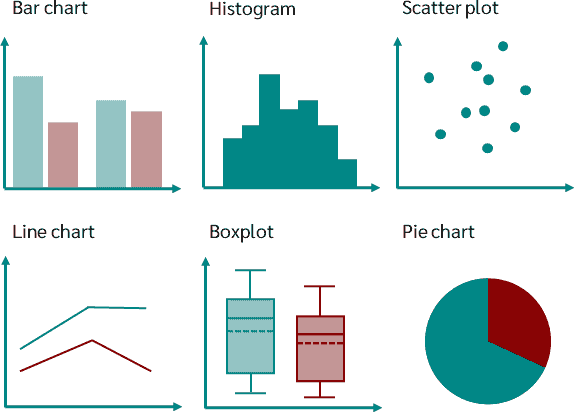
- Scatter plots: Show correlation patterns.
- Bar charts: Compare groups based on categories.
- Line graphs: Show trends over time.
Case Study: Using Independent Variables in Marketing Analysis
A retail store tested three promotional strategies:
- Email campaigns
- Social media ads
- In-store discounts
The independent variable was the type of promotion, while the dependent variable was sales revenue.
Results showed social media ads generated the highest increase in sales.
Tools and Resources for Understanding Independent Variables
- Excel / Google Sheets – For basic data analysis.
- Python (Pandas, Matplotlib) – For advanced visualization and correlation testing.
- SPSS – For statistical analysis in research.
Conclusion & Key Takeaways
The independent variable is the driving force in any research or analysis. Correctly identifying and controlling it ensures:
- Accurate results
- Reliable cause-effect conclusions
- Stronger predictive models in machine learning
Whether you’re running a scientific experiment, analyzing marketing campaigns, or building AI models, the independent variable will always be your starting point.


