Artificial intelligence has evolved far beyond simple automation and pattern recognition. Modern AI systems are now expected to perform deep reasoning, contextual understanding, and multimodal analysis. These requirements have led to the emergence of advanced platforms designed specifically for structured research and creative intelligence.
Among these innovations, gemini deep research stands out as a system designed to handle complex research workflows while simultaneously supporting advanced image generation capabilities. It represents a shift toward AI systems that do not merely respond to prompts but actively assist in exploration, synthesis, and discovery.
Understanding Gemini Deep Research
Gemini Deep Research is an AI-driven research framework designed to perform multi-step reasoning, long-context understanding, and deep analytical synthesis. Unlike traditional AI tools that provide surface-level responses, this system focuses on structured exploration of knowledge domains.
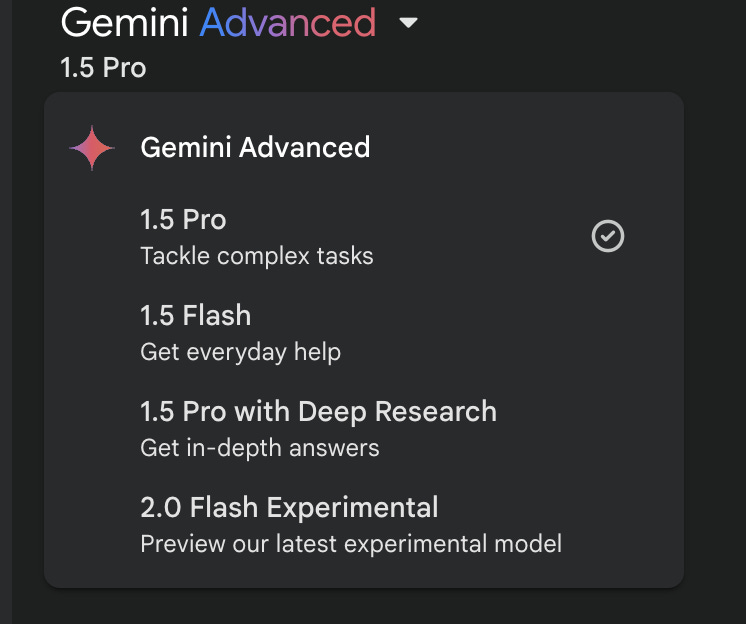
The strength of gemini deep research lies in its ability to:
- Analyze large volumes of information
- Identify relationships between concepts
- Generate structured insights
- Support creative and technical workflows
This makes it particularly valuable for professionals working in data science, research, education, and enterprise analytics.
Core Architecture Behind Gemini Deep Research
The underlying architecture of Gemini Deep Research is built on a multimodal foundation. This means it can process and integrate different data types such as:
- Textual data
- Visual information
- Structured datasets
- Contextual knowledge graphs
The system leverages advanced transformer models with extended memory capabilities, allowing it to maintain coherence across long research sessions. This architectural approach enables deeper reasoning compared to conventional AI assistants.
How Gemini Deep Research Enhances Knowledge Discovery
Traditional research often requires manual filtering, reading, and synthesis. Gemini Deep Research streamlines this process by:
- Identifying key themes across documents
- Summarizing complex ideas without losing context
- Connecting interdisciplinary concepts
- Generating structured research outlines
For example, a data scientist researching predictive analytics models can use gemini deep research to synthesize academic papers, industry reports, and experimental findings into a cohesive framework.
Gemini Deep Research vs Traditional AI Research Tools
| Feature | Traditional AI Tools | Gemini Deep Research |
| Context Handling | Limited | Long-context reasoning |
| Research Depth | Surface-level | Multi-layer analysis |
| Multimodal Support | Minimal | Strong integration |
| Image Generation | Separate tools | Unified workflow |
| Knowledge Synthesis | Fragmented | Structured insights |
This comparison highlights why gemini deep research is particularly suitable for complex analytical tasks.
Role of Multimodal Intelligence in Gemini
Multimodal intelligence allows Gemini systems to process text, images, and data simultaneously. This capability is crucial in research environments where visual context enhances understanding.
For instance:
- Charts and graphs can be interpreted alongside numerical data
- Visual patterns can support hypothesis formation
- Diagrams can complement theoretical explanations
This integrated intelligence significantly improves analytical accuracy.
Gemini Image Generation Explained
Gemini image generation is a complementary capability that allows the system to generate high-quality, context-aware visuals based on textual descriptions and research insights.
Key characteristics include:
- Contextually aligned visuals
- High semantic accuracy
- Support for technical and creative imagery
Gemini image generation is not isolated creativity; it is research-driven visualization.
How Gemini Image Generation Works with Deep Research
One of the most powerful aspects of Gemini is the integration between deep research and image generation. The system ensures that generated visuals align with research context.
Examples include:
- Generating conceptual diagrams for machine learning workflows
- Creating educational illustrations for scientific topics
- Producing visual summaries for analytical reports
Real-World Use Cases of Gemini Deep Research
Academic Research
Researchers can accelerate literature reviews, generate structured summaries, and explore interdisciplinary connections.
Data Science
Professionals can analyze datasets, visualize insights, and document findings efficiently.
Product Development
Teams can research market trends, visualize concepts, and validate ideas faster.
Applications in Data Science and Analytics
Gemini Deep Research supports:
- Exploratory data analysis
- Feature selection reasoning
- Model comparison documentation
- Insight visualization
For example, analysts studying customer behavior can combine statistical analysis with visual storytelling using Gemini image generation.
Applications in Academic and Scientific Research
In academic environments, gemini deep research assists with:
- Hypothesis formulation
- Research gap identification
- Methodology comparison
- Structured paper drafting
This reduces manual workload while maintaining intellectual rigor.
Gemini Deep Research in Comparison with Other Advanced AI Models
When evaluating advanced AI systems, it is important to understand where Gemini Deep Research stands in comparison to other large-scale AI research models.
Unlike general-purpose conversational AI tools, Gemini Deep Research is designed with research-first architecture. Its focus is not only on answering questions but also on structuring knowledge, validating sources, and maintaining reasoning consistency across long research sessions.
Key differentiators include:
- Persistent contextual memory across complex research workflows
- Native support for multimodal research, including image-based reasoning
- Better handling of domain-specific terminology in technical fields
- Strong alignment between text analysis and image generation outputs
This makes Gemini Deep Research particularly suitable for academic, enterprise, and scientific environments where accuracy and depth matter more than speed alone.
Gemini Image Generation for Technical and Scientific Content
While many AI image generators focus on artistic creativity, Gemini image generation emphasizes semantic accuracy. This is especially useful for technical and educational content.
Examples of technical image generation include:
- Flowcharts explaining machine learning pipelines
- Visual representations of neural network architectures
- Conceptual diagrams for research papers
- Educational graphics for data science tutorials
Because the images are generated within the context of Gemini Deep Research, they remain aligned with the subject matter and reduce the risk of misleading visuals.
Role of Gemini Deep Research in Education and Learning Platforms
Educational institutions and online learning platforms can benefit significantly from Gemini Deep Research.
Use cases include:
- Generating structured study materials from complex textbooks
- Creating visual explanations for mathematical and scientific concepts
- Assisting instructors in curriculum design
- Supporting students with guided research and conceptual clarity
For example, a course on artificial intelligence can use Gemini Deep Research to explain algorithms conceptually while simultaneously generating diagrams to reinforce understanding.
Gemini Deep Research for Long-Form Content Creation
Long-form technical writing often requires extensive research, consistency, and clarity. Gemini Deep Research supports this process by:
- Maintaining narrative coherence across thousands of words
- Preventing contradiction between sections
- Structuring content logically using headings and subtopics
- Supporting SEO-friendly content organization
This makes it suitable for creating whitepapers, research articles, technical blogs, and documentation.
Data Privacy and Security Considerations
Data security is a major concern in AI-driven research systems. Gemini Deep Research emphasizes:
- Secure handling of sensitive data
- Controlled access to research inputs
- Compliance with enterprise-grade security standards
- Reduced exposure of proprietary information
Organizations using Gemini Deep Research for internal analysis can maintain higher confidence in data confidentiality.
Optimization Tips for Using Gemini Deep Research Effectively
To get the best results from Gemini Deep Research, consider the following practices:
- Use well-defined research prompts with clear objectives
- Break complex topics into structured sub-questions
- Validate outputs using trusted external references
- Combine text analysis with visual generation for clarity
These strategies help maximize the depth and relevance of research outcomes.
Gemini Deep Research and the Future of AI-Assisted Discovery
As AI continues to evolve, research-focused systems like Gemini Deep Research will play a critical role in shaping knowledge discovery.
Future developments are expected to include:
- Stronger reasoning transparency
- Improved interpretability of AI-generated insights
- Deeper domain-specific specialization
- Tighter integration with real-time datasets
This evolution will further position Gemini Deep Research as a foundational tool for next-generation AI-driven research.
Gemini Deep Research for Business Intelligence
Enterprises use Gemini Deep Research to:
- Analyze market intelligence
- Generate executive summaries
- Visualize strategic insights
- Support data-driven decision-making
By combining deep analysis with visual clarity, organizations can improve communication and strategic alignment.
Ethical AI and Responsible Research
Responsible AI usage is a critical aspect of Gemini Deep Research. The system emphasizes:
- Data integrity
- Bias reduction
- Transparent reasoning
- Ethical image generation
This ensures trust and reliability in research outcomes.
Gemini Deep Research in Enterprise Decision-Making
Modern enterprises rely heavily on data-backed decisions. Gemini Deep Research enhances decision-making by transforming raw information into structured intelligence.
Organizations can use Gemini Deep Research to:
- Analyze large volumes of internal reports
- Summarize market research documents
- Extract insights from policy papers and legal texts
- Support strategic planning with evidence-based reasoning
By maintaining context across long analytical sessions, Gemini Deep Research ensures that insights remain coherent and traceable.
Gemini Deep Research for Market and Competitive Analysis
Market research often involves tracking trends, competitors, and customer behavior across multiple sources. Gemini Deep Research simplifies this process by:
- Aggregating insights from diverse datasets
- Identifying hidden correlations and patterns
- Producing structured competitor comparisons
- Supporting long-term forecasting initiatives
When combined with Gemini image generation, businesses can also create visual dashboards and conceptual charts to communicate findings effectively.
Advancing Scientific Research with Gemini Deep Research
In scientific domains, accuracy and consistency are critical. Gemini Deep Research supports scientific workflows by:
- Reviewing research papers and extracting core findings
- Assisting in hypothesis exploration
- Summarizing experimental results
- Supporting interdisciplinary research collaboration
Researchers can generate conceptual diagrams, experimental workflows, and illustrative models using Gemini image generation, enhancing clarity in publications.
Gemini Image Generation in Knowledge Visualization
Visual knowledge representation plays a crucial role in understanding complex ideas. Gemini image generation supports:
- Concept maps for research topics
- Visual summaries of academic papers
- Step-by-step process illustrations
- Educational visuals for technical documentation
These visuals help reduce cognitive load and improve retention of complex information.
Ethical AI Considerations in Gemini Deep Research
Ethical responsibility is a critical aspect of AI adoption. Gemini Deep Research aligns with ethical AI principles by focusing on:
- Responsible data usage
- Reduction of misinformation through structured reasoning
- Transparency in analytical outputs
- Minimizing hallucinated or unverifiable claims
This makes it suitable for regulated industries such as healthcare, finance, and education.
Scalability of Gemini Deep Research Across Industries
Gemini Deep Research is designed to scale across multiple domains, including:
- Finance and investment research
- Healthcare analytics
- Education and academic research
- Technology and product development
- Public policy and governance
Its adaptable architecture allows domain-specific tuning while maintaining core research integrity.
Integrating Gemini Deep Research into Existing Workflows
Integration is key for adoption. Gemini Deep Research can be embedded into workflows through:
- Research management systems
- Knowledge bases and documentation tools
- Business intelligence platforms
- Content management systems
This enables seamless research augmentation without disrupting existing processes.
Gemini Deep Research as a Knowledge Amplifier
Rather than replacing human expertise, Gemini Deep Research acts as a knowledge amplifier. It supports:
- Faster literature reviews
- Deeper analytical exploration
- Improved clarity in complex topics
- Enhanced collaboration across teams
Human judgment remains central, with Gemini Deep Research accelerating insight discovery.
Future Opportunities with Gemini Deep Research and Image Generation
Looking ahead, Gemini Deep Research is expected to evolve with:
- Enhanced multimodal reasoning
- Improved contextual persistence
- Deeper real-time data integration
- More advanced visualization capabilities
These advancements will further strengthen its role in AI-assisted research and innovation.
Integration with Existing AI Ecosystems
Gemini Deep Research integrates seamlessly with:
- Data analytics platforms
- Research databases
- Visualization tools
- Cloud-based AI services
You can also internally link related content such as:
- AI analytics guides
- Machine learning fundamentals
- Data visualization tutorials
Performance Optimization and Scalability
Designed for scalability, gemini deep research supports:
- High-volume data processing
- Concurrent research workflows
- Enterprise-level performance requirements
This makes it suitable for both individual researchers and large organizations.
Limitations and Challenges
Despite its strengths, Gemini Deep Research has limitations:
- Dependence on data quality
- Computational resource requirements
- Learning curve for advanced features
Understanding these challenges helps users adopt the platform effectively.
Future Scope of Gemini Deep Research
The future of gemini deep research includes:
- Enhanced reasoning depth
- Improved image realism
- Stronger domain specialization
- Deeper integration with real-time data
These advancements will further redefine AI-powered research.
Conclusion
Gemini Deep Research represents a significant step forward in artificial intelligence by combining deep analytical reasoning with advanced image generation. It empowers researchers, data scientists, and organizations to explore knowledge more effectively and communicate insights with clarity.
By integrating structured research workflows and visual intelligence, gemini deep research sets a new standard for how AI supports discovery, innovation, and decision-making in the modern digital era.
FAQ’s
What is Deep Research in Gemini?
Deep Research in Gemini is an AI-powered capability by Google that autonomously explores, analyzes, and synthesizes information from multiple sources, delivering structured, in-depth insights for complex research tasks.
Is Gemini’s Deep Research good?
Yes — many users and reviews find Gemini’s Deep Research capable of generating comprehensive, structured reports with multi-source analysis and advanced reasoning, making it a strong tool for in-depth research tasks. However, it can be slower, sometimes varied in detail, and dependent on source quality, so results still benefit from human oversight and verification.
How much Deep Research does Gemini have?
Gemini’s Deep Research capacity isn’t infinite — it operates under usage limits that vary by subscription tier. For example, free users typically get a small number of Deep Research reports per month, while Google AI Pro and Ultra subscribers get significantly more daily reports to support heavier research workflows.
What is the best way to prompt Gemini Deep Research?
The best way is to clearly define your research goal, scope, key questions, and expected output format, while asking Gemini to synthesize insights from multiple credible sources rather than just summarize information.
How many times can I use Gemini Deep Research?
Usage limits for Gemini Deep Research vary by subscription tier. On the free plan, you can generate about 5 Deep Research reports per month, while Google AI Pro subscribers get up to 20 reports per day, and Google AI Ultra users can access up to 200 Deep Research reports per day.