

Control flow structures define how programs execute instructions. Python offers unique constructs that simplify logic when used correctly. Among them, the for else python structure often surprises developers because it behaves differently than expected. This article explains the concept thoroughly, demonstrates real-world usage, and clarifies when and why this feature should be used.
Understanding Python Control Flow
Python control flow statements determine how loops, conditionals, and branches execute. These structures include for loops, while loops, break statements, and conditional logic. Together, they allow programs to respond dynamically to data and conditions.
What Is for else python
The for else python construct combines a loop with an else clause. The else block executes only when the loop completes normally, without encountering a break statement. This behavior is intentional and useful in specific scenarios.
Why for else python Exists
Python emphasizes readability and expressive syntax. The for else python structure eliminates the need for flag variables or extra conditions when checking whether a loop terminated early.
Basic Syntax of for else python
The syntax is straightforward:
- The for loop iterates over items
- A break exits the loop early
- The else block executes if no break occurs
This pattern creates clean and expressive logic.
Execution Flow Explained
Understanding execution flow is critical. When the loop encounters break, execution skips the else block. If the loop exhausts all iterations, the else block runs automatically.
Difference Between break and else
The else block is tied to loop completion, not conditional failure. This is a common misunderstanding among developers new to the concept.
Common Misconceptions
Many assume else runs when the loop condition becomes false. In reality, it runs only when break is not executed.
Real-Time Use Cases
The for else python construct is useful in searching, validation, and verification tasks where early exit indicates failure.
Searching Algorithms with for else python
When searching for a value in a collection:
- break indicates success
- else indicates absence
This removes the need for additional state variables.
Validation Scenarios
Validation logic benefits from for else python when checking constraints across datasets. If all items pass validation, the else block confirms success.
Error Handling Alternatives
Although try except handles runtime errors, for else python handles logical completeness. They serve different purposes.
for else python with Lists
Iterating through lists is the most common use case. The else block provides a clean way to handle full traversal.
for else python with Strings
Strings are iterable, making them compatible with for else python for character validation and parsing.
for else python with Dictionaries
Dictionaries allow iteration over keys or items, enabling lookup logic with elegant termination handling.
for else python with Nested Loops
Nested loops also support else blocks, though readability must be carefully managed.
Comparison with try except
Both constructs support control flow clarity. for else python is ideal for logic-driven completion checks, while try except handles exceptions.
Performance Considerations
There is no significant performance overhead when using for else python. The benefit lies in clarity rather than speed.
Readability and Best Practices
Use for else python only when it improves clarity. Overuse can confuse readers unfamiliar with the construct.
Debugging for else python Logic
Debugging requires awareness of break behavior. Logging and step-through debugging help verify execution paths.
Insights into for else python
While for else python is often introduced as a syntactic curiosity, its real strength becomes evident in data validation, automation, cybersecurity, and algorithm design. Understanding these advanced patterns helps developers write cleaner and more intention-revealing code.
How for else python Improves Algorithm Readability
In algorithm-heavy code, especially in search, matching, and validation problems, developers usually rely on flags or extra variables. The else clause eliminates this need.
Instead of:
- Initializing a Boolean flag
- Updating it conditionally
- Checking it after the loop
The for else python construct directly expresses intent:
- Run this logic if the loop completes normally
- Skip it if the loop exits early
This makes the algorithm easier to review, debug, and maintain.
Using for else python in Data Science Workflows
In data science pipelines, loops are often used to:
- Scan datasets
- Validate records
- Detect anomalies
- Verify constraints
Example Use Case: Dataset Validation
Imagine scanning rows of a dataset to detect invalid entries.
- If an invalid record is found → break the loop
- If no invalid record exists → confirm dataset integrity
Using for else python, this logic becomes natural and expressive.
Why This Matters
- Prevents unnecessary post-loop checks
- Improves clarity for collaborators
- Reduces risk of logical bugs in preprocessing pipelines
Role of for else python in Cybersecurity Scripts
Security engineers frequently use Python for:
- Port scanning
- Password validation
- Malware signature detection
- Intrusion detection scripts
Example Scenario
When checking a list of IP addresses:
- If a suspicious IP is found → break immediately
- If the scan completes safely → trigger a secure-state response
Here, for else python clearly differentiates:
- Threat detected
- System verified safe
This makes the code easier to audit and more reliable in sensitive environments.
for else python vs Traditional Control Flow
Traditional Approach Problems
- Requires extra flags
- Increases code length
- Harder to understand for new developers
- Easy to introduce logical errors
for else python Advantages
- No auxiliary variables
- Logical flow matches real-world reasoning
- Cleaner and more Pythonic
- Easier unit testing
Python’s philosophy emphasizes readability and explicit intent, and for else python aligns perfectly with this principle.
Understanding the Execution Flow of for else python at Runtime
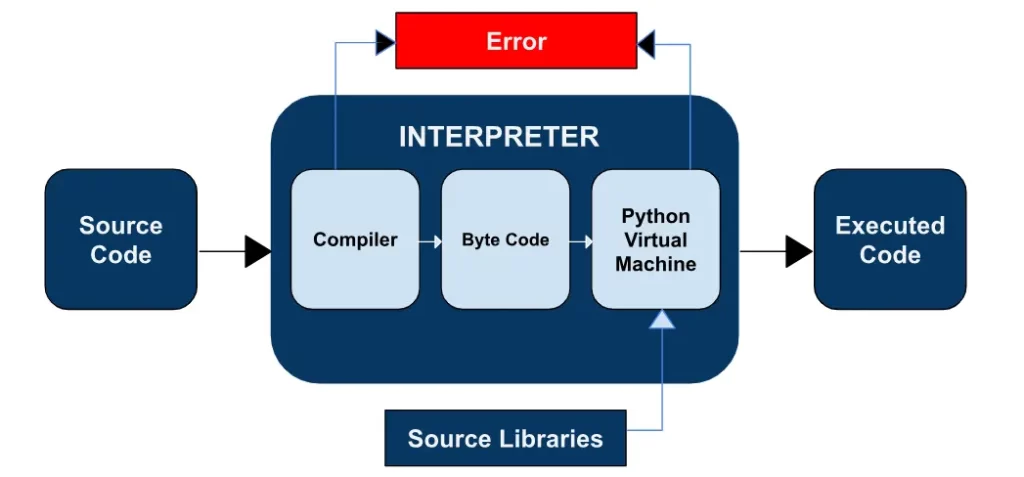
To truly master for else python, it is essential to understand how Python’s interpreter evaluates this construct internally.
At runtime, Python treats the else block as a completion handler for the loop. The interpreter tracks whether the loop exits normally or is interrupted by a break statement.
- If the loop iterates through all items → else executes
- If a break occurs at any iteration → else is skipped
- If the loop never starts (empty iterable) → else still executes
This behavior makes for else python uniquely suitable for search-completion logic and exhaustive verification tasks.
Behavior of for else python with Empty Iterables
One lesser-known but important characteristic is how for else python behaves when the iterable is empty.
Key Insight
If a loop does not run even once, the else block still executes because no break was encountered.
Practical Implication
This is especially useful in:
- Configuration checks
- Input validation
- Default-state execution
Developers can rely on for else python to execute fallback logic even when no data is available.
Combining for else python with Nested Loops
Nested loops introduce complexity, but for else python remains predictable when used carefully.
Important Rule
The else clause always belongs to the nearest enclosing loop.
Use Case
In nested search problems:
- Inner loop break skips inner else
- Outer loop continues normally unless explicitly broken
This allows precise control over multi-layer search termination logic without introducing confusing state variables.
for else python vs Exception-Based Flow Control
Some developers replace loop-completion logic with exceptions. While this may work, it is often discouraged.
Why for else python Is Better
- Exceptions should signal errors, not normal flow
- for else python is clearer and more intentional
- Improves performance by avoiding unnecessary exception handling
Using for else python keeps control flow explicit and semantically correct.
Use of for else python in API Response Validation
In real-world applications, APIs often return lists of responses that need validation.
Example Scenario
- Iterate over response objects
- Break if an invalid response is detected
- Else confirm API integrity
This pattern is common in:
- Microservices validation
- Payment gateways
- Authentication workflows
The construct makes validation logic self-documenting and easier to audit.
Static Code Analysis and for else python
Modern linters and static analyzers fully support for else python, but misuse can trigger warnings.
Common Linter Feedback
- Unreachable else block
- Missing break in loop
- Misleading indentation
Best Practice
Always ensure:
- The loop contains at least one possible break
- The else block serves a distinct logical purpose
This improves maintainability and avoids confusion during code reviews.
Teaching Perspective: Why Beginners Struggle with for else python
Many beginners misunderstand for else python because they associate else exclusively with if.
Conceptual Shift Required
- if else → condition-based branching
- for else python → completion-based branching
Once this mental model is adopted, the construct becomes intuitive rather than confusing.
Performance Considerations
From a performance standpoint, for else python:
- Adds no overhead compared to traditional loops
- Does not allocate extra memory
- Eliminates flag variables that may consume resources
In performance-critical loops, clarity without cost is a significant advantage.
Real-World Industry Adoption
Despite misconceptions, for else python is actively used in:
- Open-source Python libraries
- Data engineering pipelines
- Automation frameworks
- Security analysis tools
Experienced Python developers favor it when correctness and readability matter more than stylistic familiarity.
When You Should Avoid for else python
Although powerful, there are situations where it should be avoided:
- When loop logic is extremely simple
- When team members are unfamiliar with Python idioms
- When a function return is clearer than a loop else
- When readability would suffer due to overuse
Knowing when not to use it is as important as knowing how to use it.
Best Practices for Using for else python
To use this feature effectively, follow these best practices:
- Use for else python only when break is meaningful
- Avoid using it with continue-heavy loops
- Add clear comments explaining why else is used
- Prefer readability over cleverness
- Ensure team members understand the construct
Used responsibly, it enhances code quality rather than confusing readers.
Common Real-World Mistakes Developers Make
Despite its usefulness, developers often misuse or misunderstand for else python.
Frequent Errors
- Assuming else runs when the loop condition fails
- Forgetting that break prevents else execution
- Overusing it where simple logic would suffice
- Mixing return and break incorrectly
Understanding these pitfalls ensures correct and confident usage.
Interview and Competitive Programming Relevance
The for else python construct is frequently discussed in:
- Python interviews
- Coding assessments
- Competitive programming
Interviewers often test:
- Logical understanding
- Loop termination behavior
- Code readability awareness
Knowing how and when to apply for else python demonstrates intermediate-to-advanced Python proficiency.
Future of for else python in Modern Python
As Python continues evolving:
- Readability remains a core design principle
- Expressive control flow structures gain importance
- for else python remains relevant in clean-code practices
Frameworks, libraries, and automation scripts continue to benefit from this feature when used thoughtfully.
for else python in Interviews
Interviewers often test understanding of this construct. Correct explanation demonstrates strong Python fundamentals.
Industry-Level Examples
In data processing pipelines, for else python helps confirm successful data scans without anomalies.
Visual Explanation and Flow Diagrams
Flow diagrams help visualize how loop completion triggers the else block. Including diagrams improves understanding.
Common Mistakes to Avoid
Avoid placing logic in else that should execute regardless of break. Misplacement leads to bugs.
When Not to Use for else python
If logic becomes unclear, alternative patterns may be more readable.
Related Python Control Structures
Other useful constructs include while else, continue, and pass.
Future Relevance in Python
This construct remains part of Python’s philosophy of expressive control flow.
Conclusion
The for else python construct is one of Python’s most elegant yet misunderstood features. While it may appear unusual at first glance, its purpose is deeply rooted in improving code clarity, logical correctness, and developer intent.
By using for else python, developers can:
- Eliminate unnecessary flags and variables
- Write more expressive search and validation logic
- Improve readability in algorithms and automation scripts
- Align code structure with real-world problem-solving patterns
When applied correctly, this feature transforms loops into powerful logical tools rather than simple iteration mechanisms. Whether you are a beginner aiming to write cleaner Python code or an experienced developer optimizing complex workflows, mastering for else python is a valuable step toward writing truly Pythonic programs.Understanding not just how it works, but why it exists, allows you to leverage Python’s design philosophy to its fullest potential.
FAQ’s
How does control flow influence the logical execution of a Python program?
Control flow determines the order in which statements execute using conditions and loops, enabling Python programs to make decisions, repeat actions, and handle different logical paths efficiently.
What is the control flow of Python?
The control flow of Python refers to the order in which code statements are executed, managed through constructs like if–else conditions, loops (for, while), and control statements such as break, continue, and pass.
How is the logic flow defined using conditional statements like if-else in Python?
Conditional statements define logic flow by evaluating conditions and executing specific code blocks based on whether those conditions are true or false.
What are the three types of control flow?
The three types of control flow are sequential flow, selection (decision) flow, and iteration (looping) flow, which determine how a program executes its instructions.
What is control flow logic?
The three types of control flow are sequential flow, selection (decision) flow, and iteration (looping) flow, which determine how a program executes its instructions.


