
Artificial Intelligence (AI) has moved from being a futuristic concept to a core driver of business innovation. From personalized recommendations on streaming platforms to fraud detection in banking, AI is transforming industries at scale.
As a result, AI jobs—especially AI training roles—are among the fastest-growing and highest-paying careers in the US job market.
This guide explores:
- What AI jobs are
- The importance of AI training roles
- Salary trends in the US
- Skills required
- Career growth strategies
What Are AI Jobs?
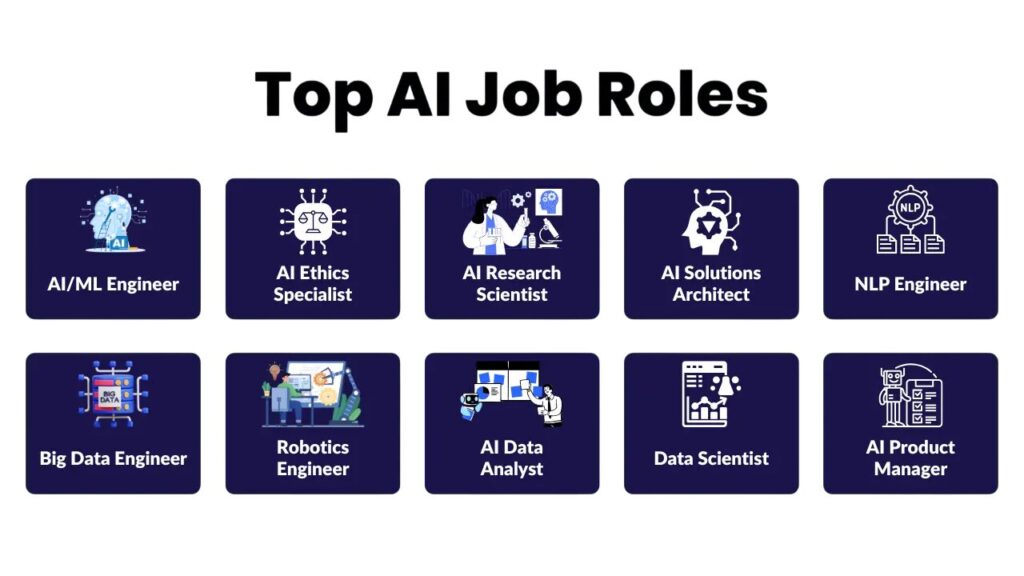
AI jobs involve building systems that can learn from data, make predictions, and automate decision-making. These roles combine programming, mathematics, and domain expertise.
Common AI Roles
| Role | Description | Typical Focus |
|---|---|---|
| Machine Learning Engineer | Builds ML models and pipelines | Model deployment & scalability |
| Data Scientist | Extracts insights from data | Analytics & predictions |
| AI Engineer | Designs AI-powered systems | End-to-end AI solutions |
| NLP Engineer | Works with text & language | Chatbots, LLMs |
| Computer Vision Engineer | Works with images/videos | Object detection, recognition |
Key Insight:
AI jobs are not just about coding—they are about solving real-world business problems using intelligent systems.
Understanding AI Training Jobs
AI training jobs are the foundation of artificial intelligence systems. While deployment roles focus on using models, training roles focus on building and improving them.
Core Responsibilities
- Data preprocessing and cleaning
- Feature engineering
- Model training and validation
- Hyperparameter tuning
- Performance optimization
Advanced Responsibilities
- Distributed training across GPUs/TPUs
- Handling large-scale datasets
- Model optimization and compression
- Experiment tracking and reproducibility
Why AI Training Jobs Matter
Without proper training:
- Models produce inaccurate results
- Systems fail in real-world scenarios
- Business decisions become unreliable
AI Training vs AI Deployment Jobs
| Aspect | AI Training Jobs | AI Deployment Jobs |
|---|---|---|
| Focus | Model building | Model usage |
| Work Type | Experimental | Production |
| Complexity | High | Moderate |
| Tools | TensorFlow, PyTorch | APIs, MLOps tools |
| Output | Trained models | Scalable systems |
Why AI Job Salaries Are Increasing in the US
AI job salaries are increasing mainly because demand for skilled professionals is growing faster than supply. Companies across industries are adopting AI to improve efficiency, automate processes, and gain competitive advantages, creating a strong need for talent.
At the same time, AI roles require specialized skills like machine learning, deep learning, and data engineering, which are not easy to master. Because of this skill gap and the high business impact of AI, organizations are willing to offer higher salaries to attract and retain top professionals
Key Drivers
- Talent shortage: Demand exceeds supply
- Business dependency: AI drives revenue growth
- Data explosion: More data requires more experts
- Generative AI boom: LLMs and automation tools
Insight:
Companies are not just hiring AI talent—they are competing aggressively for it, leading to premium compensation.
AI Job Salaries in the US (2026 Overview)
Salary by Role
| Role | Average Salary (US) |
|---|---|
| Machine Learning Engineer | $130,000 – $180,000 |
| Data Scientist | $120,000 – $160,000 |
| AI Engineer | $140,000 – $190,000 |
| AI Research Scientist | $150,000 – $220,000 |
| AI Training Specialist | $110,000 – $170,000 |
Salary by Experience Level
| Experience Level | Salary Range |
|---|---|
| Entry-Level (0–2 yrs) | $90K – $120K |
| Mid-Level (3–6 yrs) | $120K – $160K |
| Senior-Level (7+ yrs) | $160K – $220K+ |
AI Jobs Salary Comparison Table: Roles, Experience, and Earning Potential
| AI Job Role | Entry-Level Salary (India) | Mid-Level Salary (India) | Senior-Level Salary (India) | Global Avg Salary (USD) |
| Machine Learning Engineer | ₹6–10 LPA | ₹12–20 LPA | ₹25–50+ LPA | $110K – $160K |
| Data Scientist | ₹5–9 LPA | ₹10–18 LPA | ₹20–45+ LPA | $100K – $150K |
| AI Training Specialist | ₹4–8 LPA | ₹9–16 LPA | ₹18–35+ LPA | $90K – $140K |
| Deep Learning Engineer | ₹7–12 LPA | ₹15–25 LPA | ₹30–60+ LPA | $120K – $170K |
| NLP Engineer | ₹6–11 LPA | ₹14–22 LPA | ₹28–55+ LPA | $115K – $165K |
| Computer Vision Engineer | ₹6–10 LPA | ₹12–20 LPA | ₹25–50+ LPA | $110K – $160K |
| AI Research Scientist | ₹8–15 LPA | ₹18–30 LPA | ₹40–80+ LPA | $130K – $200K |
| MLOps Engineer | ₹7–12 LPA | ₹15–25 LPA | ₹30–60+ LPA | $120K – $170K |
Factors Affecting Salary
AI salaries depend on experience, skills, industry, and location. Higher expertise and working in top companies or tech hubs usually lead to better pay.
- Experience and expertise
- Specialized skills (e.g., NLP, deep learning)
- Industry (finance & tech pay more)
- Company size (FAANG-level companies pay premium)
- Location (San Francisco, NYC, Seattle lead)
Skills Required for AI Jobs
Core Skills
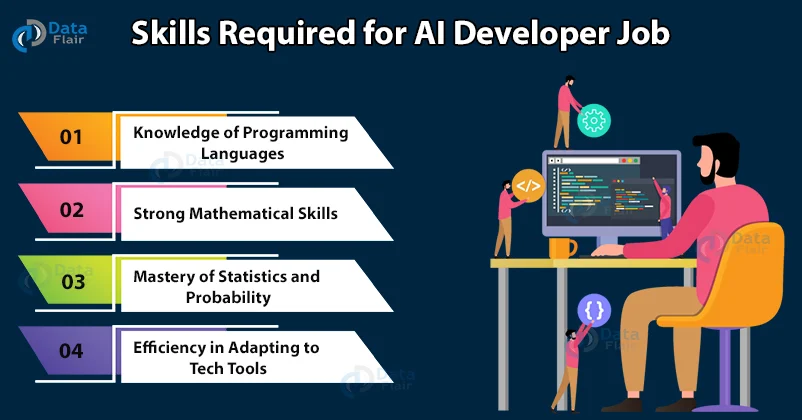
- Python programming
- Machine learning algorithms
- Statistics and probability
- Data analysis
Advanced Skills
- Deep learning (CNNs, Transformers)
- MLOps and model deployment
- Cloud platforms (AWS, GCP, Azure)
- Big data tools (Spark, Hadoop)
Tools & Technologies
AI Training Tools
- TensorFlow
- PyTorch
- Scikit-learn
Supporting Tools
- MLflow (experiment tracking)
- Weights & Biases
- Data visualization tools (Tableau, Power BI)
- Cloud platforms
Real-World Examples
1. Recommendation Systems
AI training engineers build models using user behavior data to:
- Recommend products (Amazon)
- Suggest movies (Netflix)
2. Fraud Detection
AI models analyze transaction patterns to:
- Detect anomalies
- Prevent financial fraud
Advanced Concepts in AI Training Jobs
1. Large-Scale Model Training
Large-scale model training involves working with massive datasets and models that contain billions of parameters. This requires powerful infrastructure, such as GPUs and distributed systems, to handle the complexity and scale efficiently.
Because of the high computational cost and technical expertise required, professionals working in large-scale training are highly valued. Their ability to optimize performance and manage resources directly impacts model accuracy and business outcomes.
Modern AI models involve:
- Billions of parameters
- Massive datasets
- High computational cost
These roles command top-tier salaries.
2. Distributed Training
Distributed training allows AI models to be trained across multiple machines or GPUs, significantly reducing training time. This approach is essential when working with large datasets and complex models that cannot be handled by a single system.
It improves scalability and ensures efficient use of resources, enabling faster experimentation and deployment. Professionals skilled in distributed systems are in high demand due to their ability to handle large-scale AI workloads efficiently.
Training models across multiple machines:
Benefits:
- Faster processing
- Scalability
- Efficient resource usage
3. Data Pipeline Engineering
Data pipeline engineering ensures that data flows smoothly from source to model. It involves collecting, transforming, and storing data in a structured way so it can be used effectively for training.
Strong data pipelines improve data quality and reliability, which directly impacts model performance. Professionals with these skills are highly valued as they enable efficient and scalable AI systems.
AI depends heavily on data pipelines:
- Data ingestion
- Transformation
- Storage
Professionals skilled in pipelines are highly valued.
4. Model Optimization Techniques
Model optimization techniques such as regularization, dropout, and gradient optimization help improve model performance and prevent overfitting. These methods ensure that AI models are more accurate, efficient, and reliable in real-world applications.
- Regularization
- Dropout
- Gradient optimization
Better optimization = better performance = higher business value.
5. Experimentation Culture
AI training follows an iterative process of training, evaluating, adjusting, and retraining models. This continuous experimentation helps improve performance and achieve better results over time.
AI training is iterative:
- Train
- Evaluate
- Adjust
- Retrain
Professionals who manage experiments efficiently are in high demand.
Industries Hiring AI Professionals in the US
| Industry | Use Case |
|---|---|
| Healthcare | Diagnosis, drug discovery |
| Finance | Fraud detection, trading |
| Retail | Personalization, inventory |
| Technology | Automation, AI products |
How to Increase Your AI Salary
Proven Strategies
- Master advanced AI concepts
- Build real-world projects
- Gain industry experience
- Learn cloud + AI combination
- Stay updated with trends
Certifications & Education
Certifications and formal education play an important role in building a strong foundation for AI careers. Programs in machine learning, data science, and AI specialization help professionals understand core concepts such as algorithms, statistics, and model development. While a degree can be beneficial, industry-recognized certifications often provide practical, job-ready skills.
Platforms like Coursera offer widely recognized AI and machine learning courses from top universities, making them a popular choice in the US market. Similarly, upGrad provides structured programs in collaboration with global institutions, focusing on real-world projects and career transition support.
Earning certifications from these platforms not only enhances technical knowledge but also strengthens your resume, improves job opportunities, and helps in negotiating higher salaries in competitive AI roles.
Valuable Certifications
- Machine learning programs
- Data science certifications
- AI specialization courses
Insight:
While degrees help, skills + projects matter more in the US market.
Career Growth Path in AI
| Stage | Focus |
|---|---|
| Beginner | Learn fundamentals |
| Intermediate | Build projects |
| Advanced | Specialize (NLP, CV) |
| Expert | Lead AI systems |
Emerging Trends in AI Jobs
- Generative AI (ChatGPT-like models)
- Edge AI (on-device intelligence)
- Autonomous systems
- Real-time learning systems
Future of AI Training Jobs
AI training jobs are evolving rapidly:
Opportunities
- High salary growth
- Specialized roles
- Global job opportunities
Challenges
- High computational cost
- Data quality issues
- Long training cycles
Conclusion
AI jobs—especially AI training roles—are at the core of modern technological innovation.
As businesses increasingly rely on data-driven decision-making, the demand for skilled AI professionals will continue to rise.
Final Takeaways:
- AI training jobs are foundational and high-value
- Salaries in the US are among the highest globally
- Specialized skills significantly boost earning potential
- Continuous learning is essential
If you invest in the right skills today, AI can offer one of the most rewarding and future-proof careers.
FAQ’s
How much do AI jobs get paid?
AI jobs are among the highest-paying roles, with salaries ranging from ₹5–12 LPA for freshers to ₹20–70+ LPA for experienced professionals in India, while globally they can exceed $100,000–$250,000+ per year depending on role and experience.
What are 7 types of AI?
The seven types of AI are Reactive Machines, Limited Memory, Theory of Mind, Self-Aware AI, Artificial Narrow Intelligence (ANI), Artificial General Intelligence (AGI), and Artificial Superintelligence (ASI), representing different levels and capabilities of AI systems.
Which is the highest salary job in AI?
The seven types of AI are Reactive Machines, Limited Memory, Theory of Mind, Self-Aware AI, Artificial Narrow Intelligence (ANI), Artificial General Intelligence (AGI), and Artificial Superintelligence (ASI), representing different levels and capabilities of AI systems.
Which 3 jobs will survive AI?
Three jobs likely to survive AI are creative roles (like designers or writers), human-centered professions (like healthcare and teaching), and strategic decision-making roles (like management and leadership), as they require creativity, empathy, and complex judgment.
What are the 4 types of AI?
The four types of AI are Reactive Machines, Limited Memory AI, Theory of Mind AI, and Self-Aware AI, based on their level of intelligence and ability to process and respond to information.