Data teams are drowning. Not in a lack of information — but in the sheer friction of turning raw data into decisions that actually move a business forward. Spreadsheets, manual processes, and rigid code-first workflows have created a critical bottleneck that modern enterprises can no longer afford to ignore.
The shift toward self-service analytics isn’t a trend — it’s a structural correction. According to Alteryx’s 2025 State of the Data Analyst report, analysts are under mounting pressure to deliver insights faster while simultaneously managing more complex data environments. Manual spreadsheet manipulation simply can’t scale to meet that demand.
Enterprises are responding by adopting code-friendly platforms — tools that empower both technical and non-technical users without forcing every workflow through a developer bottleneck. This approach dramatically reduces Time-to-Insight, the critical gap between data availability and actionable decision-making that costs businesses competitive ground every single day.
What typically happens is that organizations recognize the platform gap first, then scramble to close the skills gap second. That’s where validated expertise becomes indispensable. Alteryx certification signals to employers that a professional can bridge both worlds — turning complex pipelines into business results without unnecessary delays.
The question isn’t whether these skills pay off. It’s how much — and the financial case is more compelling than most professionals realize.
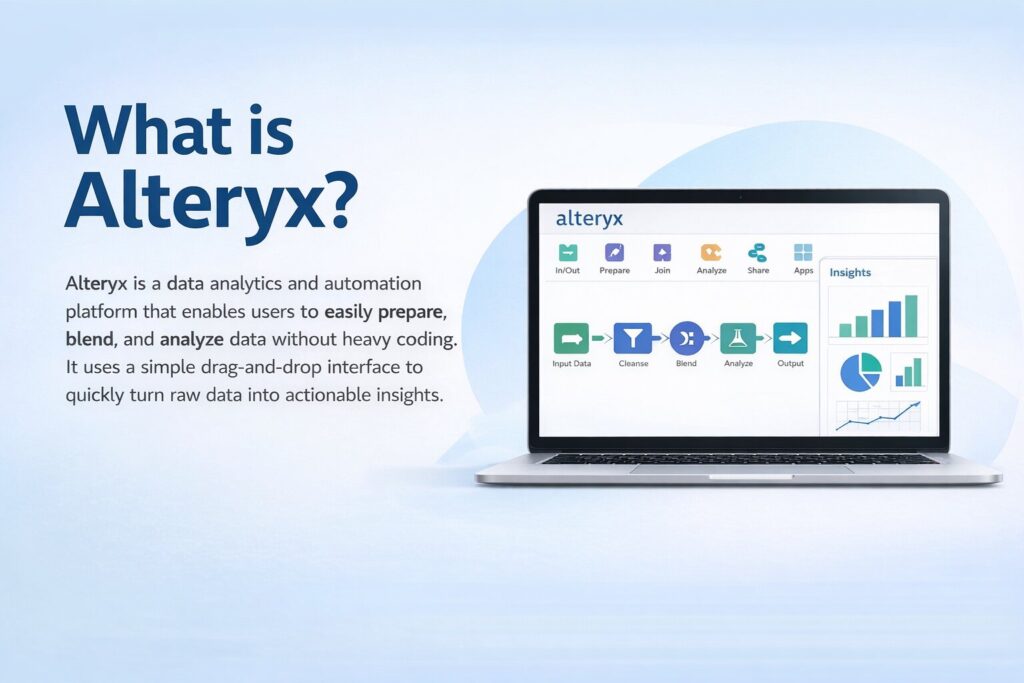
What is Alteryx?
Alteryx is a powerful data analytics and automation platform that helps users prepare, blend, and analyze data without heavy coding. It provides a drag-and-drop interface where analysts can build workflows to clean data, perform advanced analytics, and generate insights quickly. Widely used in business intelligence and data science, Alteryx simplifies complex processes like data integration, predictive modeling, and reporting, making it easier for organizations to turn raw data into actionable decisions.
The Financial Case: Measuring the Alteryx Salary Premium
The analytics bottleneck isn’t just a productivity problem — it’s a compensation opportunity. Professionals who close the skills gap with a recognized data analytics certification tend to see a measurable return almost immediately.
The 20% Salary Premium Reality
The numbers are straightforward: certified data professionals earn roughly 20% more than their non-certified peers. That premium isn’t incidental. It reflects how employers price specialized, verifiable expertise versus general familiarity with tools. Certification converts assumed competence into documented capability — and hiring managers pay accordingly.
For Alteryx specifically, the salary signal is strong. Professionals listing Alteryx Designer skills on their profiles command average salaries in the range of $80,000–$110,000 annually, depending on role and geography, according to market data tracked by platforms covering analytics talent. That positions Alteryx proficiency well above median wages for general data roles.
Growth Tailwinds Through 2031
The timing matters too. Operations research and analytics roles are projected to grow significantly through 2031, driven by organizations doubling down on data-informed decision-making. Supply of credentialed analysts is not keeping pace with demand — which means certified professionals enter a favorable negotiating position.
One practical pattern emerges consistently in the market: professionals who combine hands-on Alteryx experience with formal certification move into senior analyst and data operations roles faster than those relying on experience alone.
Of course, not every certification investment delivers equal ROI. The return depends heavily on which credential you pursue and whether it aligns with your career trajectory — which is exactly what the next section breaks down.
Navigating the Certification Path: Core vs. Advanced
Now that the salary premium is clear, the logical next question is: where do you actually start? The Alteryx certification program is structured as a deliberate progression — each tier building on the last — and choosing the right entry point can save you months of misaligned effort.
Alteryx Core: The Foundation That Opens Doors
Alteryx Core certification is where most data professionals should begin, regardless of experience level. This tier validates your ability to handle the fundamentals: data preparation, cleansing, blending, and output — the bread and butter of any analytics workflow. According to the DataCamp certification guide, the Core exam tests practical proficiency with the Designer interface, requiring candidates to solve real-world data challenges within a time limit rather than simply recalling theory.
That practical, scenario-based format matters. Employers aren’t hiring for certification trivia — they’re hiring for execution.
Alteryx Advanced: Where Specialization Begins
Once the Core credential is secured, the Advanced certification moves into significantly more technical territory. Candidates demonstrate competency in spatial analytics, predictive modeling, and complex macro development. This is the tier where analysts transition from task-executor to problem-architect — and where the compensation jump tends to be most pronounced.
The skills tested at this level align directly with what organizations are prioritizing as analytics functions absorb more of the work traditionally handled by data engineering teams.
Expert Level: Platform Mastery
The Expert certification sits at the top of the stack. It targets professionals who are designing Alteryx environments at an organizational scale — think governance frameworks, performance optimization, and enterprise workflow architecture. In practice, this credential is most relevant for analytics engineers, solution architects, or senior leads who own the platform strategy rather than just contribute to it.
Choosing Your Starting Point
A practical framework for deciding:
- Early-career analysts → Start with Core, aim for Advanced within 12 months
- Mid-career specialists → Assess gap areas first; Advanced may be the right entry
- Senior practitioners → Expert certification signals leadership-level platform ownership
The certification path is linear by design, but your career goals determine the pace. Understanding which credential unlocks which opportunities is only half the equation — the other half is making sure the right people actually see your credentials once you’ve earned them.
The 80/20 Rule of Data Careers: Building a Loyal Audience for Your Skills
Passing the certification exam is a milestone — but it’s not the finish line. Here’s a pattern that plays out consistently across high-growth analytics careers: roughly 80% of meaningful opportunities — the referrals, the recruiter outreaches, the unsolicited job offers — flow from about 20% of your professional visibility efforts. The credential opens the door; your public presence keeps it open.
Turn Your Workflows Into a Portfolio
One of the most underutilized career moves for certified analysts is building a public-facing portfolio. This doesn’t require a polished personal website on day one. A simple blog documenting real-world Alteryx use cases — data cleansing workflows, automated reporting pipelines, blending messy datasets — signals far more than a business intelligence certification listed on a resume ever could. Recruiters reviewing hundreds of applications can’t evaluate your thinking from a badge alone. A portfolio gives them proof.
A practical starting point: document three to five workflows you’ve already built, explain the business problem each one solved, and publish them on a platform like LinkedIn Articles, Medium, or a personal GitHub page. Specificity is what earns trust. “Automated a weekly sales report that saved the team four hours per week” is far more compelling than a generic skills list.
Build an Audience With How-To Content
Sharing practical knowledge consistently is the highest-ROI visibility strategy available to a data professional. Short LinkedIn posts walking through a single Alteryx tool, a 60-second screen-recorded workflow tip, or a breakdown of a data visualization decision — these create what might be called a “loyalty loop” with recruiters and peers who follow along over time.
According to TechRadar’s analysis of AI and automation ROI, demonstrating tangible, documented outcomes from automation work is increasingly what separates candidates in competitive hiring markets. Content that shows your process is the closest thing to a live audition you can offer.
However, consistency matters more than volume. Two thoughtful posts per week will outperform a burst of ten followed by silence. Build the habit before you build the audience.
As the analytics landscape evolves rapidly — particularly with AI being woven into the tools themselves — the professionals who’ve built a visible track record will be best positioned to lead that shift.
Future-Proofing Your Career: Alteryx in the Age of AI
Building a public portfolio and earning your certification are powerful moves — but the smartest professionals are already thinking one step further: how do these credentials hold up as AI reshapes the analytics landscape?
The answer is more reassuring than you might expect.
AiDIN: AI That Amplifies, Not Replaces
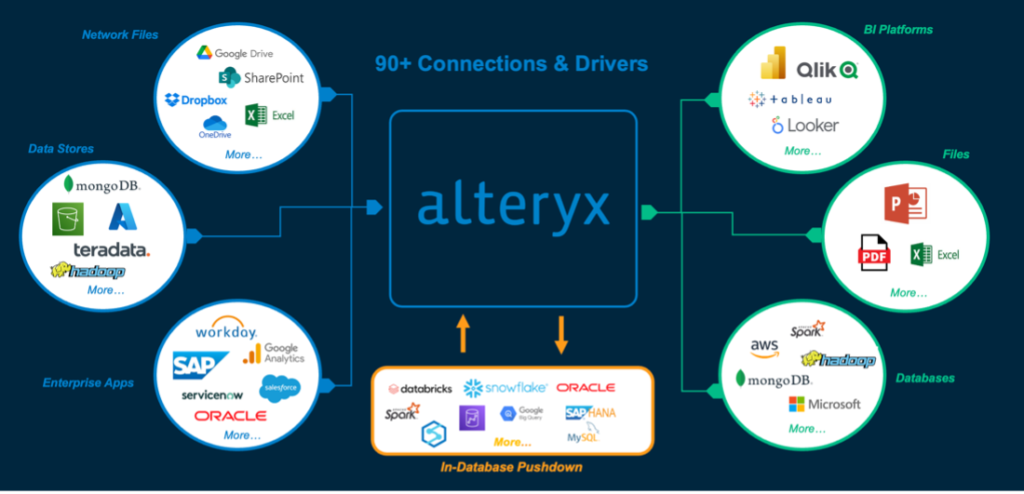
Alteryx’s embedded AI engine, AiDIN, integrates generative AI directly into automated workflows — allowing analysts to build, interpret, and optimize pipelines faster than ever. According to the Alteryx Fall Release 2025, new AI-assisted features are accelerating everything from data prep to predictive modeling. The platform isn’t replacing analysts; it’s raising the floor of what a single analyst can accomplish.
Certified professionals are better positioned to leverage these tools — because they understand the underlying logic that AI is automating.
The ‘Human in the Loop’ Advantage
Here’s what the AI hype often misses: automated insights still require human judgment to validate, contextualize, and govern. A common pattern in enterprise analytics is that AI-generated outputs surface correlations quickly, but a trained analyst must determine whether those correlations are meaningful, ethical, or actionable.
Certification proves you’re that analyst. It signals that you understand not just how to use a tool, but why a workflow produces a specific result — exactly the skill required to govern AI-driven outputs responsibly.
Why Certification Stays Relevant
Pursuing Alteryx Advanced certification specifically signals readiness for this governance role. The Alteryx Academy’s updated learning paths are explicitly designed around the modern AI-and-analytics skill set — meaning the credential you earn today reflects tomorrow’s workplace demands.
Credentials that keep pace with AI are the ones worth investing in. With that in mind, it’s worth stepping back to look at the complete roadmap ahead.
Conclusion: Your Roadmap to Certification Success
The case for Alteryx certification is compelling and clear. Across every dimension that matters on a data analyst career path — salary, promotability, skill relevance, and job security — certification delivers measurable advantages. Certified professionals consistently command higher compensation, move into senior roles faster, and position themselves as indispensable when organizations double down on analytics-driven decisions.
The smartest starting point remains the Alteryx Designer Core certification. It’s accessible, respected, and creates the foundation for everything else. Pair that credential with a public portfolio — documented workflows, solved business problems, shared community contributions — and you shift from candidate to practitioner in the eyes of hiring managers.
Certification without visibility is a tree falling in an empty forest. The badge matters; what you build with it matters more.
FAQ’s
Is Alteryx certification worth it in 2026?
Alteryx certification is considered valuable as it validates your data analytics skills and improves job prospects. It helps candidates stand out in a competitive market where data skills are in high demand.
What jobs can you get with Alteryx certification?
With Alteryx certification, you can pursue roles like Data Analyst, Business Analyst, Data Engineer, and Analytics Consultant. Many organizations look for professionals who can automate workflows and analyze data efficiently.
How long does it take to get Alteryx certified?
The time varies depending on your experience, but beginners can complete foundational certifications in a few weeks to a couple of months. Learning paths and guided training programs help speed up the process.
Does Alteryx certification help in career growth?
Yes, it enhances your resume, demonstrates expertise, and increases opportunities for promotions and better job roles. Certifications show employers that you have practical, job-ready analytics skills.