
In the modern data-driven world, access to high-quality data is one of the most critical factors for success in analytics and machine learning. While many professionals struggle to find reliable datasets, platforms like Kaggle provide a powerful solution.
A Kaggle dataset is widely used by beginners, professionals, and researchers to build real-world projects, test algorithms, and improve analytical skills. It plays a vital role in bridging the gap between theoretical knowledge and practical implementation.
What is a Kaggle Dataset
A Kaggle dataset refers to publicly available datasets hosted on Kaggle that can be used for data analysis, machine learning, and research.
These datasets are contributed by:
- Organizations
- Researchers
- Data scientists
- Companies
Each Kaggle dataset typically includes structured or unstructured data along with descriptions and sometimes sample notebooks.
Why Kaggle Datasets Are Important
Kaggle datasets are essential for learning and development in data science.
They provide:
- Real-world data for practice
- Exposure to diverse problem domains
- Opportunities to build portfolios
- Hands-on experience
Unlike theoretical learning, working with a Kaggle dataset helps understand real challenges such as missing data, noise, and inconsistencies.
Kaggle datasets play a crucial role in making data science more accessible to everyone. Instead of spending hours searching for reliable data sources, learners and professionals can instantly access well-structured datasets across multiple domains. This accessibility reduces the barrier to entry and allows individuals to focus more on learning analysis, modeling, and problem-solving rather than data collection.
Types of Kaggle Datasets
Kaggle hosts a wide variety of datasets.
Common categories include:
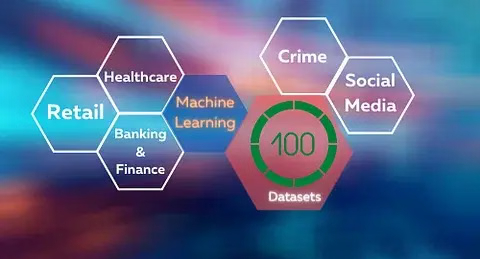
- Healthcare datasets
Healthcare Kaggle datasets include medical records, patient data, disease statistics, and clinical trial information. These datasets are widely used for building predictive models for disease diagnosis, risk analysis, and healthcare optimization. They help data scientists work on real-world problems like early disease detection, patient outcome prediction, and improving treatment strategies.
- Finance datasets
Finance Kaggle datasets contain data related to stock markets, transactions, credit scoring, and financial performance. These datasets are used for tasks such as fraud detection, stock price prediction, and risk analysis. Working with finance data helps professionals understand market trends and build models for investment and financial decision-making.
- E-commerce datasets
E-commerce datasets include customer transactions, product details, sales data, and user behavior. These datasets are useful for analyzing customer preferences, building recommendation systems, and optimizing pricing strategies. Businesses use such insights to improve customer experience and increase sales performance.
- Social media datasets
Social media Kaggle datasets consist of user posts, comments, likes, and engagement data from platforms like Twitter or Instagram. These datasets are commonly used for sentiment analysis, trend detection, and user behavior analysis. They help organizations understand public opinion and improve marketing strategies.
- Image and video datasets
Image and video datasets include visual data used for computer vision tasks such as object detection, facial recognition, and image classification. These datasets are essential for training deep learning models and are widely used in applications like autonomous vehicles, security systems, and medical imaging.
Each Kaggle dataset serves different purposes and helps in developing domain-specific expertise.
Kaggle datasets are not only diverse in terms of industries but also vary significantly in structure and complexity. Some datasets are highly structured, such as tabular datasets with rows and columns, while others are unstructured, including images, audio, and text data. This variety allows learners to work on different types of problems and gain experience with multiple data formats, which is essential for real-world data science applications.
Another important classification of Kaggle datasets is based on their use case. For example, some datasets are specifically designed for predictive modeling, where the goal is to forecast outcomes such as sales, customer churn, or disease diagnosis. Others are exploratory datasets used for data analysis and visualization, helping users identify trends, patterns, and insights without necessarily building machine learning models.
How to Find the Right Kaggle Dataset
Choosing the right Kaggle dataset is crucial.
Steps to select:
- Define your project goal
- Choose relevant domain
- Check dataset size
- Review data quality
- Analyze metadata
A well-chosen Kaggle dataset improves project outcomes and learning efficiency.
Finding the right Kaggle dataset starts with clearly defining your project goal and the type of problem you want to solve. You should choose a dataset that matches your domain of interest, such as healthcare, finance, or e-commerce. It is important to check the dataset size, structure, and quality to ensure it is suitable for your skill level. Reviewing the dataset description, columns, and sample data helps you understand its usability. Selecting the right Kaggle dataset makes your analysis more effective and improves overall project outcomes.
Kaggle Dataset for Beginners
Beginners should start with simple datasets.
Kaggle datasets for beginners are typically simple, well-structured, and easy to understand, making them ideal for learning the basics of data analysis and machine learning. Popular beginner-friendly datasets, such as Titanic survival or house price prediction, help users practice data cleaning, visualization, and basic modeling techniques. These datasets usually have clear problem statements and manageable sizes, allowing new learners to focus on concepts rather than complexity. Working with such Kaggle datasets builds confidence and provides a strong foundation for more advanced projects.
Examples:
- Titanic survival dataset
- House price prediction
- Basic sales data
These Kaggle datasets are easier to understand and help build foundational skills.
Kaggle Dataset for Machine Learning
Machine learning projects rely heavily on Kaggle datasets.
Use cases:
- Classification problems
- Regression models
- Clustering
Working with Kaggle dataset enables understanding of algorithms and model evaluation.
Kaggle Dataset for Deep Learning
Deep learning requires large datasets.
Examples:
- Image classification datasets
- Text datasets
- Speech recognition data
A Kaggle dataset in deep learning helps train neural networks and improve accuracy.
Kaggle Dataset for Data Analysis
Data analysis projects use Kaggle datasets for insights.
Tasks include:
- Data cleaning
- Visualization
- Trend analysis
This improves decision-making and storytelling skills.
Real-World Examples Using Kaggle Dataset
Example 1: Retail Analysis
A Kaggle dataset containing sales data can be used to analyze customer behavior and improve business strategies.
Example 2: Healthcare Prediction
Healthcare datasets help predict diseases and improve patient outcomes.
Example 3: Financial Forecasting
Finance datasets help predict stock trends and manage risks.
Example 4: Customer Churn Prediction
Telecom or subscription-based companies often use Kaggle datasets to predict customer churn. By analyzing customer usage patterns, billing information, and service history, companies can identify customers who are likely to leave. For example, a telecom company can use this dataset to offer targeted discounts or personalized plans to retain customers, improving long-term profitability.
Example 5: Recommendation Systems
E-commerce platforms use Kaggle datasets to build recommendation systems. By analyzing user behavior, purchase history, and product interactions, businesses can suggest relevant products to customers. For example, an online shopping platform can recommend products based on previous purchases, increasing user engagement and sales.
Example 6: Sentiment Analysis from Social Media
Social media datasets on Kaggle are used to analyze public sentiment. Companies can track customer opinions about products, services, or brands. For example, a company launching a new product can analyze tweets or reviews to understand customer feedback and improve their offerings.
Example 7: Image Classification in Computer Vision
Kaggle provides image datasets that are used for tasks like object detection and image classification. For example, a dataset of handwritten digits can be used to build models that recognize numbers, which is useful in applications like automated form processing and banking systems.
Example 8: Stock Market Prediction
Financial Kaggle datasets can be used to analyze stock price movements and trends. Data scientists can build models to forecast future prices based on historical data. While predictions are not always perfect, they help investors make more informed decisions.
Example 9: Supply Chain Optimization
Logistics companies use Kaggle datasets to improve supply chain efficiency. By analyzing shipping data, delivery times, and demand patterns, companies can optimize routes and reduce costs. For example, a delivery company can improve its logistics planning using such insights.
Example 10: Energy Consumption Forecasting
Energy datasets help predict electricity usage patterns. Governments and utility companies can use this data to manage energy supply efficiently. For example, predicting peak usage times helps in reducing power outages and improving resource allocation.
Real-World Applications of Kaggle Dataset (Table)
| Use Case | Dataset Type | Application | Business Impact |
| Retail Sales Analysis | E-commerce Data | Analyze customer buying behavior | Increase revenue and optimize inventory |
| Customer Churn Prediction | Telecom/Customer Data | Predict customers likely to leave | Improve retention and reduce churn |
| Disease Prediction | Healthcare Data | Identify health risks and predict diseases | Better patient care and early diagnosis |
| Fraud Detection | Financial Data | Detect suspicious transactions | Reduce financial losses and improve security |
| Recommendation Systems | User Behavior Data | Suggest products or content | Increase engagement and sales |
| Sentiment Analysis | Social Media Data | Analyze customer opinions and feedback | Improve brand strategy and decisions |
| Image Classification | Image Dataset | Recognize objects or patterns | Enable automation and AI applications |
| Stock Market Analysis | Financial Time-Series | Predict price trends | Support investment decisions |
| Supply Chain Optimization | Logistics Data | Optimize delivery routes and operations | Reduce costs and improve efficiency |
| Energy Forecasting | Time-Series Data | Predict electricity demand | Better resource planning |
How to Work with Kaggle Dataset
Steps:
- Download dataset
- Load into environment
- Clean data
- Perform analysis
- Build models
Tools used include Python, pandas, and visualization libraries.
Kaggle Dataset Best Practices
Important practices:
- Understand data before analysis
- Handle missing values
- Normalize data
- Validate results
Following best practices ensures accurate outcomes.
Common Mistakes to Avoid
Mistakes include:
- Ignoring data quality
- Overfitting models
- Poor feature selection
Avoiding these mistakes improves performance.
Kaggle Dataset and Career Growth
Working with Kaggle datasets helps in:
- Building portfolios
- Preparing for interviews
- Gaining practical experience
Employers value candidates with real project experience.
Advanced Use of Kaggle Dataset
Advanced users can:
- Participate in competitions
- Build complex models
- Collaborate with others
This enhances expertise and visibility.
Extended Advanced Insights (5 Key Points with Detailed Explanation)
1. Data Cleaning Importance
Data cleaning is the first step when working with any Kaggle dataset. Raw data often contains missing values, duplicates, and inconsistencies that can affect analysis. Cleaning ensures accuracy and reliability. Without proper preprocessing, even advanced models will produce poor results. This step involves handling null values, correcting errors, and standardizing formats. It is essential for building strong data foundations. Clean data leads to better model performance. Professionals spend significant time on this stage. It directly impacts project success. It also improves interpretability. Data cleaning is a core skill for every data professional. Mastering it enhances project quality. It ensures consistency across datasets. It builds confidence in results. It is a critical part of the data pipeline.
2. Feature Engineering
Feature engineering transforms raw data into meaningful inputs. It improves model accuracy and efficiency. In a Kaggle dataset, selecting the right features is crucial. Creating new features from existing data can reveal hidden patterns. This process requires domain knowledge and creativity. It enhances predictive power. Good feature engineering often differentiates top performers. It reduces noise in data. It improves model interpretability. It helps algorithms learn better. It is a key step in machine learning workflows. It directly affects results. It requires experimentation. It is both an art and science.
3. Model Selection Strategy
Choosing the right model depends on the dataset and problem type. A Kaggle dataset can support multiple algorithms. Testing different models helps identify the best performer. Model selection involves balancing accuracy and complexity. Overly complex models may overfit. Simpler models may underperform. Cross-validation helps in evaluation. Understanding model behavior is essential. It improves decision-making. It ensures optimal results. It is a critical step in analytics projects. It requires experimentation and analysis.
4. Evaluation Metrics
Evaluation metrics measure model performance. Different problems require different metrics. Accuracy, precision, recall, and F1-score are common. For regression, metrics include RMSE and MAE. Choosing the right metric is essential. It ensures proper evaluation. It aligns with business goals. It helps compare models. It improves decision-making. It prevents misleading results. It is critical for validation. It ensures reliability.
5. Data Visualization
Visualization helps understand patterns. It makes complex data easier to interpret. Charts and graphs reveal insights. Visualization is essential in Kaggle dataset analysis. It supports storytelling. It improves communication. It highlights trends. It identifies anomalies. It aids decision-making. It enhances reports. It is a key analytical skill.
Conclusion
A Kaggle dataset is one of the most valuable resources for anyone looking to build a career in data science. It provides real-world experience, enhances technical skills, and helps in solving practical problems.
Professionals who actively work with Kaggle datasets gain a competitive advantage in the job market. Continuous practice, experimentation, and learning are key to success.
FAQ’s
How to use a dataset in Kaggle?
To use a dataset in Kaggle, download or import it into a Kaggle Notebook, explore and preprocess the data, and apply analysis or machine learning models to build insights or solutions.
Is Kaggle 100% free?
Yes, Kaggle is 100% free to use, offering free datasets, notebooks, and limited cloud computing resources, although usage limits apply for advanced compute features.
How to create a dataset for Kaggle?
To create a dataset on Kaggle, prepare and clean your data, upload it via the “Create Dataset” option, add a description and metadata, and publish it for others to use.
What are some good beginner datasets on Kaggle?
Some good beginner datasets on Kaggle include Titanic (survival prediction), House Prices, Iris dataset, MNIST digits, and COVID-19 datasets, as they are simple, well-structured, and widely used for learning data analysis and machine learning.
Can I earn money through Kaggle?
Yes, you can earn money through Kaggle by participating in competitions with cash prizes, winning challenges, and gaining visibility that can lead to job opportunities or freelance work.


