

Search volume and intent data represent the foundation of strategic content creation—revealing not just how many people search for topics, but why they’re searching in the first place. Without this intelligence, content teams operate in the dark, producing material that might never reach its intended audience. Studies show that 83% of B2B marketers now leverage intent data to improve campaign performance, yet many still struggle to connect search demand with actual user needs.
The relationship between volume and intent is more nuanced than raw numbers suggest. A keyword with 10,000 monthly searches may seem attractive, but if those searches indicate informational browsing rather than purchase consideration, the traffic won’t convert. Conversely, a term with just 200 searches might drive significant results if it captures high-intent users at the decision stage. Search intent classification—whether informational, navigational, commercial, or transactional—determines the true value of any topic suggestion.
Understanding keyword difficulty vs volume adds another critical dimension. High-volume keywords often face intense competition, requiring substantial domain authority and resources to rank. Lower-volume terms with manageable difficulty scores frequently offer faster wins and more qualified traffic. Smart content strategists balance these factors through comprehensive data profiling approaches, identifying opportunities where demand meets feasibility. The goal isn’t chasing the biggest numbers—it’s finding topics where search demand aligns with your capability to rank and serve user needs effectively.
The Significance of Search Volume in Content Strategy
Search volume serves as the economic indicator of content opportunity—revealing the actual market size for any given topic before you invest resources in creating it. While traditional SEO keyword research focuses on identifying relevant terms, understanding search volume transforms this practice from guesswork into strategic resource allocation. A topic with 50 monthly searches requires fundamentally different investment than one attracting 50,000 searches, regardless of competitive difficulty.

The relationship between search volume and business impact, however, isn’t purely linear. According to research on search intent optimization, search intent types—navigational, informational, transactional, and commercial investigation—dramatically affect conversion potential regardless of volume. A high-volume informational query might generate awareness, while a lower-volume transactional search could directly drive revenue. This creates a critical decision framework: pursue broad visibility or targeted conversion?
Timing represents another dimension where search volume data becomes strategic. Seasonal fluctuations, trending topics, and emerging market shifts all manifest first in search patterns. Content teams monitoring these signals can identify opportunities before competitors, positioning themselves for traffic surges. What appears as modest search volume in February might explode in June—but only for those tracking data patterns systematically.
Yet volume data carries inherent limitations. It reflects past behavior, not future potential. Innovative products, emerging technologies, or novel solutions often show minimal search volume precisely because audiences haven’t learned to articulate their needs in those terms. The most successful content strategies balance volume-driven optimization with strategic bets on topics where search demand will materialize—a distinction that becomes clearer when examining how different intent types guide actual content creation.
Overview & Core Concept
| Section | Key Concept | Description | Business Impact |
| Overview | Search Volume + Intent Data | Combines demand (volume) with user purpose (intent) | Enables strategic content creation |
| Problem | Content Blind Spots | Creating content without demand/intent insights | Low traffic and poor conversions |
| Core Insight | Volume vs Intent Balance | High volume ≠ high value | Better ROI from intent-driven topics |
How Search Intent Guides Content Creation
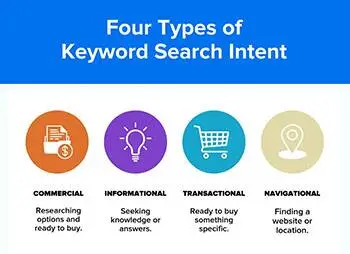
Search intent represents the reason behind every query—transforming raw keyword search volume metrics into actionable content strategy. While search volume tells you how many people search, intent reveals what they actually want to accomplish, fundamentally shaping how you should craft your content.
Understanding search intent impacts keyword research by categorizing queries into four primary types: informational (seeking knowledge), navigational (finding specific pages), commercial (researching solutions), and transactional (ready to purchase). A keyword with 10,000 monthly searches might seem attractive until you recognize the intent mismatch—informational searchers won’t convert on product-focused content, no matter how well-written.
Consider the query “email marketing tools” versus “how email marketing works.” Both contain valuable keywords, but the first signals commercial intent from someone comparing solutions, while the second indicates an educational need. Creating solution-oriented content for informational queries wastes resources and frustrates users who bounce immediately.
Intent data collected through behavioral signals—including click patterns, time on page, and content consumption—reveals these distinctions with remarkable precision. Modern search engines leverage advanced natural language processing capabilities to interpret context beyond individual keywords, understanding that “best running shoes” differs fundamentally from “running shoe technology explained.”
Aligning content format with search intent creates the foundation for engagement. Informational intent demands comprehensive guides; commercial intent requires comparison frameworks; transactional intent needs clear conversion paths. However, many content creators still prioritize keyword search volume alone, creating content-intent mismatches that undermine even substantial traffic numbers.
Case Study: Analyzing Search Demand for Suggested Topics
Search intent analysis transforms abstract topic suggestions into data-backed content decisions—revealing which ideas deserve resources and which should remain on the backlog. Consider a B2B software company evaluating five blog topics suggested during a brainstorming session. Without demand data, all suggestions appear equally viable.
The reality proves otherwise. A comparison of search volumes shows dramatic differences: “cloud security best practices” generates 2,900 monthly searches, while “enterprise cloud security frameworks” attracts only 320. However, search intent analysis reveals that the lower-volume term targets decision-makers in the consideration stage, while the higher-volume phrase primarily attracts researchers seeking educational content.
The evaluation process follows a systematic pattern: First, identify the search volume floor that justifies content investment based on your conversion rates and customer value. A company with a $50,000 average contract value might pursue topics with 100+ monthly searches, while those selling $50 products need thousands of searchers to achieve similar revenue impact.
Next, examine the competitive landscape for each topic. Research shows that companies using intent data achieve 70% higher engagement rates when they align content with searcher needs. A topic with 500 monthly searches and weak existing content offers more opportunity than a 5,000-search keyword dominated by authoritative sites.
Finally, map each topic’s intent signals—SERP features, query modifiers, and ranking content types—to your conversion funnel. This reveals which suggested topics align with revenue goals versus those that build brand awareness without generating qualified leads. The next step requires reliable data collection methods to support these strategic decisions.
Tools for Measuring Search Volume and Intent
Understanding which tools provide reliable search demand data makes the difference between content strategy based on assumptions versus data-backed decisions. The landscape of search research tools has evolved significantly—each offering distinct approaches to capturing keyword volume, competitive metrics, and behavioral signals that reveal true user intent.
Google Keyword Planner remains the authoritative source for search volume directly from Google’s database, though it provides ranges rather than precise numbers for many queries. The tool excels at showing seasonal trends and related keyword clusters—particularly valuable when validating whether suggested topics align with actual monthly searches. However, its focus on advertiser needs sometimes obscures nuances in organic search behavior.
Third-party platforms like Semrush, Ahrefs, and Moz aggregate clickstream data from millions of users to estimate search volumes and reveal SERP features that indicate intent. These tools typically classify queries by intent type automatically—transactional, informational, navigational, or commercial investigation—though manual verification remains essential. One practical approach is to cross-reference volume estimates across multiple tools, since methodologies vary and can produce different baseline numbers.
AnswerThePublic and related question-mining tools surface the actual questions people ask around your seed topics, revealing informational intent patterns that pure keyword tools might miss. Meanwhile, Google Trends provides relative demand signals over time without absolute numbers—useful for comparing topic momentum rather than establishing baseline viability.
The most effective strategy combines quantitative volume data with qualitative intent signals. What typically happens is that focusing solely on high-volume keywords leads to mismatched content—a topic might show 10,000 monthly searches but prove impossible to rank for, or satisfy the wrong stage of the buyer journey. Advanced practitioners testing AI-driven approaches often supplement traditional tools with SERP analysis and user behavior tracking to validate that search demand translates into genuine content opportunities.
Limitations and Considerations When Using Search Data
Search volume and intent data provide invaluable direction, but treating these metrics as absolute truth leads to strategic blind spots—several inherent limitations shape how reliably these numbers predict content performance.
The Accuracy Gap in Search Volume Estimates
Most keyword tools display estimated ranges rather than precise figures. These estimates aggregate data from multiple sources, apply statistical modeling, and often exclude zero-volume searches that might represent emerging topics. What appears as “390 monthly searches” might represent anywhere from 200 to 600 actual queries—a variation that significantly impacts content prioritization decisions.
Seasonal and Trend Volatility
Search patterns fluctuate based on industry cycles, news events, and seasonal factors. A topic showing strong monthly demand in October may drop 70% by February, while breaking industry developments can spike search volumes overnight. Annual averages smooth these variations but can obscure critical timing considerations for content deployment.
Keyword Relevance Doesn’t Guarantee Conversion Potential
High search volume indicates curiosity, not necessarily commercial intent or audience fit. A keyword averaging 10,000 monthly searches may attract traffic from job seekers, students, or competitors researching the space rather than qualified prospects. The search volume metric reveals demand without validating whether that demand aligns with business objectives or audience composition.
Geographic and Demographic Blind Spots
Standard search tools aggregate global or national data, masking significant regional variations in AI performance metrics and search behavior. A B2B software topic might show 1,000 monthly searches, but if 800 originate from markets you don’t serve, the effective addressable demand shrinks dramatically. Similarly, demographic skew remains invisible—tools rarely reveal whether searchers represent decision-makers or end-users.
What typically happens is that combining search data with conversion tracking reveals the true content ROI picture.
Example Scenarios: Applying Search Volume and Intent Data
Real-world applications reveal how combining search volume metrics with user intent SEO principles transforms content decisions from guesswork into strategic choices—imagine a SaaS company evaluating three potential blog topics about project management software. The first keyword shows 8,200 monthly searches for “project management tools comparison” (informational intent), the second reveals 1,900 searches for “best project management software for small teams” (commercial investigation), and the third displays just 320 searches for “project management software implementation checklist” (informational, high-intent).
A common pattern is choosing the highest-volume keyword automatically. However, analyzing intent depth changes the calculation—the 1,900-search commercial keyword indicates prospects actively evaluating solutions, while the 8,200-search term captures early-stage researchers unlikely to convert soon. Meanwhile, the 320-search implementation topic, though lower in volume, targets users past the decision phase who need guidance deploying their chosen solution, making it valuable for customer retention content.
In practice, the optimal approach allocates resources across all three topics strategically. The high-volume informational piece builds top-of-funnel awareness, the commercial investigation content captures active prospects, and the implementation guide serves existing customers while demonstrating product expertise. This scenario illustrates why comprehensive data quality practices matter when evaluating topics—without accurate search volume and reliable intent classification, content teams risk misallocating resources to topics that generate traffic without supporting business objectives. The most successful content strategies recognize that a 500-search keyword answering a high-intent question often outperforms a 10,000-search vanity metric.
Key Takeaways
Search volume data and intent classification work as complementary lenses—one reveals opportunity size, the other illuminates audience mindset—and content strategies built on both dimensions consistently outperform those relying on raw traffic potential alone. Topics with modest search volume (500-1,000 monthly queries) but strong conversion intent often deliver higher business value than high-volume informational queries that generate traffic without tangible outcomes.
The most effective approach treats these metrics as starting points rather than final verdicts. Analyze enrichment techniques alongside keyword data to uncover hidden audience segments, and recognize that search engines increasingly prioritize user satisfaction over keyword matching precision. According to McKinsey research, AI-powered search is fundamentally changing how users discover information, making intent signals even more critical than traditional volume metrics.Prioritize these action steps: establish clear definitions for each intent category within your organization; create content templates that match specific intent types; regularly audit keyword performance against business outcomes rather than just rankings; and balance portfolio investment across informational authority-builders and transactional conversion drivers. The businesses that thrive in search aren’t those chasing the highest volume—they’re those aligning content with genuine user needs at every funnel stage, from initial research through final decision-making moments.
FAQ’s
What is search volume?
Search volume is the number of times a keyword is searched within a specific period, indicating its popularity.
What is search intent?
Search intent refers to the purpose behind a user’s query, such as informational, navigational, transactional, or commercial intent.
Why is search volume important in SEO?
It helps identify high-demand keywords, allowing marketers to target topics that attract more traffic.
Why is search intent critical for content strategy?
Understanding intent ensures content aligns with user needs, improving engagement and conversion rates.
How do search volume and intent work together?
Combining both helps prioritize keywords that are not only popular but also relevant to user goals.


