📋 KEY INSIGHTS
- A knowledge graph represents information as a network of entities (nodes) and relationships (edges) — (subject, predicate, object) triples such as (Albert_Einstein, bornIn, Ulm) or (Drug_X, inhibits, Protein_Y). This representation captures the structured, relational nature of real-world knowledge in a way that relational tables and document stores cannot.
- Knowledge graphs are the backbone of major AI products: Google’s search Knowledge Panel, Amazon’s product catalogue linking, LinkedIn’s economic graph, and virtually every enterprise master data management system is a knowledge graph. They are not a research curiosity — they are operational infrastructure at scale.
- Graph databases (Neo4j, Amazon Neptune, TigerGraph) are purpose-built for storing and querying knowledge graphs. They outperform relational databases by orders of magnitude on queries that traverse multiple relationship hops — “find all colleagues of colleagues who work at companies in the same industry as my customers” is O(1) hop traversal in a graph vs exponential join cost in SQL.
- Knowledge graph embeddings — representing entities and relations as dense vectors (TransE, RotatE, ComplEx) — enable link prediction: inferring missing relationships in an incomplete graph, which is the core task in drug discovery (predicting protein-drug interactions), fraud detection (finding hidden connections), and recommendation (identifying unobserved user-item affinities).
- Retrieval-Augmented Generation (RAG) systems increasingly use knowledge graphs alongside vector search: structured graph traversal retrieves precise relational facts (what drugs does this protein interact with?) while vector search retrieves semantically similar passages (what is known about this protein’s mechanism?). The combination outperforms either approach alone on knowledge-intensive QA.
- Ontologies — formal specifications of concepts and their relationships in a domain — are the schema layer of knowledge graphs. Well-designed ontologies (SNOMED CT for clinical medicine, ChEMBL for chemistry, schema.org for the web) enable interoperability between systems and allow reasoning engines to infer new facts from existing ones.
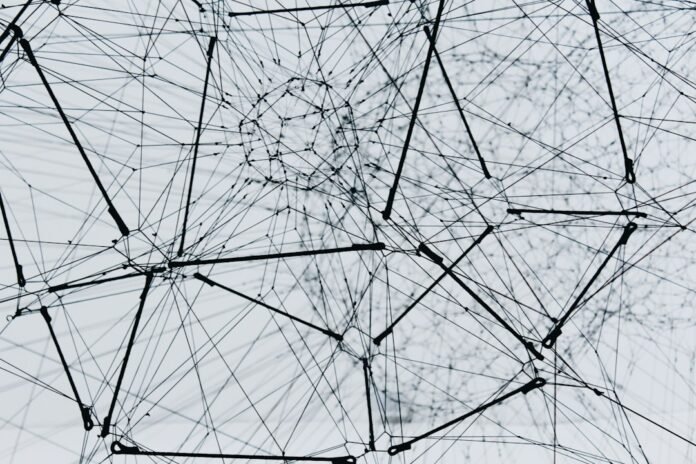
The world is fundamentally relational — people belong to organisations, drugs bind to proteins, transactions connect accounts, products share suppliers. Relational databases model some of these connections through foreign keys and join tables, but they are designed for rectangular, schema-rigid data, not for the fluid, multi-hop relational queries that knowledge work requires. Knowledge graphs represent information as it actually is: a network of entities with typed, directional relationships between them, stored in a structure optimised for traversal, pattern matching, and inference. From Google’s Knowledge Panel to clinical decision support systems to financial crime networks, knowledge graphs are operational infrastructure in the most knowledge-intensive domains. This guide covers the graph data model, knowledge graph construction, graph database querying with Cypher, knowledge graph embeddings for link prediction, and the integration of knowledge graphs with modern LLM-based retrieval systems.
The Graph Data Model — Nodes, Edges and Properties
A knowledge graph is a directed, labelled, property graph in which: nodes (vertices) represent entities — people, organisations, products, concepts, events; edges (relationships) connect pairs of nodes and carry a type label — WORKS_AT, PURCHASED, INHIBITS, LOCATED_IN; and both nodes and edges can carry properties (key-value attributes). The triple (subject, predicate, object) is the fundamental unit of information: (Ada_Lovelace, BORN_IN, London), (London, CAPITAL_OF, United_Kingdom), (XGBoost, IS_A, GradientBoostingAlgorithm). A connected chain of such triples forms a path that encodes complex, multi-hop facts — (Drug_A, INHIBITS, Protein_B, EXPRESSED_IN, Tissue_C, ASSOCIATED_WITH, Disease_D) — which cannot be efficiently queried in a relational model without expensive multi-way joins.
The W3C standard for knowledge graph interchange is RDF (Resource Description Framework), where nodes and edge types are identified by IRIs (Internationalized Resource Identifiers), enabling knowledge graphs from different sources to be merged and queried together. SPARQL is the standard query language for RDF graphs, analogous to SQL for relational databases. Property graphs (the model used by Neo4j, TigerGraph, and Amazon Neptune) are a more pragmatic variant that trades RDF’s formal semantics for easier schema design and more expressive queries via the Cypher and Gremlin query languages. The choice between RDF and property graphs depends on whether cross-system interoperability (RDF) or developer experience and query expressiveness (property graph) is the priority.
| Graph Database | Data Model | Query Language | Strengths | Best For |
|---|---|---|---|---|
| Neo4j | Property graph | Cypher | Mature ecosystem, excellent tooling | General KG, fraud detection, recommendations |
| Amazon Neptune | RDF + property graph | SPARQL + Gremlin | Managed cloud, dual model support | AWS-native enterprise KGs |
| TigerGraph | Property graph | GSQL | Fastest for deep multi-hop traversal | Real-time analytics, large graphs |
| Weaviate | Vector + graph hybrid | GraphQL + vector search | Semantic search over KG | RAG with structured knowledge |
| Stardog | RDF + ontology (OWL) | SPARQL + SHACL | Reasoning, ontology validation | Enterprise data integration, compliance |
| Memgraph | Property graph | Cypher | In-memory, streaming graph analytics | Real-time graph ML, streaming KGs |
Querying Knowledge Graphs with Cypher
Cypher (Neo4j’s query language, now standardised as GQL under ISO) uses ASCII-art pattern syntax to express graph traversal queries in a readable, declarative form. A node is written as (n:Label {property: value}), a relationship as -[:TYPE]->, and a path as (a)-[:REL1]->(b)-[:REL2]->(c). This visual syntax makes complex multi-hop queries far more readable than equivalent SQL with multiple joins. Consider finding all colleagues of a person’s direct reports who have relevant skills for a project — in Cypher, this is a natural three-hop traversal written in a handful of lines; in SQL, it requires nested CTEs or recursive queries that few data scientists write fluently. The graph traversal capability is the key differentiator of graph databases for graph-structured problems like social network analysis, supply chain tracing, and fraud ring detection.
For fraud detection specifically, knowledge graphs catch patterns that are invisible in isolated record analysis. A fraudster who uses the same device, IP address, and phone number across multiple seemingly unrelated accounts creates a graph pattern — a cluster of accounts connected through shared identifiers — that is immediately visible in a graph traversal but requires complex self-join SQL queries to find. Our anomaly detection guide covers the unsupervised graph-based approaches (community detection, centrality anomalies) that complement supervised fraud models. Our Graph Neural Networks guide covers how GNNs apply deep learning to graph-structured data, learning representations that encode both node features and neighbourhood structure — a direct extension of knowledge graph reasoning with neural networks.
Knowledge Graph Embeddings and Link Prediction
Knowledge graphs in practice are always incomplete — no knowledge graph captures all true relationships between entities, and many true relationships are simply not yet recorded. Link prediction — inferring missing relationships from the graph structure — is one of the most important ML tasks on knowledge graphs. Knowledge graph embedding methods learn dense vector representations of entities and relations such that true triples score higher than false triples, enabling the model to predict missing links by scoring unobserved entity-relation pairs.
TransE (Bordes et al., 2013) is the simplest and most intuitive embedding model: it represents a relation as a translation in entity space, such that h + r ≈ t for true triples (head entity h, relation r, tail entity t). TransE works well for one-to-one relations but struggles with one-to-many, many-to-one, and symmetric relations. RotatE (Sun et al., 2019) represents relations as rotations in complex space, naturally handling symmetry, antisymmetry, inversion, and composition patterns. ComplEx uses complex-valued embeddings that handle asymmetric relations by modelling them as Hermitian inner products. The mathematical foundation — embedding entities into vector spaces and using distance/similarity metrics to score triples — directly parallels the word embedding methods (word2vec, GloVe) and the matrix factorisation techniques used in recommendation systems. In fact, collaborative filtering can be viewed as a special case of knowledge graph link prediction over the bipartite user-item graph.
In pharmaceutical and biomedical applications, knowledge graph link prediction is used for drug repurposing (predicting new therapeutic uses for existing drugs), side-effect prediction (predicting adverse drug-drug interactions), and target identification (predicting which proteins a new compound will bind to). The Hetionet knowledge graph — connecting drugs, diseases, genes, pathways, and anatomical structures through millions of typed edges — is a standard benchmark for biomedical link prediction. These applications connect knowledge graphs to the Graph Neural Network methods that achieve state-of-the-art link prediction performance by learning from both entity features and graph topology simultaneously.
Knowledge Graphs and Retrieval-Augmented Generation

The integration of knowledge graphs with large language models is one of the most active areas of applied AI in 2026. Standard RAG pipelines retrieve relevant document chunks using vector similarity search and pass them as context to the LLM generator. Knowledge graph-augmented RAG (GraphRAG) adds structured graph traversal: for a query about a drug’s interactions, the system both retrieves semantically similar passages via vector search and traverses the knowledge graph to retrieve all known drug-protein-disease relationships for that drug. The structured graph facts provide precise, reliable relational information that vector retrieval over text may miss or confabulate, while the retrieved passages provide natural language context and explanation. Microsoft’s GraphRAG (2024) demonstrated that graph-augmented retrieval substantially outperforms standard RAG on queries that require reasoning over multiple connected entities — the kind of multi-hop relational question that is common in enterprise knowledge work.
Building a domain-specific knowledge graph for RAG requires: (1) entity extraction — identifying named entities in documents using NER models; (2) relation extraction — identifying typed relationships between entities using relation extraction models (a sub-task covered in our NLP pipeline guide); (3) entity resolution — merging references to the same real-world entity across documents (Einstein and Albert Einstein are the same node); and (4) ontology alignment — mapping extracted entities and relations to a standard schema. This pipeline connects to the full data engineering and ETL pipeline infrastructure for graph construction and maintenance at scale.
✦ SUMMARIZE THIS ARTICLE WITH AI
 ChatGPT
Graph Neural Networks — the deep learning counterpart to knowledge graph embeddings for graph-structured data — are in our Graph Neural Networks guide. Recommendation systems using matrix factorisation — closely related to KG link prediction — are in our Recommendation Systems guide. Word embeddings — mathematically analogous to KG entity embeddings — are in our Word Embeddings guide. RAG pipelines that knowledge graphs augment are in our Generative AI guide. NLP entity extraction and relation extraction used to build KGs from text are in our NLP Pipeline and NLP Applications guides.