
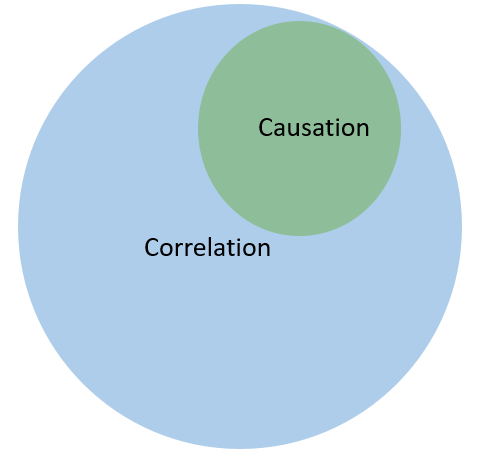
Data analysis often focuses on identifying relationships between variables. These relationships guide decisions in business, healthcare, public policy, and technology.
However, misunderstanding relationships can lead to flawed conclusions. Distinguishing between association and cause is essential for accurate reasoning and responsible decision-making.
Introduction to Causation and Correlation
Causation and correlation describe different types of relationships between variables.
While correlation measures association, causation implies a direct cause-and-effect relationship. Confusing the two is one of the most common analytical errors.
Understanding this distinction is foundational for data literacy.
What Is Correlation
Correlation refers to a statistical relationship between two variables. When one variable changes, the other tends to change as well.
Correlation does not indicate why the relationship exists. It only describes how variables move together.
Types of Correlation
Correlation can be classified into several types.
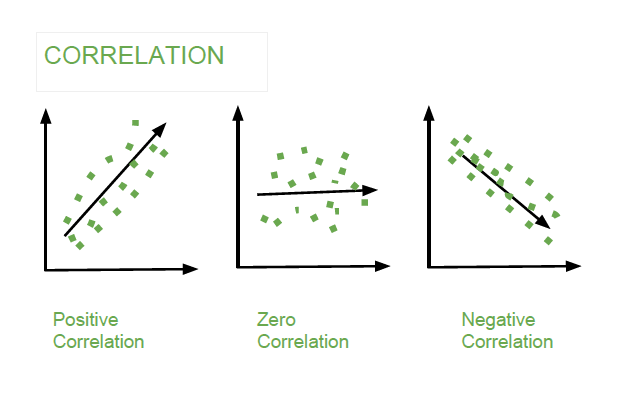
- Positive correlation where variables increase together
- Negative correlation where one variable increases as the other decreases
- Zero correlation where no consistent relationship exists
Correlation strength varies from weak to strong.
What Is Causation
Causation exists when a change in one variable directly produces a change in another.
A causal relationship implies that manipulating one variable will reliably influence the outcome of another.
Causation is stronger and more difficult to establish than correlation.
Causation Correlation Differences Explained
The key difference lies in interpretation.
- Correlation measures association
- Causation explains mechanism
- Correlation can exist without causation
- Causation implies correlation, but not always visibly
Understanding this distinction prevents misleading conclusions.
Why Causation Does Not Equal Correlation
The phrase causation does not equal correlation highlights a fundamental principle in data analysis.
Just because two variables move together does not mean one causes the other. Many correlated relationships are coincidental or influenced by other factors.
This principle protects analysts from drawing false causal claims.
Common Misinterpretations of Correlation
Misinterpretations often arise due to cognitive bias.
Common errors include:
- Assuming correlation implies cause
- Ignoring confounding variables
- Overlooking directionality
- Failing to test alternative explanations
Awareness of these pitfalls is essential.
Historical Background of Causation and Correlation
The distinction between causation and correlation has been debated for centuries in philosophy and science.
Early thinkers recognized that observing two events together does not automatically explain why they occur together. This realization laid the groundwork for modern statistical reasoning and scientific experimentation.
The formal treatment of correlation emerged with the development of statistics, while causation became central to scientific methodology.
Philosophical Perspective on Causation
Causation is not only a statistical concept but also a philosophical one.
Philosophers have long questioned:
- What does it mean for one event to cause another
- Whether causation can be observed directly
- How certainty in causal claims can be achieved
These debates influence how modern researchers interpret empirical evidence.
Correlation as a Descriptive Tool
Correlation is primarily descriptive.
It helps analysts:
- Identify patterns
- Detect associations
- Generate hypotheses
However, correlation alone cannot confirm mechanisms or predict outcomes under intervention.
This makes correlation a starting point, not a conclusion.
Causation as an Explanatory Concept
Causation seeks explanation rather than description.
A causal relationship answers:
- What happens if we intervene
- Why a change occurs
- How effects propagate
This explanatory power makes causation essential in policy-making and scientific research.
Temporal Order in Causal Reasoning
One key requirement for causation is temporal order.
The cause must occur before the effect. If this condition is violated, the causal claim is invalid.
Time-based reasoning helps eliminate many incorrect causal assumptions.
Counterfactual Thinking in Causal Inference
Causal inference relies heavily on counterfactuals.
A counterfactual asks:
What would have happened if the cause had not occurred?
Since counterfactuals cannot be observed directly, statistical methods approximate them using comparison groups.
Role of Control Groups in Establishing Causation
Control groups are fundamental to causal analysis.
They provide a baseline against which outcomes can be compared. Without a control group, it is difficult to separate cause from coincidence.
Randomized experiments use control groups to isolate causal effects.
Natural Experiments and Causation
When controlled experiments are impractical, natural experiments offer alternatives.
Natural experiments exploit external events that mimic random assignment. These scenarios allow analysts to infer causation from observational data under specific conditions.
Causation and Correlation in Economics
Economics heavily relies on causal inference.
Economists use causation to understand:
- Policy impact
- Market behavior
- Incentive structures
Correlation alone is insufficient for economic decision-making.
Causation and Correlation in Healthcare Research
Medical research depends on distinguishing correlation from causation.
Treatments must be proven to cause improvement, not merely be associated with recovery. Incorrect causal assumptions can lead to harmful interventions.
Clinical trials are designed to address this challenge.
Causation and Correlation in Education Analytics
Educational data often reveals correlations between variables such as study time and performance.
However, causation must be established before implementing policy changes. Confounders like socioeconomic background can influence both variables.
Causation and Correlation in Marketing Analytics
Marketing teams frequently analyze customer behavior.
Correlation might suggest that certain campaigns align with increased sales, but causation must be tested to justify investment decisions.
Controlled experiments such as A/B testing help confirm causal effects.
Role of Visualization in Understanding Relationships
Visualizations play a critical role in identifying correlation.
Scatter plots, line charts, and heatmaps reveal patterns, but they do not prove causation. Visual tools must be combined with statistical reasoning.
Simpson’s Paradox and Its Implications
Simpson’s paradox occurs when a trend appears in aggregated data but reverses when data is segmented.
This phenomenon highlights the dangers of drawing causal conclusions without considering underlying group structures.
Mediation and Moderation Effects
Causal relationships are often complex.
- Mediators explain how a cause affects an outcome
- Moderators influence the strength or direction of a relationship
Understanding these effects provides deeper causal insight.
Limitations of Causal Inference
Causal inference relies on assumptions that may not always hold.
Limitations include:
- Unobserved confounders
- Measurement error
- Model misspecification
Transparency about limitations is essential.
Ethical Implications of Misinterpreting Causation
Incorrect causal claims can have serious ethical consequences.
Examples include:
- Misguided public policies
- Ineffective medical treatments
- Biased automated decision systems
Responsible analysis requires caution and humility.
Causation and Correlation in Artificial Intelligence
AI systems often rely on correlation for prediction.
However, causal understanding is increasingly important to:
- Improve robustness
- Prevent bias
- Enhance explainability
Causal AI is an emerging research area.
Building Causal Thinking Skills
Developing causal reasoning requires practice.
Recommended steps include:
- Question assumptions
- Look for alternative explanations
- Seek experimental evidence
- Understand domain context
These habits strengthen analytical judgment.
Long-Term Importance of Causal Literacy
As data becomes more influential in society, causal literacy becomes essential.
Decision-makers must distinguish between patterns and causes to avoid harmful conclusions and build trustworthy systems.
Real-World Example in Public Health
Ice cream sales and drowning incidents often show a strong correlation.
However, ice cream consumption does not cause drowning. The hidden variable is temperature, which influences both swimming activity and ice cream sales.
This example illustrates why correlation alone is insufficient.
Real-World Example in Business Analytics
A company may observe that higher marketing spend correlates with increased sales.
However, without careful analysis, it is unclear whether marketing caused the increase or whether demand was already rising.
Business decisions based solely on correlation can lead to inefficient spending.
Real-World Example in Social Media Data
Posts with higher engagement may correlate with posting frequency.
This does not necessarily mean frequent posting causes engagement. Content quality, timing, and audience behavior may be influencing both variables.
Spurious Correlation and Hidden Variables
Spurious correlations occur when two unrelated variables appear correlated due to coincidence or shared influence.
Hidden variables can create misleading associations that disappear when properly controlled.
Recognizing spurious correlation is a key analytical skill.
Confounding Factors Explained
A confounding factor influences both the independent and dependent variables.
If not controlled, confounders distort conclusions and create false causal interpretations.
Identifying and adjusting for confounders is central to causal analysis.
Directionality and Reverse Causation
Directionality matters in causal reasoning.
Sometimes the assumed cause is actually the effect. This is known as reverse causation.
Clarifying directionality requires careful study design.
Introduction to Causal Inference
Causal inference is a set of methods used to determine cause-and-effect relationships from data.
Unlike traditional correlation analysis, causal inference focuses on understanding what would happen if conditions were changed.
This field bridges statistics, economics, and data science.
Methods Used in Causal Inference
Several methods are commonly used.
- Randomized experiments
- Controlled trials
- Matching techniques
- Instrumental variables
- Regression adjustments
Each method addresses different causal challenges.
Experiments and Randomized Control Trials
Randomized control trials are the gold standard for establishing causation.
Random assignment eliminates confounding variables and allows clear causal conclusions.
However, experiments are not always feasible or ethical.
Observational Data and Its Challenges
Most real-world data is observational.
Observational data lacks randomization, making causal inference more complex. Analysts must rely on statistical controls and assumptions.
Careful methodology is required to avoid bias.
Causal Inference in Machine Learning
Machine learning models often focus on prediction rather than explanation.
However, causal inference is increasingly integrated into ML to ensure decisions are fair, interpretable, and robust.
This is especially important in healthcare, finance, and policy systems.
Causation and Correlation in Data Science
Data scientists must balance correlation-based modeling with causal reasoning.
Predictive accuracy alone is insufficient when decisions affect real outcomes.
Understanding causation improves trust and accountability.
How to Identify Potential Causal Relationships
Identifying causation requires structured thinking.
Key questions include:
- Is there a plausible mechanism
- Are confounders controlled
- Does the relationship persist across conditions
- Can intervention change the outcome
Positive answers strengthen causal claims.
Practical Guidelines for Analysts
Best practices include:
- Never assume correlation implies causation
- Validate findings using multiple methods
- Document assumptions clearly
- Use experiments when possible
- Communicate uncertainty transparently
These guidelines support responsible analysis.
Common Mistakes to Avoid
Avoid these frequent errors:
- Overinterpreting correlations
- Ignoring external context
- Confusing prediction with explanation
- Drawing conclusions from limited data
Avoiding these mistakes improves analytical quality.
Final Thoughts and Key Takeaways
Causation and correlation represent fundamentally different ideas. Correlation identifies patterns, while causation explains why those patterns occur.
Understanding the difference is essential for accurate data interpretation, ethical decision-making, and meaningful insights. By applying causal inference principles and avoiding common pitfalls, analysts can move beyond surface-level patterns toward true understanding.
FAQ’s
How do you explain correlation and causation?
Correlation means two variables move together, while causation means one directly causes the other—highlighting that correlation does not always imply causation.
What are the 4 criteria for causation?
The four key criteria for causation are temporality (cause comes before effect), strength of association, consistency across studies, and plausibility, indicating a logical and scientific explanation for the relationship.
What is the concept of correlation?
Correlation describes the statistical relationship between two variables, indicating how strongly and in what direction they move together, without implying causation.
Why do people often confuse correlation and causation?
People often confuse correlation and causation because variables that move together appear connected, making it easy to assume one causes the other without considering hidden factors or coincidence.
What is an example of correlation but not causation?
Ice cream sales and drowning incidents often rise together in summer, but buying ice cream does not cause drowning—warm weather is the hidden factor affecting both.