
Artificial Intelligence has transformed how machines understand and generate human language. From chatbots to search engines, modern systems rely on complex models to process text data efficiently.
One of the most important metrics used to evaluate these models is perplexity.
Understanding perplexity helps data scientists and machine learning engineers assess how well a language model predicts text and improves overall performance.
What is Perplexity?
Perplexity is a measurement used in natural language processing to evaluate how well a probability model predicts a sample.
In simple terms:
Perplexity measures how “confused” a model is when predicting the next word.
Key idea:
- Lower perplexity = better model
- Higher perplexity = poor predictions
Why Perplexity Matters in AI
Perplexity plays a critical role in evaluating language models.
Importance:
- Measures prediction accuracy indirectly
- Helps compare different models
- Guides model optimization
Applications:
- Chatbots
- Text generation
- Machine translation
- Speech recognition
Mathematical Understanding of Perplexity
Perplexity is calculated using probability distributions.
Formula:
Perplexity = 2^(-log probability)
Or more commonly:
Perplexity = exp(-1/N * sum of log probabilities)
Explanation:
- N = number of words
- Log probability = likelihood of predictions
Perplexity in Language Models
Language models use perplexity to evaluate performance.
Example:
If a model predicts the next word in a sentence:
“The cat is ___”
- Good prediction: “sleeping”
- Poor prediction: random word
Lower perplexity indicates better prediction capability.
Real-Time Examples of Perplexity
Example 1: Chatbots
A chatbot with low perplexity generates meaningful responses.
Example 2: Text Autocomplete
Search engines use perplexity to improve suggestions.
Example 3: Machine Translation
Lower perplexity leads to more accurate translations.
Perplexity vs Accuracy
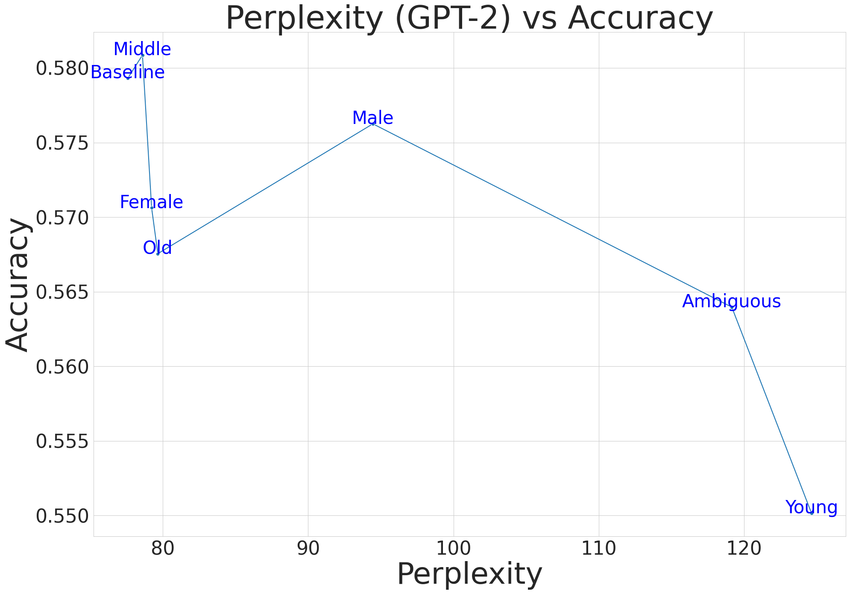
Perplexity:
- Measures probability
- Focuses on uncertainty
Accuracy:
- Measures correctness
- Binary evaluation
Key Difference:
Perplexity evaluates model confidence, not just correctness.
Perplexity in NLP Applications
Applications include:
- Language modeling
- Text summarization
- Speech recognition
- Predictive typing
Factors Affecting Perplexity
Key factors:
- Data quality
- Model architecture
- Training size
- Vocabulary complexity
Cross-Entropy and Its Relationship with Perplexity
Perplexity is directly derived from cross-entropy, a key concept in machine learning.
What is Cross-Entropy?
Cross-entropy measures the difference between the predicted probability distribution and the actual distribution.
Relationship:
- Lower cross-entropy → Lower perplexity
- Higher cross-entropy → Higher perplexity
Formula Connection:
Perplexity = exp(cross-entropy)
Why This Matters:
Understanding cross-entropy helps interpret perplexity more effectively in model evaluation.
Perplexity in N-Gram Models
Before modern deep learning models, n-gram models were widely used.
How It Works:
- Predict next word based on previous words
- Example: bigram (2 words), trigram (3 words)
Role of Perplexity:
- Measures how well n-gram models predict sequences
- Helps compare different n-gram configurations
Perplexity in Transformer Models
Modern AI models like transformers rely heavily on perplexity.
Key Features:
- Context-aware predictions
- Attention mechanisms
Why Perplexity is Important:
- Evaluates large language models
- Tracks training progress
Perplexity During Training vs Evaluation
Perplexity behaves differently during model development.
Training Phase:
- Gradually decreases
- Indicates learning progress
Validation Phase:
- Helps detect overfitting
Key Insight:
If training perplexity decreases but validation perplexity increases, the model is overfitting.
Perplexity and Tokenization
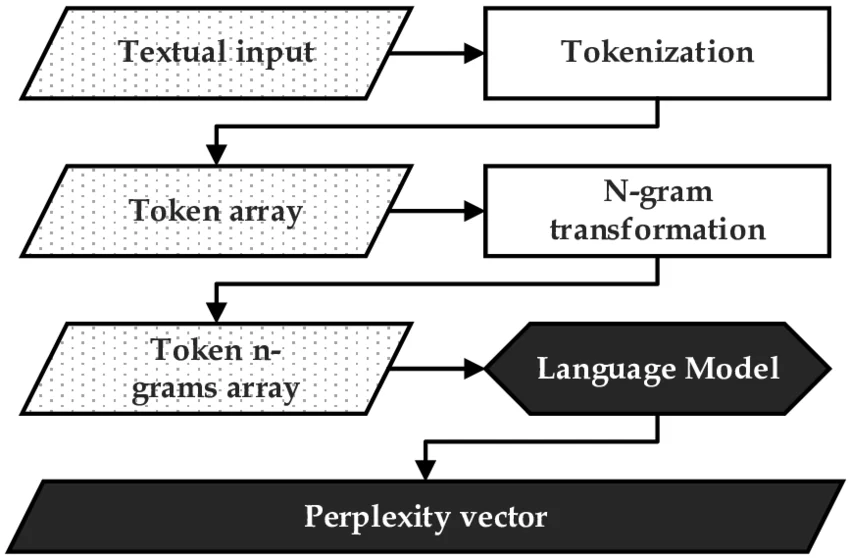
Tokenization affects perplexity significantly.
Types:
- Word-level tokens
- Subword tokens
- Character-level tokens
Impact:
- Smaller tokens → Lower perplexity
- Larger tokens → Higher perplexity
Perplexity in Multilingual Models
Perplexity varies across languages.
Challenges:
- Different grammar structures
- Vocabulary size
- Data availability
Example:
A model trained on English may show higher perplexity on less-resourced languages.
Benchmarking Models Using Perplexity
Perplexity is widely used in benchmarking.
Example:
Comparing two models:
- Model A: Perplexity = 20
- Model B: Perplexity = 15
Model B performs better.
Perplexity in Generative AI Systems
Generative AI models depend on perplexity for optimization.
Applications:
- Text generation
- Code generation
- Content creation
Insight:
Lower perplexity improves coherence and fluency.
Perplexity vs BLEU Score
Another evaluation metric in NLP.
Perplexity:
- Measures probability
- Model-based
BLEU Score:
- Measures similarity to reference text
- Output-based
Use Together:
Combining both gives better evaluation.
Perplexity in Speech Recognition
Speech systems convert audio into text.
Role:
- Evaluates language model predictions
- Improves transcription accuracy
Impact of Dataset Size on Perplexity
Observation:
- Larger datasets → Lower perplexity
- Smaller datasets → Higher perplexity
Reason:
More data improves learning and prediction accuracy.
Perplexity and Vocabulary Size Trade-Off
Trade-Off:
- Large vocabulary → Higher complexity
- Small vocabulary → Simpler model
Balance:
Choose optimal vocabulary size to minimize perplexity.
Fine-Tuning Models to Reduce Perplexity
Fine-tuning improves model performance.
Steps:
- Use domain-specific data
- Adjust hyperparameters
- Train for additional epochs
Perplexity Monitoring in Production Systems
In real-world systems, monitoring is essential.
Why Monitor:
- Detect model degradation
- Maintain performance
Tools:
- Logging systems
- Monitoring dashboards
Perplexity in Conversational AI
Chatbots and assistants rely on perplexity.
Role:
- Ensures meaningful responses
- Improves conversation quality
Perplexity and Context Length
Context length affects predictions.
Insight:
- Longer context → Better predictions
- Short context → Higher perplexity
Perplexity in Code Generation Models
AI models generate code using NLP techniques.
Example:
- Auto-completion tools
- Coding assistants
Lower perplexity leads to more accurate code suggestions.
Hyperparameter Tuning for Perplexity Optimization
Key parameters:
- Learning rate
- Batch size
- Model depth
Proper tuning reduces perplexity.
Perplexity in Real-Time Applications
Examples:
- Chatbots
- Recommendation systems
- Virtual assistants
Real-time systems require low perplexity for better performance.
Combining Perplexity with Other Metrics
For better evaluation:
- Accuracy
- Precision
- Recall
- F1 Score
Perplexity Visualization Techniques
Visualizing helps understanding.
Methods:
- Training curves
- Graphs
- Dashboards
Common Misinterpretations of Perplexity
Mistakes:
- Assuming lower perplexity always means better output
- Ignoring context and semantics
Practical Implementation Example
Python Example:
import torch
import math
loss = 2.5
perplexity = math.exp(loss)
print(perplexity)
Industry Use Cases of Perplexity
Industries:
- Technology
- Healthcare
- Finance
- E-commerce
Perplexity in AI Research
Researchers use perplexity for:
- Model comparison
- Algorithm evaluation
- Performance benchmarking
Advanced Optimization Techniques
Techniques:
- Transfer learning
- Regularization
- Dropout
Ethical Considerations in Model Evaluation
Evaluation metrics impact decisions.
Considerations:
- Bias detection
- Fair evaluation
- Transparency
Scaling Models and Perplexity
Larger models often achieve lower perplexity.
Trade-Off:
- Better performance
- Higher computational cost
Here is ultra-advanced, expert-level additional content you can append to your Perplexity blog to make it truly research-grade, enterprise-level, and highly authoritative. This goes beyond standard explanations into modern LLM evaluation, scaling laws, optimization strategies, and real-world deployment insights.
Perplexity and Information Theory Foundations
Perplexity is deeply rooted in information theory.
Core Concept:
Perplexity measures the uncertainty of a probability distribution.
It is directly linked to:
- Entropy
- Cross-entropy
- Information gain
Interpretation:
- Lower perplexity = less uncertainty
- Higher perplexity = more randomness
Insight:
Perplexity can be seen as the effective branching factor of a model when predicting the next token.
Scaling Laws and Perplexity in Large Language Models
Modern AI research shows that perplexity follows predictable scaling laws.
Key Insight:
As model size, data, and compute increase:
- Perplexity decreases systematically
- Performance improves
Scaling Law Equation:
Loss ∝ (Model Size)^-α
Practical Meaning:
- Bigger models + more data = better predictions
- But with diminishing returns
Perplexity and Zero-Shot / Few-Shot Learning
Large models perform tasks without explicit training.
Observation:
- Lower perplexity often correlates with better zero-shot performance
Example:
A model with lower perplexity can:
- Answer questions
- Translate languages
- Summarize text
Without task-specific training.
Calibration of Language Models Using Perplexity
Perplexity helps evaluate model calibration.
Calibration Meaning:
How well predicted probabilities match actual outcomes.
Issue:
Models may have:
- Low perplexity
- But poor calibration
Solution:
- Temperature scaling
- Probability normalization
Perplexity in Reinforcement Learning from Human Feedback (RLHF)
Modern AI systems use RLHF for alignment.
Role of Perplexity:
- Initial training uses perplexity minimization
- RLHF adjusts behavior beyond perplexity
Key Insight:
Perplexity alone cannot capture:
- Helpfulness
- Safety
- Alignment
Domain-Specific Perplexity Optimization
Perplexity varies across domains.
Examples:
- Medical text → specialized vocabulary
- Legal documents → complex structure
- Financial reports → numerical context
Strategy:
Fine-tune models on domain-specific data to reduce perplexity.
Perplexity Drift in Production Systems
Models degrade over time.
Causes:
- Changing data patterns
- New vocabulary
- User behavior shifts
Solution:
- Continuous monitoring
- Periodic retraining
Token-Level vs Sequence-Level Perplexity
Token-Level:
- Measures prediction per word/token
Sequence-Level:
- Measures entire sentence probability
Insight:
Both provide different perspectives on model performance.
Perplexity in Autoregressive vs Masked Models
Different architectures use perplexity differently.
Autoregressive Models:
- Predict next token
- Use perplexity directly
Masked Models:
- Predict missing tokens
- Use modified evaluation metrics
Perplexity and Compression Theory
Perplexity is related to data compression.
Key Idea:
Better language models compress data more efficiently.
Interpretation:
- Lower perplexity = better compression
- Model captures patterns effectively
Sparse vs Dense Models and Perplexity
Modern AI uses different architectures.
Dense Models:
- All parameters active
- Lower perplexity
Sparse Models:
- Selectively activated
- Efficient but complex
Perplexity in Retrieval-Augmented Generation (RAG)
RAG combines retrieval and generation.
Impact on Perplexity:
- External knowledge reduces uncertainty
- Improves predictions
Result:
Lower perplexity with better factual accuracy.
Perplexity in Multimodal AI Systems
AI now processes text, images, and audio.
Challenge:
Perplexity is primarily text-based.
Adaptation:
- Multimodal evaluation metrics
- Hybrid approaches
Perplexity and Long-Context Models
Modern models process long documents.
Observation:
- Longer context reduces perplexity
- Better coherence
Challenge:
- Computational cost increases
Perplexity Optimization Using Curriculum Learning
Curriculum learning improves training.
Approach:
- Start with simple data
- Gradually increase complexity
Result:
- Faster convergence
- Lower perplexity
Gradient-Based Optimization for Perplexity Reduction
Training minimizes loss related to perplexity.
Techniques:
- Gradient descent
- Adam optimizer
- Learning rate scheduling
Perplexity in Edge AI and Lightweight Models
Edge devices require efficient models.
Trade-Off:
- Slightly higher perplexity
- Lower computational cost
Perplexity in Knowledge Distillation
Large models transfer knowledge to smaller ones.
Goal:
- Reduce model size
- Maintain low perplexity
Perplexity in Streaming Data Systems
Real-time systems process continuous data.
Challenge:
- Data evolves constantly
Solution:
- Online learning
- Adaptive models
Perplexity and Explainability
Perplexity does not explain decisions.
Limitation:
- Black-box metric
Solution:
Combine with:
- Attention visualization
- Feature importance
Adversarial Attacks and Perplexity
Models can be manipulated.
Observation:
Adversarial inputs increase perplexity.
Use Case:
- Detect malicious inputs
Perplexity in Synthetic Data Generation
AI generates training data.
Insight:
- Synthetic data quality affects perplexity
- Poor data increases uncertainty
Perplexity Thresholds in Production Systems
Organizations define thresholds.
Example:
- Acceptable perplexity range
- Alerts when exceeded
Perplexity in A/B Testing of Models
Compare multiple models.
Process:
- Deploy models
- Measure perplexity
- Select best performer
Hardware Acceleration and Perplexity Optimization
Modern AI uses:
- GPUs
- TPUs
Benefit:
- Faster training
- Lower perplexity achieved efficiently
Distributed Training and Perplexity
Large models train across multiple systems.
Advantage:
- Handle massive datasets
- Improve performance
Perplexity and Energy Efficiency
AI training consumes energy.
Insight:
- Lower perplexity often requires more compute
- Trade-off between efficiency and performance
Real-World Enterprise Case Study (Conceptual)
Scenario:
An e-commerce company improves search recommendations.
Approach:
- Train language model
- Reduce perplexity
Result:
- Better product suggestions
- Increased conversions
Combining Perplexity with Human Evaluation
Human feedback remains essential.
Why:
- Perplexity cannot capture meaning fully
Approach:
- Hybrid evaluation systems
Research Trends in Perplexity Optimization
Current Trends:
- Efficient transformers
- Retrieval-based models
- Hybrid evaluation metrics
Future Alternatives to Perplexity
New metrics are emerging.
Examples:
- Semantic similarity metrics
- Human evaluation
Advantages of Using Perplexity
Benefits:
- Easy to compute
- Widely used metric
- Helps model comparison
Limitations of Perplexity
Drawbacks:
- Does not measure semantic meaning
- Can be misleading
- Depends on dataset
How to Improve Perplexity
Strategies:
- Increase training data
- Optimize model parameters
- Use better architectures
- Clean dataset
Tools and Libraries for Measuring Perplexity
Popular tools:
- Python NLP libraries
- TensorFlow
- PyTorch
Perplexity in Modern AI Systems
Modern AI systems rely heavily on perplexity.
Use cases:
- Generative AI
- Conversational AI
- Large language models
Future of Perplexity
Future developments include:
- Better evaluation metrics
- Integration with AI tools
- Improved model benchmarking
Conclusion
Perplexity is a fundamental metric in natural language processing that helps evaluate how well a language model predicts text.
While it has limitations, it remains a widely used and valuable tool for improving AI systems.
Understanding perplexity enables professionals to build better models, improve predictions, and enhance overall AI performance.
FAQ’s
Is Perplexity a powerful AI?
Is Perplexity a powerful AI?
Perplexity is powered by a combination of its own models and top AI models from OpenAI, Anthropic, Google, and others, using a smart routing system to choose the best model for each query.
What models power Perplexity?
Perplexity is powered by a multi-model system combining its own Sonar models with top AI models like GPT, Claude, Gemini, and Grok, selecting the best model dynamically for each query.
What is a high Perplexity?
High perplexity refers to a situation where a language model is uncertain and less confident in its predictions, indicating lower accuracy and poorer performance in understanding or generating text.
Which AI does Elon Musk use?
Elon Musk mainly uses Grok AI by xAI, his own AI model, which powers features on X and supports his broader AI ecosystem.
How much did Jeff Bezos invest in Perplexity AI?
Elon Musk mainly uses Grok AI by xAI, his own AI model, which powers features on X and supports his broader AI ecosystem.