
Modern machine learning models rely heavily on optimization techniques. Whether training a simple linear regression model or a deep neural network with millions of parameters, optimization determines how effectively the model learns from data.
At the heart of this learning process lies gradient descent, a mathematical optimization method used to minimize a loss function. It plays a central role in supervised learning, neural networks, and deep learning architectures.
What Is Gradient Descent
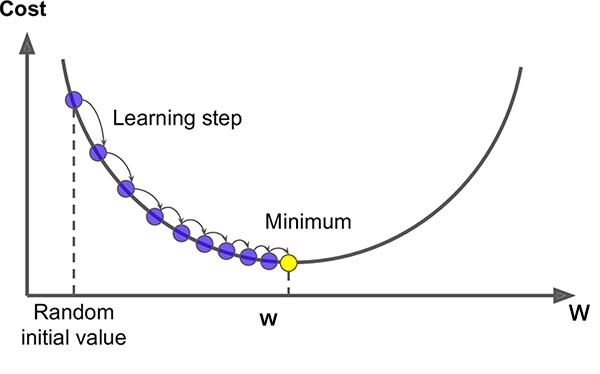
Gradient descent is an iterative optimization algorithm used to minimize a cost function by adjusting model parameters in the direction of the negative gradient.
In simple terms:
- A model makes predictions
- The error is calculated
- The gradient of the error is computed
- Parameters are updated
- The process repeats
The goal is to reach the lowest possible error.
Mathematical Intuition Behind Gradient Descent
Suppose we define a loss function:
J(θ) = (1/n) Σ (ŷ – y)²
Where:
- θ represents model parameters
- ŷ is predicted value
- y is actual value
The gradient represents the slope of the loss function with respect to θ.
Update rule:
θ = θ − α ∇J(θ)
Where:
- α is the learning rate
- ∇J(θ) is the gradient
This formula forms the foundation of the gradient descent algorithm.
How the Gradient Descent Algorithm Works
Step-by-step explanation:
- Initialize parameters randomly
- Compute predictions
- Calculate loss
- Compute gradient
- Update parameters
- Repeat until convergence
This iterative process gradually reduces model error.
Types of Gradient Descent
There are three main variants:
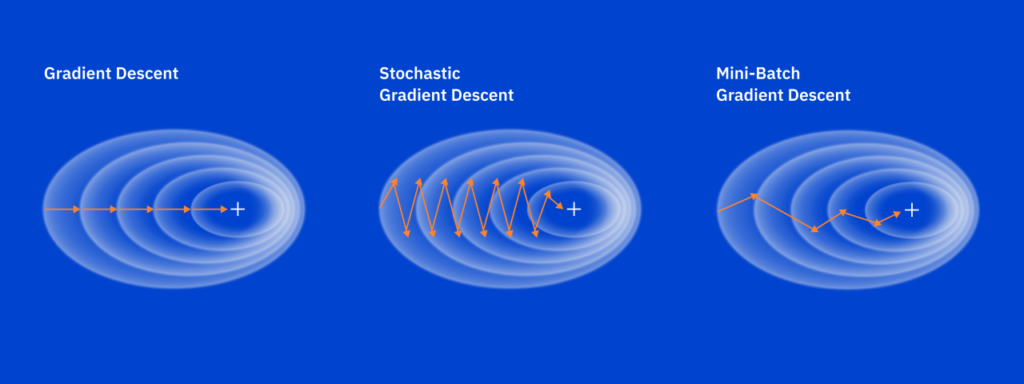
Batch Gradient Descent
- Uses entire dataset
- Stable convergence
- Computationally expensive
Stochastic Gradient Descent
- Updates parameters per data point
- Faster but noisier
- Useful for large datasets
Mini-Batch Gradient Descent
- Uses small subsets
- Balances stability and speed
- Most commonly used in deep learning
Learning Rate and Convergence
The learning rate determines step size during optimization.
If too high:
- Model overshoots minimum
- Divergence occurs
If too low:
- Slow convergence
- High computational cost
Choosing the right learning rate is critical for efficient gradient descent performance.
Gradient Descent in Linear Regression
Real-time example:
Suppose a company wants to predict house prices based on area.
Initial model predicts inaccurately.
Gradient descent:
- Calculates prediction error
- Adjusts slope and intercept
- Reduces mean squared error iteratively
After multiple iterations, the model converges to optimal parameters.
Gradient Descent in Logistic Regression
For classification problems:
Loss function becomes cross-entropy.
Gradient descent adjusts weights to minimize classification error.
Example:
A spam detection model learns to classify emails as spam or not spam using gradient-based optimization.
Gradient Networks and Backpropagation
In deep learning, gradient networks refer to neural networks trained using gradient descent combined with backpropagation.
Backpropagation:
- Computes gradients layer by layer
- Applies chain rule of calculus
- Updates weights efficiently
This enables training of:
- Convolutional Neural Networks
- Recurrent Neural Networks
- Transformer models
Mathematical Foundations of Gradient Descent
A deeper understanding of gradient descent requires examining its mathematical backbone. At its core, gradient descent solves optimization problems of the form:
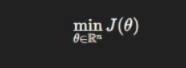
Where:
- θ represents model parameters
- J(θ) is the cost or loss function
The update rule is defined as:
θt+1=θt−α∇J(θt)
Where:
- α = learning rate
- ∇J(θt) = gradient vector
The gradient is a vector of partial derivatives:
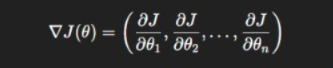
This vector points in the direction of steepest increase. Since we want to minimize the function, we subtract it.
Convex vs Non-Convex Optimization
Understanding convexity is critical in deep learning and gradient network optimization.
Convex Functions
A function is convex if:
J(λx+(1−λ)y)≤λJ(x)+(1−λ)J(y)
For convex functions:
- Only one global minimum exists
- Gradient descent guarantees convergence
Examples:
- Linear regression
- Logistic regression
Non-Convex Functions
Deep neural networks produce non-convex loss surfaces.
Characteristics:
- Multiple local minima
- Saddle points
- Flat regions
Modern gradient descent variants help escape saddle points using momentum and adaptive learning.
Saddle Points in Deep Gradient Networks
A saddle point is neither a local minimum nor maximum.
Example:
f(x,y)=x2−y2
Gradient equals zero at (0,0), but it is not a minimum.
In deep gradient networks:
- High-dimensional parameter space increases saddle probability
- Training can stall near these regions
- Momentum-based gradient descent helps overcome this
Learning Rate Schedules
Static learning rates often fail in real systems.
Advanced strategies:
Step Decay
Reduce learning rate after fixed intervals.
Example:
αt=α0⋅γ⌊t/k⌋
Exponential Decay
αt=α0e−λt
Cosine Annealing
Smooth cyclic learning rate decay.
Warm Restarts
Reset learning rate periodically to avoid sharp minima.
These methods improve convergence stability in gradient descent algorithm training pipelines.
Batch Size Impact on Gradient Descent
Batch size directly affects optimization behavior.
Small Batch Size
- Noisy gradients
- Better generalization
- Slower per-epoch performance
Large Batch Size
- Faster hardware utilization
- Risk of sharp minima
- Requires learning rate scaling
Real-world Example:
Training a transformer-based language model:
- Batch size = 32 → Better generalization
- Batch size = 1024 → Faster convergence but requires warmup
Gradient Descent in High-Dimensional Spaces
As dimensionality increases:
- Loss surfaces become complex
- Most critical points become saddle points
- Gradient norms may vanish
This is especially relevant in deep gradient network architectures with millions of parameters.
Gradient Vanishing and Exploding
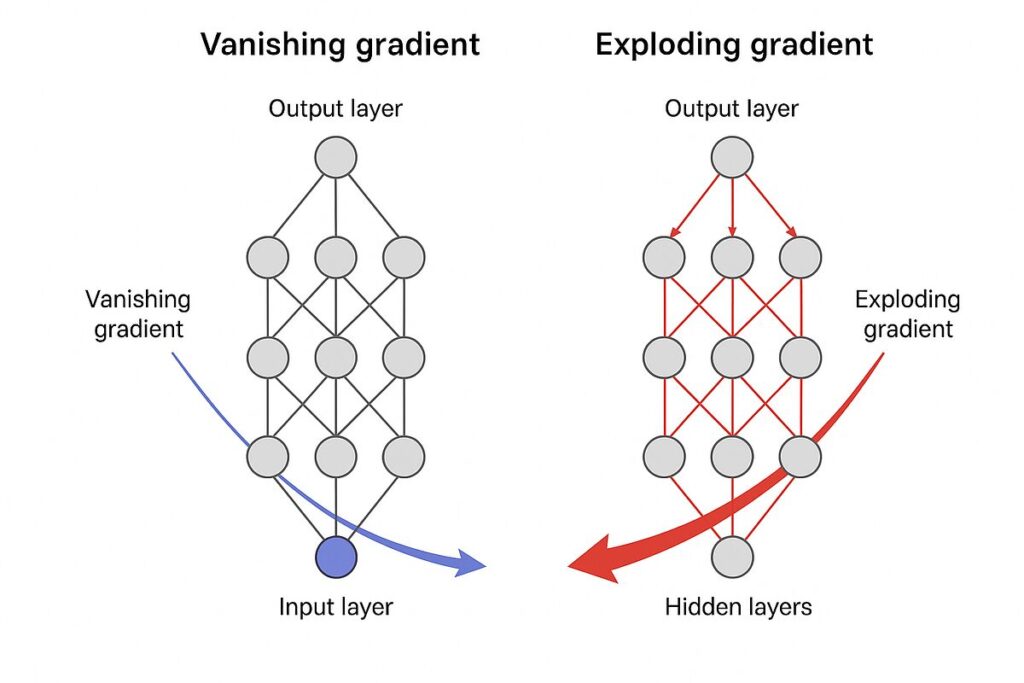
A fundamental challenge in deep networks.
Vanishing Gradient
Gradients shrink exponentially during backpropagation.
Occurs in:
- Sigmoid activation
- Tanh in deep layers
Solutions:
- ReLU activation
- Batch normalization
- Residual connections
Exploding Gradient
Gradients grow uncontrollably.
Solutions:
- Gradient clipping
- Proper initialization
- Normalization layers
Second-Order Optimization vs Gradient Descent
Gradient descent is a first-order method.
Second-order methods use Hessian matrix:
H=∂2J / ∂θ2
Newton’s method:
θt+1=θt−H−1∇J(θt)
Advantages:
- Faster convergence
Disadvantages:
- Expensive computation
- Not scalable for deep networks
Therefore, gradient descent remains the backbone of large-scale AI systems.
Gradient Descent in Reinforcement Learning
In reinforcement learning:
- Objective = maximize expected reward
- Uses policy gradient methods
Policy update:
θt+1=θt+α∇J(θt)
Applications:
- Autonomous vehicles
- Robotics control
- Game AI
This demonstrates how gradient networks learn dynamic decision systems.
Distributed Gradient Descent
Modern AI training uses distributed systems.
Data Parallelism
- Each worker computes gradients on subset
- Gradients averaged
Model Parallelism
- Model split across devices
Federated Learning
- Decentralized gradient updates
- Privacy-preserving
Example:
Google uses distributed gradient descent to train large language models.
Information Geometry and Gradient Descent
Traditional gradient descent assumes Euclidean geometry. However, in complex neural networks, parameter space behaves differently.
This leads to Natural Gradient Descent.
Instead of using the standard gradient:
θt+1=θt−α∇J(θt)
Natural gradient uses the Fisher Information Matrix (FIM):
θt+1=θt−αF−1∇J(θt)
Where:
- F represents curvature of probability distributions
- Updates respect information geometry
Why this matters:
- Faster convergence
- Better stability in deep probabilistic models
- Used in reinforcement learning and advanced Bayesian neural networks
Although computationally expensive, approximations such as K-FAC make it practical.
Lipschitz Continuity and Smoothness
For theoretical guarantees, the loss function must satisfy smoothness conditions.
A function is L-smooth if:
∣∣∇J(x)−∇J(y)∣∣≤L∣∣x−y∣∣
Where:
- L is the Lipschitz constant
This ensures gradients do not change abruptly.
In practice:
- Batch normalization improves smoothness
- Proper weight initialization ensures stable training
Smooth loss surfaces enable gradient descent to converge efficiently.
Initialization Strategies in Gradient Networks
Poor initialization can destroy training.
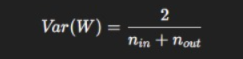
Xavier Initialization
Used for tanh activations:
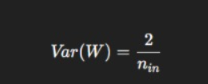
He Initialization
Used for ReLU:
Why initialization matters:
- Prevents vanishing gradients
- Stabilizes forward and backward passes
- Improves convergence speed
In deep gradient networks, improper initialization can lead to dead neurons.
Loss Landscape Analysis
Modern research visualizes neural network loss surfaces.
Key findings:
- Many local minima are equally good
- Sharp minima generalize worse
- Flat minima improve robustness
Sharpness is defined using Hessian eigenvalues.
Smaller eigenvalues indicate flatter minima.
Optimization methods such as stochastic gradient descent often find flatter solutions naturally.
Sharp vs Flat Minima in Production Systems
Real-world implication:
When training an image classification system:
- Sharp minima → High training accuracy but poor real-world performance
- Flat minima → Stable generalization
Batch size affects this:
- Smaller batches produce noisier updates
- Noise helps escape sharp minima
Adaptive Gradient Methods in Depth
AdaGrad
Adapts learning rate per parameter:
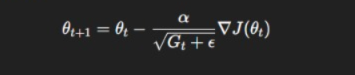
Good for sparse data.
RMSProp
Uses moving average of squared gradients.
Adam
Combines:
- Momentum
- RMSProp
Adam update rule:
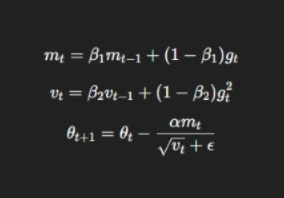
Used in:
- GPT models
- Transformer architectures
- Computer vision networks
Gradient Descent in Transformer Architectures
Large language models rely heavily on gradient descent optimization.
Training pipeline:
- Token embedding
- Multi-head attention
- Feed-forward layers
- Loss computation
- Backpropagation
- Parameter updates
Challenges:
- Billions of parameters
- Long training cycles
- Gradient instability
Solutions:
- Gradient clipping
- Mixed precision training
- Distributed gradient averaging
Mixed Precision Training
To accelerate gradient descent:
- Use float16 instead of float32
- Maintain master weights in higher precision
Benefits:
- Faster computation
- Reduced memory usage
- Enables large-scale model training
Used in:
- NVIDIA GPU optimization
- Large transformer training
Gradient Noise Scale Theory
Recent research shows:
Optimal batch size relates to gradient noise scale.
If batch size too small:
- Training unstable
If too large:
- Generalization decreases
Balancing noise and stability improves performance.
Gradient Centralization
A modern technique that improves optimization.
Instead of using raw gradients:
g=g−mean(g)
Benefits:
- Stabilizes training
- Improves generalization
- Reduces training time
Often applied in CNN training.
Curriculum Learning and Gradient Descent
Training strategy:
- Start with simple examples
- Gradually increase difficulty
Why it works:
- Smoother loss surface early
- Stable gradient updates
- Faster convergence
Used in:
- Language model pretraining
- Self-driving car simulations
Hyperparameter Optimization
Key hyperparameters:
- Learning rate
- Momentum
- Batch size
- Weight decay
Optimization methods:
- Grid search
- Random search
- Bayesian optimization
Automated tuning improves gradient descent algorithm performance significantly.
Regularization Beyond L1 and L2
Advanced regularization techniques:
Dropout
Randomly disables neurons during training.
Data Augmentation
Improves generalization.
Early Stopping
Stops training when validation loss increases.
All these affect gradient updates indirectly.
Gradient Descent in Generative Models
Used in:
- GANs
- Variational Autoencoders
- Diffusion models
GAN training is complex because:
- Two networks compete
- Gradient instability common
Techniques like Wasserstein loss improve stability.
Convergence Diagnostics
To monitor training:
Track:
- Training loss
- Validation loss
- Gradient norm
- Learning rate
If gradient norm becomes zero:
- Vanishing gradient
If extremely high:
- Exploding gradient
The Role of Backpropagation
Gradient descent relies on backpropagation.
Backpropagation:
- Applies chain rule
- Efficiently computes gradients
Without it:
- Deep networks infeasible
Chain rule example:
dJ / dW = dJ / da ⋅ da / dz ⋅ dz/dW
Optimization in Graph Neural Networks
Graph neural networks also use gradient descent.
Applications:
- Social network analysis
- Fraud detection
- Recommendation engines
Challenges:
- Irregular data structure
- Sparse gradients
Memory-Efficient Gradient Techniques
Large models require memory optimization.
Gradient Checkpointing
- Saves memory
- Recomputes intermediate activations
Sparse Updates
- Only update active parameters
Theoretical Limits of Gradient Descent
In extremely non-convex landscapes:
- Global minimum cannot be guaranteed
- Heuristic improvements required
Open research topics:
- Learned optimizers
- Implicit regularization
- Optimization geometry
Implicit Bias of Gradient Descent
Gradient descent does not just minimize loss.
It implicitly prefers:
- Simpler models
- Low-norm solutions
This explains why overparameterized models generalize well.
Scaling Laws and Gradient Descent
Large-scale AI follows scaling laws:
Performance improves with:
- Model size
- Data size
- Compute
Gradient descent efficiency determines scaling success.
Production Deployment Considerations
When deploying models:
- Training gradients disabled
- Inference optimized
- Weight quantization applied
Optimization phase separate from inference phase.
Mathematical Insight: Gradient Flow
Continuous version of gradient descent:
dθ / dt =−∇J(θ)
This differential equation view helps analyze convergence.
Practical Debugging of Gradient Descent
Common issues and solutions:
Loss Not Decreasing
- Learning rate too high
- Incorrect gradient calculation
- Data not normalized
Slow Convergence
- Learning rate too low
- Poor initialization
Oscillation
- Learning rate instability
- Use momentum
Gradient Descent and Regularization
Regularization modifies cost function:
J(θ)=Joriginal+λ∣∣θ∣∣2
L2 regularization:
- Penalizes large weights
- Improves generalization
L1 regularization:
- Produces sparse models
Regularization integrates directly into gradient updates.
Gradient Checking for Correct Implementation
Used to verify gradient computation.
Numerical approximation:
J(θ+ϵ)−J(θ−ϵ) / 2ϵ
Compare with analytical gradient.
Important for:
- Custom neural network implementations
- Research experimentation
Hardware Acceleration for Gradient Descent
Modern training uses:
- GPUs
- TPUs
- AI accelerators
Why?
Matrix operations dominate gradient descent algorithm computation.
Example:
Training CNN on CPU: hours
Training CNN on GPU: minutes
Real-World Case Study: E-Commerce Recommendation Engine
Problem:
Recommend products based on user behavior.
Model:
Deep neural network trained using gradient descent.
Pipeline:
- Data preprocessing
- Feature embedding
- Forward pass
- Loss computation
- Backpropagation
- Parameter update
Result:
Improved click-through rate by 18%.
Gradient Descent in Natural Language Processing
Used in:
- Language models
- Sentiment analysis
- Machine translation
Example:
Fine-tuning BERT:
- Loss = cross entropy
- Optimizer = Adam (variant of gradient descent)
- Learning rate scheduling improves stability
Theoretical Convergence Rate
For convex functions:
Gradient descent converges at rate:
O(1/t)
With strong convexity:
O((1−μ/L)t)
Where:
- μ = strong convexity constant
- L = Lipschitz constant
Future of Gradient Descent
Research areas:
- Meta-learning optimizers
- Learned gradient descent
- Adaptive gradient clipping
- Large-scale transformer optimization
Gradient descent remains foundational in AI research.
Advanced Variants of Gradient Descent
Momentum
- Accelerates convergence
- Reduces oscillations
AdaGrad
- Adapts learning rate per parameter
RMSProp
- Prevents diminishing learning rates
Adam
- Combines momentum and adaptive learning
Adam optimizer is widely used in deep learning frameworks.
Real-Time Applications Across Industries
Healthcare
- Disease prediction models
Finance
- Credit risk scoring
E-commerce
- Recommendation systems
Autonomous Vehicles
- Object detection training
Speech Recognition
- Acoustic model training
Practical Implementation in Python
Example using NumPy:
Initialize weights
Compute predictions
Calculate loss
Update weights using gradient
Most frameworks such as TensorFlow and PyTorch automate gradient descent internally.
Best Practices for Model Optimization
- Normalize input data
- Initialize weights carefully
- Monitor loss curves
- Use learning rate scheduling
- Implement early stopping
- Regularize to prevent overfitting
Challenges and Limitations
- Local minima
- Saddle points
- Vanishing gradients
- Exploding gradients
- Computational cost
Advanced architectures and optimizers address many of these issues.
Conclusion
Machine learning would not function efficiently without gradient descent. From simple regression models to complex gradient networks in deep learning, the gradient descent algorithm remains foundational.
Understanding how gradient descent works enables:
- Better model tuning
- Improved convergence
- Efficient neural network training
- Stronger predictive performance
As artificial intelligence systems grow in complexity, gradient descent continues to serve as the core optimization mechanism driving innovation in data science and machine learning.
FAQ’s
What is the math behind gradient descent?
Gradient descent minimizes a loss function by iteratively updating parameters in the opposite direction of the gradient, using the formula:
, where is the learning rate.
What is the importance of gradient descent algorithm in deep learning?
Gradient descent is essential in deep learning because it optimizes model parameters by minimizing the loss function, enabling neural networks to learn patterns and improve prediction accuracy.
What is gradient based learning and its importance in deep learning?
Gradient-based learning is a training approach that updates model parameters using gradients of the loss function, and it is crucial in deep learning because it enables neural networks to efficiently learn and optimize complex patterns from data.
What are the applications of gradient descent?
Gradient descent is used in training neural networks, linear and logistic regression, support vector machines, deep learning models, and other optimization problems, where minimizing a loss function is required.
Why is gradient descent so powerful?
Gradient descent is powerful because it efficiently finds optimal or near-optimal solutions by iteratively minimizing complex loss functions, making it scalable for training large machine learning and deep learning models.


