
Modern data science relies heavily on probabilistic thinking. Whether the problem involves geometry, signal processing, clustering, or regression, Gaussian-based methods appear repeatedly because of their mathematical elegance and practical reliability.
Across disciplines such as differential geometry, statistics, and machine learning, Gaussian formulations provide smoothness, uncertainty estimation, and analytical tractability. This article explores how these ideas connect, culminating in Gaussian Process Regression, a flexible and powerful modeling framework used in modern analytics.
Rather than treating each concept in isolation, this blog builds a logical bridge from foundational mathematics to applied machine learning.
Mathematical Foundations of Gaussian Concepts
The Gaussian function forms the backbone of many mathematical and statistical models. It is defined by its smooth bell-shaped curve and governed by mean and variance.
Key properties include:
- Symmetry around the mean
- Rapid decay toward infinity
- Closed-form integration in multidimensional spaces
- Stability under linear transformations
These properties make Gaussian functions ideal for modeling natural phenomena and uncertainty.
Understanding Gaussian Curvature in Geometry
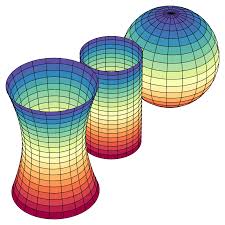
Gaussian curvature originates in differential geometry and measures how a surface bends at a point.
Unlike mean curvature, Gaussian curvature depends solely on intrinsic properties of a surface.
Key insights:
- Positive curvature indicates sphere-like shapes
- Zero curvature corresponds to flat surfaces
- Negative curvature appears in saddle-shaped surfaces
Real-world relevance includes:
- Surface reconstruction in computer graphics
- Shape analysis in medical imaging
- Terrain modeling in geospatial analysis
Although geometric, Gaussian curvature introduces the idea of local structure, which later becomes essential in kernel-based learning models.
Gaussian Functions and Their Integration
A Gaussian function is defined as:
- Smooth
- Infinitely differentiable
- Parameterized by mean and variance
Gaussian function integration plays a crucial role in probability theory and machine learning.
Applications include:
- Normalization of probability density functions
- Bayesian inference
- Kernel density estimation
In practice, Gaussian integration allows models to compute expectations and marginal probabilities efficiently.
The Gaussian Integral and Why It Matters
The Gaussian integral is one of the most important results in mathematics because it has a closed-form solution despite involving an exponential quadratic term.
Why it matters:
- Enables normalization of probability distributions
- Forms the backbone of Bayesian statistics
- Allows analytical solutions in Gaussian processes
Without the Gaussian integral, probabilistic machine learning would rely far more heavily on numerical approximations.
From Probability to Learning: Gaussian Distributions
Gaussian distributions dominate statistical modeling because of:
- Central Limit Theorem implications
- Noise modeling capabilities
- Analytical convenience
In machine learning, Gaussian assumptions appear in:
- Linear regression residuals
- Hidden Markov models
- Bayesian networks
These assumptions naturally extend into mixture models and process-based learning.
Gaussian Mixture Model Explained
A Gaussian Mixture Model represents data as a combination of multiple Gaussian distributions.
Key characteristics:
- Soft clustering rather than hard assignments
- Probabilistic membership
- Flexible modeling of complex distributions
Each component captures a different underlying data structure.
Gaussian Mixture Models in Real-World Data
Gaussian mixture models are widely used in:
- Customer segmentation
- Image segmentation
- Speech recognition
- Anomaly detection
Example:
In finance, transaction data often contains overlapping spending behaviors. Gaussian mixture models separate these behaviors probabilistically instead of forcing rigid clusters.
Introduction to Gaussian Processes
A Gaussian process is a collection of random variables where any finite subset follows a multivariate Gaussian distribution.
Unlike parametric models:
- No fixed equation is assumed
- The model adapts based on data
- Uncertainty is explicitly quantified
Gaussian processes are defined by:
- Mean function
- Covariance function (kernel)
Gaussian Process Regression Deep Dive
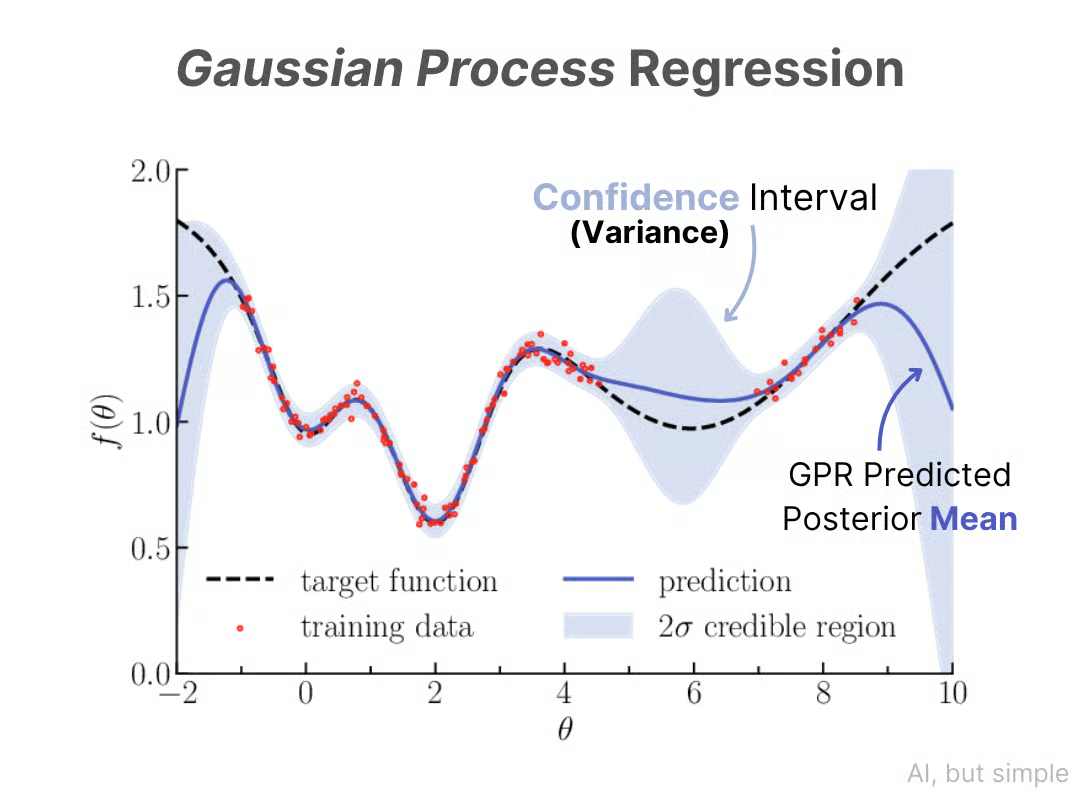
Gaussian Process Regression models functions directly instead of estimating parameters.
Key advantages:
- Provides predictive uncertainty
- Works well with small datasets
- Highly flexible non-linear modeling
This approach is particularly useful in scientific modeling where understanding uncertainty is as important as prediction accuracy.
Kernel Functions and Covariance Structure
The kernel defines similarity between data points.
Common kernels include:
- Radial Basis Function
- Matérn kernel
- Rational quadratic kernel
Choosing the right kernel allows Gaussian Process Regression to model periodicity, smoothness, and noise effectively.
Mathematical Intuition Behind Gaussian-Based Models
Gaussian-based methods are favored not only because of convenience but because they reflect how uncertainty propagates in real systems. When independent random effects accumulate, their combined behavior converges toward a Gaussian distribution. This explains why Gaussian assumptions appear repeatedly in physics, economics, and machine learning.
In regression problems, uncertainty is rarely uniform. Gaussian Process Regression models this non-uniform uncertainty explicitly by allowing variance to change across the input space. This capability makes it superior for domains where confidence estimation matters as much as accuracy.
Relationship Between Gaussian Integrals and Probabilistic Inference
Gaussian integrals allow closed-form solutions for marginal likelihoods and posterior distributions. This is especially important in Bayesian learning frameworks.
In Gaussian Process Regression:
- Posterior predictions rely on multivariate Gaussian integrals
- Marginal likelihood optimization uses Gaussian integral properties
- Hyperparameter tuning becomes analytically tractable
Without Gaussian integrals, inference would require heavy numerical approximation, significantly increasing computational cost and reducing model reliability.
Why Gaussian Mixture Models Complement Gaussian Processes
Although Gaussian Mixture Models and Gaussian Process Regression solve different problems, they are often used together in real-world pipelines.
Examples include:
- Using Gaussian Mixture Models to cluster time series, followed by Gaussian Process Regression per cluster
- Modeling multimodal input distributions before applying regression
- Noise modeling using mixture components
This hybrid approach improves robustness when data exhibits multiple underlying patterns.
Uncertainty Quantification as a Competitive Advantage
One of the strongest benefits of Gaussian Process Regression is its built-in uncertainty estimation. Instead of producing a single prediction, the model outputs a distribution.
Practical advantages include:
- Risk-aware decision making
- Confidence-driven automation
- Early anomaly detection
Industries such as finance, healthcare, and autonomous systems increasingly prioritize models that explain uncertainty, not just predictions.
Scalability Improvements in Modern Gaussian Process Implementations
Historically, Gaussian Process Regression struggled with scalability due to cubic time complexity. Modern techniques now mitigate this issue.
Key advancements include:
- Sparse Gaussian Processes
- Inducing point approximations
- Variational inference methods
- Kernel interpolation techniques
These approaches allow Gaussian Process Regression to scale to tens or even hundreds of thousands of data points in production systems.
Interpretability Compared to Deep Learning Models
While deep learning models often outperform in raw predictive power, they lack transparency. Gaussian Process Regression provides:
- Explicit covariance structure
- Explainable kernel behavior
- Interpretable uncertainty intervals
This makes it a preferred choice in regulated industries where explainability is mandatory.
Choosing the Right Kernel for Real-World Data
Kernel selection defines model behavior. Poor kernel choice can lead to underfitting or excessive smoothness.
General guidance:
- Use RBF kernels for smooth continuous data
- Use Matérn kernels for rough or noisy signals
- Combine kernels to capture periodic trends and long-term structure
Kernel composition allows Gaussian Process Regression to model complex real-world patterns without increasing model opacity.
Role of Gaussian Processes in Modern Analytics Pipelines
In modern data pipelines, Gaussian Process Regression often appears in:
- Forecasting systems
- Optimization loops
- Simulation models
- Digital twin architectures
Its ability to update predictions dynamically as new data arrives makes it ideal for real-time analytics environments.
Ethical and Responsible Modeling Considerations
Uncertainty-aware models reduce overconfidence, which is a major source of algorithmic harm. Gaussian Process Regression naturally discourages extrapolation beyond observed data, making it safer for deployment in sensitive domains.
Responsible benefits include:
- Transparent uncertainty communication
- Reduced false confidence
- Better human-in-the-loop decision support
Historical Evolution of Gaussian-Based Methods
Gaussian concepts have evolved over centuries, beginning with Carl Friedrich Gauss’s work on error analysis. Initially applied to astronomy and physics, Gaussian distributions later became foundational in probability theory. As computing advanced, these ideas transitioned from pure mathematics into machine learning and statistical modeling.
Gaussian Mixture Models emerged as a solution to represent real-world data that could not be captured by a single normal distribution. Gaussian Process Regression later extended these ideas by modeling entire functions probabilistically rather than estimating fixed parameters.
This historical progression shows how Gaussian theory naturally adapts to increasingly complex data-driven problems.
Mathematical Stability and Numerical Advantages
Gaussian-based models exhibit strong numerical stability compared to many alternative probabilistic approaches. This stability arises from:
- Well-conditioned covariance matrices
- Closed-form likelihood expressions
- Smooth optimization landscapes
These properties reduce convergence failures and make Gaussian methods reliable in production systems where numerical errors can lead to costly failures.
Gaussian Curvature Beyond Geometry
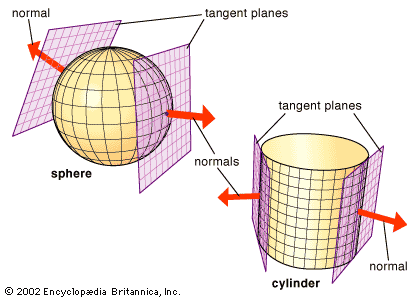
While Gaussian curvature originates in differential geometry, its conceptual interpretation extends to data surfaces. In machine learning, curvature can be interpreted as how rapidly model behavior changes across the feature space.
High curvature regions often correspond to:
- Decision boundaries
- Rapid variance changes
- Anomalous data regions
Understanding curvature helps practitioners identify unstable regions in learned models and improve robustness.
Practical Comparison with Parametric Models
Unlike parametric models that assume a fixed functional form, Gaussian Process Regression adapts its structure based on data. This makes it especially useful when:
- The underlying relationship is unknown
- Data availability is limited
- Flexibility is required without overfitting
Parametric models may converge faster, but Gaussian Process Regression offers superior adaptability when uncertainty and structure are unknown.
Handling Noise with Gaussian Mixture Models
Real-world datasets often contain heterogeneous noise sources. Gaussian Mixture Models are uniquely suited for this challenge by allowing different components to represent different noise patterns.
Use cases include:
- Sensor fusion systems
- Financial volatility modeling
- Image segmentation with varying illumination
This ability to separate structured signals from noise improves downstream modeling accuracy.
Role in Bayesian Optimization
Gaussian Process Regression serves as the backbone of Bayesian optimization techniques. By modeling the objective function probabilistically, it allows:
- Efficient exploration of unknown spaces
- Reduced evaluation cost
- Intelligent trade-offs between exploration and exploitation
This is widely used in hyperparameter tuning, materials science, and experimental design.
Interpretability Through Covariance Structure
Unlike black-box models, Gaussian-based methods expose relationships directly through covariance matrices. These matrices reveal:
- Feature similarity
- Correlation strength
- Spatial or temporal dependencies
This transparency allows domain experts to validate model behavior against real-world knowledge.
Integration with Deep Learning Systems
Modern hybrid systems combine Gaussian processes with neural networks. Examples include:
- Deep kernel learning
- Gaussian process layers in neural networks
- Bayesian neural networks with Gaussian priors
These hybrid approaches retain uncertainty estimation while scaling to large datasets.
Real-World Deployment Challenges and Solutions
Although powerful, Gaussian-based models require careful implementation. Common challenges include:
- Memory constraints for large covariance matrices
- Kernel mis-specification
- Overconfidence in sparse regions
Solutions include sparse approximations, kernel learning techniques, and uncertainty-aware deployment strategies.
Industry-Specific Impact
Gaussian methods are heavily adopted across industries:
- Healthcare: Disease progression modeling
- Finance: Risk estimation and portfolio optimization
- Manufacturing: Predictive maintenance
- Climate Science: Environmental forecasting
Their probabilistic nature aligns well with real-world uncertainty.
Future Directions of Gaussian-Based Modeling
Research continues to enhance Gaussian frameworks through:
- Scalable variational inference
- Non-stationary kernel learning
- Integration with reinforcement learning
- Automated kernel discovery
These advancements ensure Gaussian-based methods remain relevant in next-generation analytics systems.
Real-World Applications of Gaussian Process Regression
Gaussian Process Regression is widely used in:
- Time-series forecasting
- Hyperparameter optimization
- Robotics control systems
- Climate modeling
- Medical diagnosis
Example:
In predictive maintenance, Gaussian Process Regression estimates failure probabilities while quantifying uncertainty in sensor readings.
Comparison with Other Regression Models
Compared to linear regression:
- Captures non-linear patterns
- Provides uncertainty intervals
Compared to neural networks:
- Requires less data
- More interpretable uncertainty
- Higher computational cost for large datasets
Practical Challenges and Scalability
Limitations include:
- Computational complexity
- Memory usage with large datasets
Solutions involve:
- Sparse Gaussian processes
- Approximate inference
- Inducing point methods
Visual Interpretation and Model Intuition
Gaussian Process Regression produces:
- Mean prediction curve
- Confidence intervals
This visualization improves trust and interpretability, especially in high-stakes decision-making environments.
Conclusion
Gaussian-based methods form a unified mathematical framework connecting geometry, probability, and machine learning. From Gaussian curvature describing surface behavior to Gaussian integrals enabling probabilistic reasoning, these concepts converge naturally in Gaussian Process Regression.
By modeling uncertainty directly and adapting flexibly to data, Gaussian Process Regression stands as one of the most powerful tools for modern analytics. Understanding its mathematical roots not only improves implementation but also deepens trust in predictive systems built on probabilistic foundations.
FAQ’s
What is Gaussian geometry?
Gaussian geometry studies the intrinsic geometric properties of surfaces, focusing on Gaussian curvature to understand how a surface bends independently of how it is embedded in space.
What is the geometric meaning of curvature?
Curvature measures how much a curve or surface deviates from being straight or flat, describing the rate at which its direction or shape changes in space.
What is the Gaussian curvature in differential geometry?
Gaussian curvature is an intrinsic measure of a surface’s curvature, defined as the product of the two principal curvatures at a point, indicating how the surface bends locally.
What is the Gauss theorem in geometry?
Gauss’s Theorema Egregium states that Gaussian curvature is an intrinsic property of a surface, meaning it depends only on distances measured on the surface and not on how the surface is embedded in space.
What is the principle of Gaussian curve?
The Gaussian curve follows the principle that data tend to cluster around a mean value, with probabilities decreasing symmetrically as values move farther from the mean, forming a bell-shaped distribution.