
Introduction to Data Enhancement
Enhancing data is not just about adding more information; it’s about creating value by transforming raw information into actionable intelligence. By integrating enriched information into their analytics processes, companies can uncover hidden patterns and correlations that were previously unnoticed.
This enriched view enables a more holistic understanding of market trends and customer preferences, facilitating more effective marketing campaigns, product development, and customer service. Additionally, enriched data helps businesses stay ahead of competitors by quickly adapting to changes in the market environment, predicting customer behavior, and identifying new growth opportunities.
Data enrichment also enhances data accuracy and reliability by filling in missing information and correcting outdated or incorrect data points. This leads to more precise analysis and forecasting, which is crucial for making informed business decisions. Moreover, with enriched data, companies can better segment their customer base, tailor their offerings, and deliver personalized experiences, ultimately driving higher customer satisfaction and loyalty.
What Are Data Enrichment Tools?
Data enrichment tools are software solutions designed to enhance existing datasets by adding relevant, accurate, and up-to-date information from external and internal sources. These tools help organizations improve data completeness, accuracy, and context by filling gaps, correcting inconsistencies, and appending additional attributes.
Instead of working with raw or incomplete data, businesses use data enrichment tools to create a single, enriched view of customers, products, or operations. This enriched data supports better analytics, personalization, segmentation, and decision-making across departments.In simple terms, data enrichment tools transform basic data into intelligent data that drives business value.
Why Data Enhancement is Crucial for Businesses
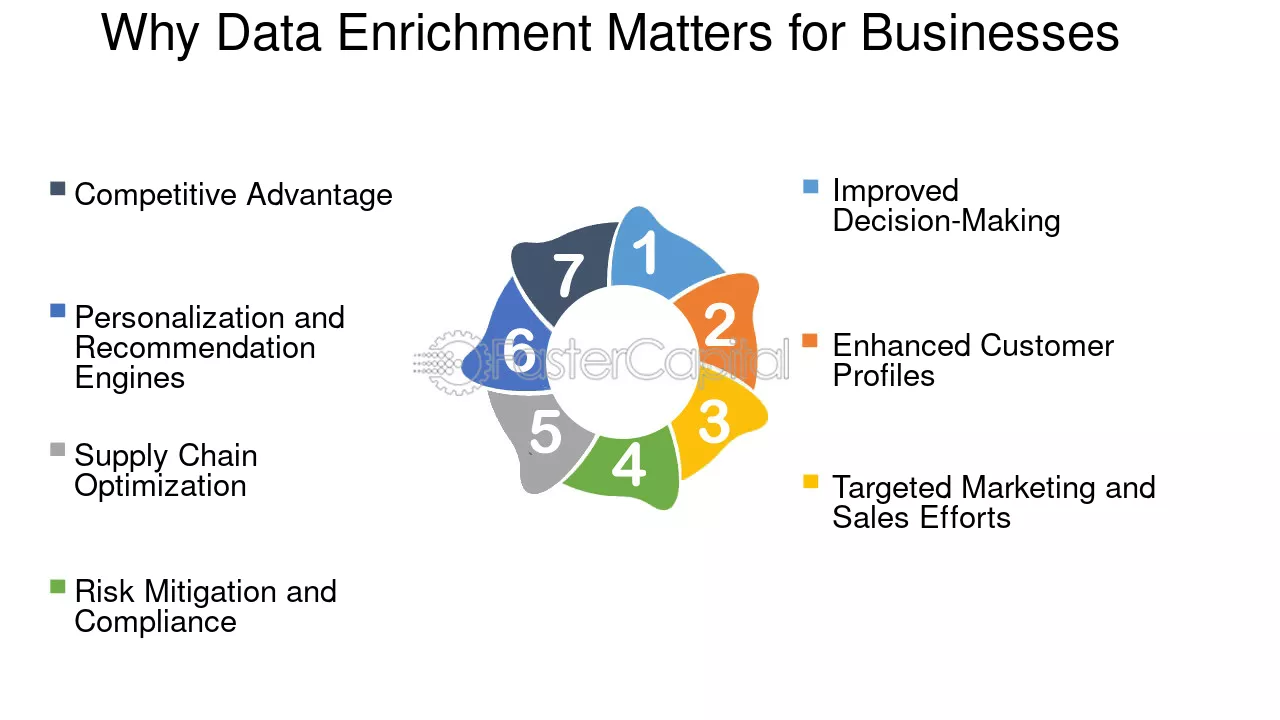
Enhancing data is crucial for businesses because it transforms raw data into valuable insights that drive strategic decision-making. By enriching information, companies can better understand their customers, market trends, and internal operations.
This process enables businesses to identify new opportunities, optimize marketing efforts, and enhance customer engagement by delivering personalized experiences. Additionally, enriched information improves the accuracy of predictive models, allowing organizations to forecast future trends and behaviors with greater precision. As a result, businesses can reduce risks, enhance operational efficiency, and maintain a competitive edge in a rapidly evolving marketplace.
Enhancing Data Quality
Data enrichment plays a vital role in enhancing data quality by filling gaps, correcting inaccuracies, and standardizing formats. High-quality data is crucial for accurate analytics and decision-making.
Improving Customer Insights
Enhanced information provides businesses with a deeper understanding of customer behavior and preferences, enabling more personalized interactions and services.
Supporting Decision-Making
By providing comprehensive insights into customer demographics and behaviors, enhanced data helps businesses make informed decisions and predict market trends more accurately.
Optimizing Marketing Strategies
Effective data enrichment allows for better segmentation and targeting, leading to more effective marketing campaigns and higher ROI.
Points:
- Personalizes customer experiences.
- Supports predictive analytics.
- Enables efficient resource allocation.
Key Concepts in Data Enhancement
Data Augmentation
Data augmentation involves adding new data points to existing datasets to increase the richness and depth of information. This could include adding social media activity, purchasing behavior, or additional demographic details.
Data Cleansing
This process focuses on removing inaccuracies, duplicates, and errors from datasets. Data cleansing ensures that the enriched data is reliable and usable for business analytics.
Data Standardization
Standardization ensures that data from different sources is consistent and compatible. It includes formatting data according to predefined rules, making it easier to integrate and analyze.
Types of Data Enhancement Techniques
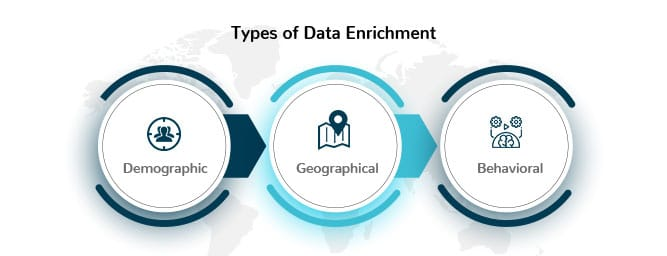
Data enrichment techniques are essential for transforming raw, unstructured data into actionable insights. These techniques allow businesses to augment their existing datasets with additional layers of information, providing a richer context and deeper understanding of their customers, market dynamics, and operational environment. By incorporating various types of enrichment, organizations can create comprehensive customer profiles, improve segmentation, and refine their marketing and sales strategies. The diverse methods of enrichment, ranging from demographic and firmographic to behavioral and geographic data, ensure that companies can tailor their approaches based on specific needs and objectives.
Demographic Enrichment
This technique adds demographic information such as age, gender, income level, and education to customer profiles. It helps businesses understand the demographic characteristics of their customer base.
Firmographic Enrichment
Used primarily in B2B scenarios, firmographic enrichment adds data about a company’s industry, size, location, and revenue, helping in better segmentation and targeting of businesses.
Behavioral Data Enrichment
Behavioral enrichment captures data about customer interactions, including website visits, purchase history, and engagement with marketing campaigns. It helps in predicting future behavior.
Geographic Data Enrichment
Adding geographic information such as location coordinates, region, and country enhances targeting and regional marketing strategies.
Psychographic Data Enrichment
This involves adding data related to customers’ values, interests, and lifestyle choices, allowing businesses to tailor offerings and marketing messages more effectively.
Integrating these various data enrichment techniques provides businesses with a holistic view of their audience, enabling more precise targeting and personalized interactions. By leveraging demographic and firmographic data, organizations can improve their segmentation strategies, while behavioral and psychographic enrichment allow for more tailored customer experiences. Geographic data enrichment, on the other hand, supports regional marketing efforts and localization strategies. Together, these techniques help businesses build robust data models that not only enhance decision-making but also foster stronger customer relationships and drive long-term growth.
Top Techniques for Enhancing Data Quality
Selecting the right data enrichment tools is essential for businesses looking to enhance their data quality and gain deeper insights into customer behavior and market trends. There are a variety of tools available, ranging from open-source platforms to commercial solutions, each offering unique features to meet different business needs. Open-source tools like Talend and Apache NiFi are popular due to their flexibility and cost-effectiveness, making them ideal for organizations with skilled technical teams that can handle customization and integration.
On the other hand, commercial tools like Salesforce Data.com and Clearbit provide more user-friendly interfaces and come with robust support services, making them suitable for businesses that prioritize ease of use and real-time data enrichment capabilities. When selecting a data enrichment tool, it’s crucial to consider factors such as scalability, real-time processing, system integration, and data security to ensure the solution aligns with the company’s goals and IT infrastructure.
Open-source Data Enrichment Tools
Open-source tools like Talend and Apache NiFi offer cost-effective solutions for data enrichment. These tools provide flexibility and customization options but may require more technical expertise.
Commercial Data Enrichment Tools
Commercial solutions like Salesforce Data.com and Clearbit
Features to Look for in Data Enrichment Tools
- Scalability to handle large datasets.
- Real-time data processing capabilities.
- Integration with existing systems and databases.
- Robust data security features.
How to Implement Data Enhancement
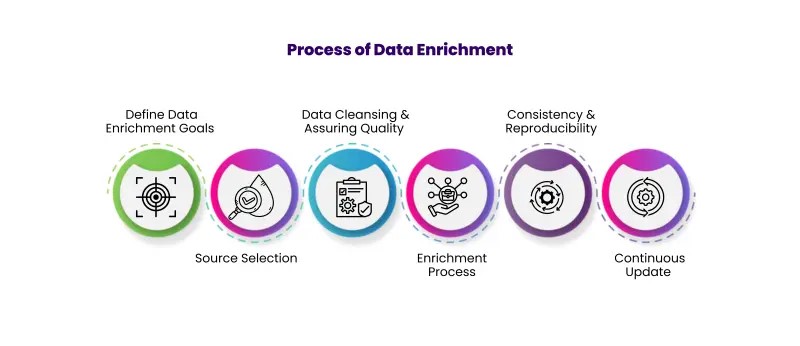
Defining Objectives and Goals
Clearly define what you aim to achieve with data enrichment. This could include improving customer segmentation, enhancing data quality, or optimizing marketing efforts.
Selecting the Right Data Sources
Identify external data sources that provide valuable information relevant to your business objectives. This could include third-party databases, social media platforms, or government records.
Choosing the Appropriate Tools
Select data enrichment tools that align with your business needs, budget, and technical capabilities. Consider both open-source and commercial options.
Integration and Automation Strategies
Implement automation to streamline the data enrichment process, ensuring that enriched data is integrated seamlessly into existing workflows and systems.
10 Best Data Enrichment Tools in 2025
Here are some of the most powerful and widely used data enrichment tools worth considering in 2025:
1. Clearbit
Best for B2B data enrichment, Clearbit enhances customer and company profiles with firmographic, technographic, and intent data.
2. ZoomInfo
A leading B2B intelligence platform that enriches CRM data with company size, industry, revenue, and contact details.
3. Apollo.io
Popular for sales and marketing teams, Apollo enriches lead data with verified contact and firmographic information.
4. FullContact
Focuses on customer identity resolution and profile enrichment using demographic and behavioral data.
5. Salesforce Data Cloud
Native enrichment for Salesforce users, enabling real-time customer data unification and personalization.
6. Fivetran
Primarily a data integration tool, but powerful for enriching data pipelines by syncing reliable third-party sources into warehouses.
7. Talend Data Fabric
Combines data quality, enrichment, and integration with strong governance capabilities.
8. Experian Data Quality
Ideal for enriching customer data with demographic, geographic, and validation insights.
9. Snowflake Marketplace
Offers access to third-party datasets that can be used to enrich analytics directly within Snowflake environments.
10. People Data Labs
Provides APIs for enriching person and company data at scale, widely used in recruitment and B2B analytics.
Best Data Enrichment Software — Where to Start?
Choosing the best data enrichment software starts with clarity around your data goals. There is no one-size-fits-all solution, so businesses should begin by evaluating the following:
- Type of data you want to enrich (customer, company, behavioral, geographic)
- Industry requirements (B2B vs B2C use cases)
- Data volume and frequency (batch vs real-time enrichment)
- Existing tech stack (CRM, data warehouse, marketing tools)
For startups and SMBs, tools like Clearbit, Apollo, or FullContact offer fast onboarding and ease of use.
For enterprises, platforms like Talend, Salesforce Data Cloud, or Experian provide scalability, governance, and compliance.
Starting small with a pilot enrichment project is often the best approach before scaling across the organization.
How Do You Choose the Right Data Enrichment Software?
Selecting the right data enrichment software requires balancing functionality, scalability, and data quality. Here are the key factors to consider:
1. Data Accuracy and Freshness
Ensure the tool provides regularly updated and verified data to avoid outdated or incorrect insights.
2. Data Coverage
Check whether the tool supports the types of enrichment you need:
- Demographic
- Firmographic
- Behavioral
- Geographic
- Psychographic
3. Integration Capabilities
The software should integrate seamlessly with your:
- CRM systems
- Data warehouses
- Marketing automation tools
- BI platforms
4. Scalability
Choose a solution that can handle increasing data volumes as your business grows.
5. Real-Time vs Batch Processing
Decide whether you need:
- Real-time enrichment for customer interactions
- Batch enrichment for analytics and reporting
6. Data Privacy and Compliance
Ensure the platform complies with regulations like GDPR, CCPA, and industry-specific standards.
7. Ease of Use
No-code or low-code tools reduce dependency on technical teams and speed up implementation.
8. Cost and ROI
Evaluate pricing models (API calls, subscriptions, usage-based) and ensure the value aligns with your business outcomes.
Quick Comparison: Data Enrichment Tool Types
| Tool Type | Best Use Case |
| CRM-Based Tools | Sales & marketing enrichment |
| API-Based Tools | Real-time enrichment at scale |
| Open-Source Tools | Custom enrichment pipelines |
| Cloud Marketplaces | Analytics and BI enrichment |
| Enterprise Platforms | Governance and compliance-driven use |
Benefits of Data Enhancement
Enhanced Personalization
Data enrichment allows businesses to tailor customer interactions based on enriched profiles, leading to higher customer satisfaction and loyalty.
Better Targeting in Marketing Campaigns
With enriched data, marketing teams can create more targeted and effective campaigns, improving conversion rates and reducing ad spend.
Improved Sales Conversions
Sales teams can leverage enriched customer data to tailor their pitches, leading to more successful sales outcomes.
Streamlined Data Management
Enriched data reduces the need for manual data entry and cleansing, improving overall data management efficiency.
Informed Decision-Making
By integrating enriched data into analytics, businesses gain a more comprehensive view of their operations, customers, and markets, leading to more informed and strategic decision-making.
Enhanced Customer Segmentation
Data enrichment helps businesses create more precise customer segments, enabling them to deliver targeted messaging and offers that resonate with specific groups, thereby increasing engagement and customer loyalty.
Challenges in Data Enhancement
Data Privacy Concerns
Handling enriched data requires adherence to data privacy regulations such as GDPR. Businesses must implement robust security measures to protect sensitive information.
Maintaining Data Quality
Ensuring the accuracy and reliability of enriched data can be challenging, especially when integrating data from multiple sources.
Integration Issues
Integrating enriched data with existing systems can be complex, requiring careful planning and execution.
Managing Data Overload
With large volumes of data, businesses may struggle to process and analyze enriched data effectively.
Future Trends in Data Enhancement
Data enrichment is continually evolving as businesses seek to derive more value from their data assets. One significant trend is the integration of AI and machine learning into data enrichment processes. These technologies are enhancing the accuracy and efficiency of data enrichment by automating tasks that were previously manual, such as identifying patterns and correlations within large datasets.
Machine learning algorithms can continuously improve as they process more data, leading to more precise enrichment over time. This automation not only saves time and resources but also reduces the likelihood of human error, ensuring that enriched data is more reliable and actionable.
Another major trend is the growing demand for real-time data enrichment. As businesses increasingly operate in fast-paced environments where timely information is critical, the ability to enrich data as it flows into systems becomes invaluable. Real-time data enrichment allows organizations to respond to changes instantly, providing up-to-date insights that can drive immediate decision-making.
This is particularly beneficial for industries such as finance, where market conditions can change rapidly, or retail, where customer preferences can shift quickly. Real-time enrichment ensures that businesses have the most current and relevant data available, enabling them to maintain a competitive edge in their respective markets.
AI and Machine Learning in Data Enrichment
AI and machine learning are increasingly being used to automate data enrichment processes, enhancing accuracy and efficiency.
Real-Time Data Enrichment
The demand for real-time insights is driving the adoption of real-time data enrichment techniques, allowing businesses to respond to changes instantly.
Cloud-Based Data Enrichment Solutions
Cloud-based solutions provide scalability and flexibility, making it easier for businesses to implement and manage data enrichment.
Privacy-Driven Data Enrichment Techniques
As privacy concerns grow, there is a shift towards techniques that balance data enrichment with enhanced privacy measures.
Case Studies: Successful Data Enhancement Implementations
Enhancing Data in Retail
A major retail chain implemented enhancement techniques to improve customer profiles, resulting in improved personalized marketing campaigns and a 20% increase in customer engagement.
Enhancing Data in Financial Services
A financial services firm used data enhancement to identify high-value customers, leading to targeted marketing strategies and a significant increase in sales conversions.
Enhancing Data in Healthcare
A healthcare provider enriched patient data with demographic and behavioral information, improving patient care and compliance with health regulations.
Conclusion on Data Enhancement
Data enrichment is a powerful tool for enhancing data quality, improving customer insights, and driving better business outcomes. By leveraging the right techniques and tools, businesses can ensure their data is accurate, relevant, and actionable. As data enrichment continues to evolve, integrating AI and machine learning will further enhance its capabilities, making it an essential component of data management strategies.
Data enrichment not only enhances the quality of existing data but also unlocks new opportunities for innovation and growth. By combining internal data with external data sources, companies can gain a more holistic view of their customers, markets, and operations. This comprehensive perspective enables businesses to anticipate customer needs, tailor products and services, and make proactive decisions that drive long-term success.
As organizations increasingly recognize the value of enriched data, investing in the right tools and developing robust data enrichment strategies will be critical. In the ever-evolving landscape of data management, embracing data enrichment can provide a significant competitive advantage, empowering businesses to navigate complexities and seize opportunities with confidence.
FAQ’s
What is the best data enrichment tool?
One of the top data enrichment tools in 2025 is Apollo.io, known for its all-in-one data enrichment and CRM prospecting capabilities, alongside strong alternatives like ZoomInfo, Clearbit, and UpLead depending on your business size and needs.
What is a data enrichment tool?
A data enrichment tool enhances raw data by adding accurate, relevant information from external sources, improving data quality, completeness, and insights for better analysis and decision-making.
Which tool can be used for great data management?
A top choice for robust data management is Microsoft SQL Server, offering powerful database, integration, and analytics capabilities, with excellent alternatives like Google BigQuery, Snowflake, and AWS Redshift depending on scale and cloud preference.
What are the tools and techniques of data analytics?
Data analytics uses tools like Python, R, SQL, Excel, Power BI, and Tableau, along with techniques such as data cleaning, statistical analysis, data visualization, clustering, regression, and machine learning to extract insights from data.
What are the 5 C’s of data management?
The 5 C’s of data management are Collect, Clean, Classify, Connect, and Consume, ensuring data is accurate, organized, integrated, and ready for effective analysis and decision-making.


