
We thoroughly tested building data platforms to help you make an informed decision. The construction industry generates approximately 1.8 trillion data points annually, yet fewer than 30% of construction firms have mature data capabilities to harness this information effectively. This data gap represents both a massive challenge and an unprecedented opportunity for building professionals seeking competitive advantages in an increasingly digital marketplace.
Building data encompasses every piece of information collected throughout a structure’s lifecycle—from initial design specifications and construction schedules to ongoing maintenance records and energy consumption patterns. What makes this domain particularly complex is the sheer diversity of data sources involved: architectural blueprints, sensor networks, project management platforms, financial systems, and regulatory compliance documents all contribute to a sprawling information ecosystem that traditional tools struggle to manage.
The emergence of building data platforms has fundamentally transformed how organizations capture, analyze, and act upon this information. These integrated systems break down historical data silos, connecting disparate sources into unified environments where insights become actionable. Instead of manually compiling spreadsheets or toggling between disconnected applications, teams now access real-time dashboards that reveal patterns invisible to conventional analysis methods.
This transformation accelerated dramatically with cloud data infrastructure adoption across the construction sector. The data center construction market alone is projected to reach $487.8 billion by 2033, reflecting massive investments in the digital backbone supporting modern building operations. Cloud platforms enable unprecedented scalability, allowing small firms to leverage enterprise-grade analytics without prohibitive upfront costs.
However, technology alone doesn’t guarantee success. The organizations seeing the strongest returns share a common approach: they treat building data as a strategic asset rather than an IT afterthought, establishing clear governance frameworks and cultivating data literacy across all roles. Understanding what types of building data matter most represents the essential first step in this journey.
Key Types of Building Data
Modern construction and facility management rely on diverse data streams, each serving distinct purposes throughout a building’s lifecycle. Understanding these categories transforms how organizations approach data building strategies and operational excellence.
Design and Planning Data
The foundation begins with architectural models, engineering specifications, and regulatory compliance documentation. Building Information Modeling (BIM) systems capture three-dimensional representations alongside material properties, load calculations, and spatial relationships. This structured data enables coordination between disciplines before construction begins, reducing costly conflicts and rework.
Operational Performance Metrics
Once occupied, buildings generate continuous streams of performance data. HVAC systems, lighting controls, and security networks produce real-time data builds that reveal energy consumption patterns, occupancy trends, and equipment health. According to industry analysis, the big data analytics market in construction is experiencing substantial growth as organizations recognize the value of these operational insights.
Financial and Project Data
Construction projects generate extensive financial records—procurement histories, labor costs, change orders, and schedule performance metrics. This transactional data provides benchmarks for future estimating while revealing productivity patterns across teams and project types. However, many firms struggle to aggregate this information effectively across multiple initiatives.
Environmental and Sensor Data
The newest category involves IoT sensors monitoring air quality, moisture levels, structural stress, and occupant comfort parameters. These environmental datasets enable predictive maintenance strategies and validate sustainability claims. Smart buildings now collect thousands of data points hourly, creating opportunities for optimization that previous generations never imagined.
The challenge isn’t data scarcity—it’s extracting actionable intelligence from these varied sources while maintaining consistency and accessibility across stakeholder groups.
Building Data Lifecycle Overview
| Stage | Data Generated | Purpose | Example |
| Design Phase | Architectural plans, BIM models, material specifications | Planning and coordination | 3D BIM model of building structure |
| Construction Phase | Project schedules, labor records, procurement data | Track project execution | Daily construction progress reports |
| Operation Phase | Energy usage, occupancy patterns, HVAC performance | Improve operational efficiency | Smart building energy dashboard |
| Maintenance Phase | Equipment logs, repair history, inspection reports | Predictive maintenance | Elevator maintenance records |
| Renovation Phase | Structural analysis, redesign models | Support upgrades and expansions | Updated building layouts |
Building Data Structure: Organizing for Success
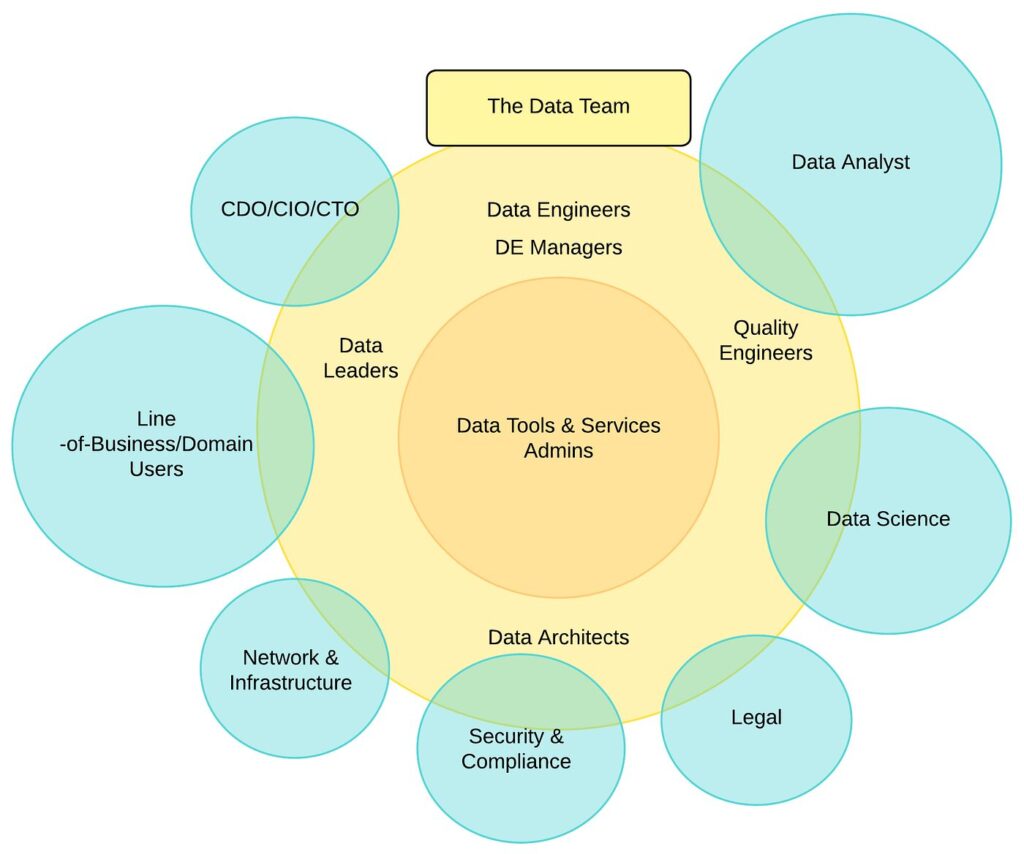
The gap between data collection and actionable insights often comes down to one critical factor: structure. While construction firms gather massive volumes of information, properly organizing that data determines whether it becomes a strategic asset or digital clutter. The distinction isn’t merely technical—it’s fundamental to extracting value from building information.
Establishing Your Foundation
To effectively build data infrastructure, organizations must first define clear hierarchies that mirror both project workflows and business objectives. This means establishing consistent naming conventions, standardized file structures, and unified metadata schemas across all projects. A well-designed infrastructure creates natural pathways for information flow, ensuring that site inspections, design iterations, and quality checks all feed into a cohesive system rather than isolated silos.
The architectural choice between centralized repositories and distributed systems significantly impacts accessibility and performance. However, what typically happens is that firms start with ad-hoc storage solutions and later struggle with integration challenges. Strategic planning from the outset prevents costly migrations and data loss down the line.
Implementing Scalable Storage Solutions
Modern data lake setup offers construction firms a flexible approach to housing diverse information types—from structured BIM models to unstructured field photos and sensor streams. Unlike traditional databases that require pre-defined schemas, data lakes accommodate raw data in its native format, enabling organizations to preserve complete information fidelity while deciding on future analytics approaches.
The key is balancing accessibility with governance. Effective data lakes implement metadata tagging, quality controls, and access permissions from day one. Organizations with mature data capabilities demonstrate significantly better project outcomes, largely because their infrastructure supports both immediate operational needs and long-term strategic analysis. This dual-purpose architecture transforms building data from a compliance requirement into a competitive advantage that informs smarter decision-making across the entire project lifecycle.
Data Modeling: Constructing Accurate Building Models
Transforming raw building data into actionable intelligence requires a robust data architecture build that mirrors the complexity of the structures themselves. Much like architectural blueprints guide physical construction, data models provide the framework for organizing, relating, and interpreting information across every stage of a building’s lifecycle.
The foundation of effective data modeling begins with understanding relationships between disparate data sources. Design specifications must connect seamlessly with material inventories, cost estimates, and construction schedules. This interconnectedness creates a digital twin of sorts—a comprehensive representation where changes in one element automatically propagate through related systems. When structural modifications occur mid-project, for instance, a well-architected model immediately flags impacts on material quantities, budget allocations, and timeline dependencies.
The ETL Building Process
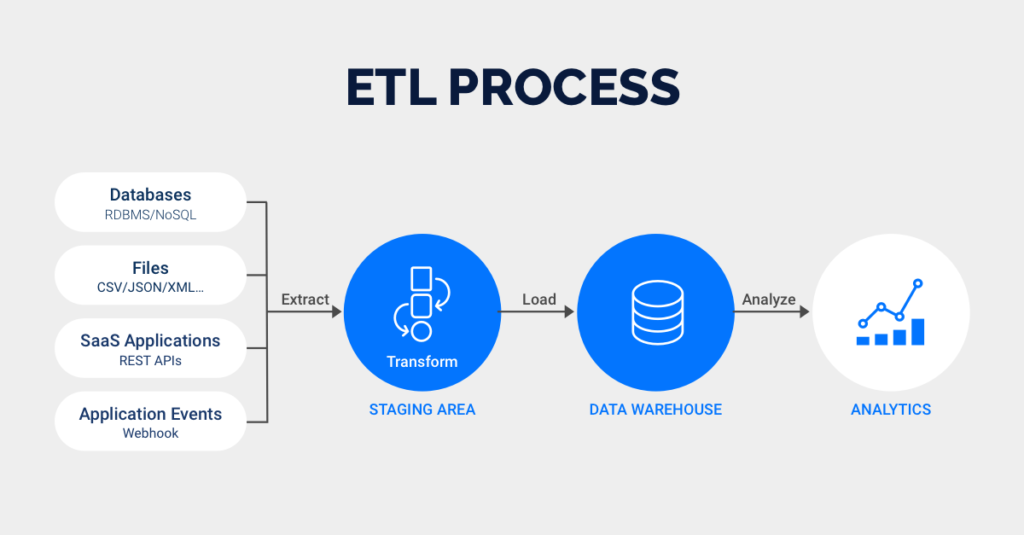
Central to any data modeling effort is ETL building—the Extract, Transform, and Load process that moves data from source systems into structured formats. Extraction pulls information from sensors, BIM software, ERP systems, and field applications. Transformation standardizes formats, resolves inconsistencies, and enriches data with calculated metrics. Loading deposits this refined information into data warehouses or lakes optimized for analysis.
According to Big Data Analytics in Construction Market research, effective ETL pipelines reduce data preparation time by up to 70%, allowing teams to focus on insights rather than manual cleanup. The transformation stage proves particularly crucial—converting disparate measurement units, reconciling naming conventions, and filling gaps through intelligent interpolation.
Modern data models also incorporate flexibility for emerging technologies. IoT sensor streams, drone imagery, and AI-generated insights must integrate without rebuilding foundational structures. This adaptability ensures your data architecture scales alongside innovation, supporting predictive maintenance algorithms and automated compliance checking as these capabilities mature.
Common Misconceptions About Building Data
The construction industry’s relationship with data is riddled with misunderstandings that hold back progress. One persistent myth suggests that simply collecting more data automatically leads to better outcomes. In reality, organizations struggle with data overload rather than data scarcity—the challenge isn’t volume but value extraction.
Another widespread misconception positions building data as primarily a compliance burden rather than a strategic asset. Many firms view data collection as overhead required for regulatory reporting, missing how the same information drives predictive maintenance, resource optimization, and competitive advantage. This narrow perspective leaves millions of dollars in efficiency gains on the table.
The “set it and forget it” fallacy plagues data pipeline construction efforts across the industry. Teams often believe that once sensors are installed and dashboards configured, the system maintains itself. However, buildings evolve, occupancy patterns shift, and equipment degrades—static data systems quickly become irrelevant without continuous calibration and maintenance. What typically happens is that initial enthusiasm fades as outdated dashboards deliver increasingly questionable insights.
A particularly damaging myth suggests that effective building data management requires massive IT budgets accessible only to enterprise-scale organizations. While sophisticated systems certainly cost more, modern cloud-based platforms and modular sensor networks have democratized access. Small and mid-sized firms can now implement targeted data strategies that deliver measurable ROI without enterprise-level investment.
Perhaps most critically, many professionals assume data quality issues resolve themselves with better technology. On the other hand, technology alone cannot fix poor collection protocols, inconsistent naming conventions, or inadequate training. The foundation of valuable building intelligence remains human processes—technology simply amplifies what’s already there, whether excellence or dysfunction.
Advanced Techniques in Building Data Analysis
Moving beyond foundational approaches, cutting-edge building data analysis requires sophisticated methodologies that transform standard datasets into strategic assets. These advanced techniques address the industry’s most pressing challenge: extracting meaningful patterns from increasingly complex information streams while maintaining operational efficiency.
Machine learning integration represents a paradigm shift in how construction professionals approach pattern recognition. Rather than manually sifting through thousands of data points, automated algorithms identify anomalies in energy consumption, predict equipment failures before they occur, and optimize maintenance schedules based on actual usage patterns. Big Data Analytics in Construction market projections indicate exponential growth precisely because these tools deliver measurable returns—reducing downtime by 25-40% in facilities that implement predictive analytics systematically.
Temporal analysis unlocks insights invisible in static snapshots. By examining how building performance metrics evolve across seasons, occupancy cycles, and operational phases, analysts discover efficiency opportunities that single-point measurements miss entirely. What typically happens is that buildings show vastly different thermal characteristics during shoulder seasons versus peak summer—yet standard analysis focuses exclusively on design-day extremes.
The development of scalable data systems addresses a critical bottleneck: most organizations collect far more information than their infrastructure can meaningfully process. Modern approaches leverage cloud-based architectures that automatically adjust computational resources based on analytical demands, ensuring that dataset expansion doesn’t compromise processing speed or analytical depth.
Cross-system correlation analysis represents perhaps the most underutilized advancement. By connecting disparate data streams—HVAC performance alongside occupancy sensors, lighting schedules correlated with productivity metrics—facilities managers identify optimization strategies that siloed analysis would never reveal. However, this technique demands robust data governance frameworks to ensure privacy compliance while maintaining analytical value.
Key Building Data Platforms Takeaways
Building data represents the defining competitive advantage for construction organizations navigating an increasingly complex, technology-driven landscape. The transformation from reactive information management to proactive, strategic data operations separates industry leaders from those struggling to maintain relevance.
Organizations that establish robust data warehouse building practices position themselves to unlock value across every operational dimension. These centralized systems eliminate data silos, enable real-time decision-making, and create the analytical foundation necessary for advanced applications like predictive maintenance and AI-driven project optimization.
The path forward demands immediate action across several critical dimensions:
- Infrastructure investment: Deploy integrated platforms that unify disparate data sources—from IoT sensors to financial systems—creating a single source of truth
- Cultural transformation: Move beyond legacy “gut feeling” approaches to embed data literacy throughout organizational hierarchies
- Strategic partnerships: Engage with construction technology specialists who understand the unique challenges of building environments and regulatory compliance
- Continuous evolution: Treat data capabilities as a journey rather than a destination, adapting to emerging technologies and changing industry standards
The construction sector’s projected annual growth demonstrates compelling market opportunities for data-proficient organizations. Companies that master building data analytics will capture disproportionate market share, command premium pricing through demonstrable quality, and attract top talent seeking innovative work environments.
The question isn’t whether to invest in building data capabilities—it’s how quickly you can implement systems that transform information into competitive advantage. Organizations that act decisively today will shape industry standards tomorrow, while those hesitating risk permanent marginalization in an increasingly data-dependent marketplace.
FAQ’s
What is a data building?
Data building refers to the process of collecting, organizing, integrating, and structuring data from multiple sources to create a reliable foundation for analytics, AI, and data-driven decision-making.
What are building data types?
Building data types include structural data (design and construction details), operational data (energy use, maintenance records), environmental data (temperature, air quality), and occupancy data (space usage and movement patterns).
What is building data structure?
A building data structure refers to the organized framework used to store, manage, and relate building-related data such as design, construction, operations, and maintenance information for efficient analysis and management.
What are the 4 types of data centers?
The four main types of data centers are Enterprise Data Centers, Colocation Data Centers, Managed Service Data Centers, and Cloud Data Centers, each designed to support different levels of infrastructure management and scalability.
Who built data?
Data is created or “built” by people, organizations, machines, sensors, software systems, and digital applications as they generate, collect, and record information through various activities and processes.