
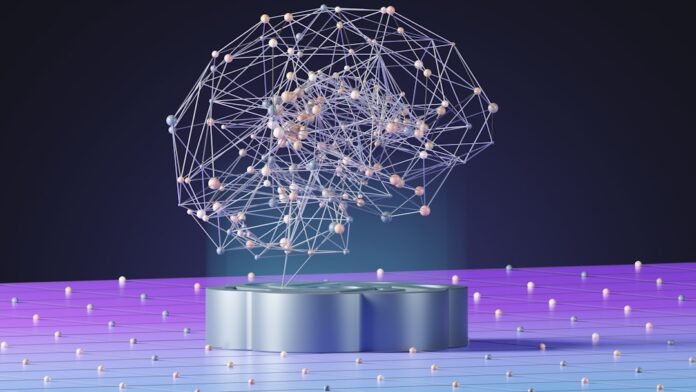
The transformer architecture, introduced in “Attention Is All You Need” (2017), is the foundation of every modern large language model — GPT-4, Claude, Gemini, LLaMA. Understanding transformers is now essential for any serious NLP practitioner. This guide breaks it down from first principles and shows you how to use them with HuggingFace in Python.
The Problem Transformers Solved

Before transformers, RNNs and LSTMs were the standard for sequence tasks. They processed tokens one at a time, left to right, which created two problems. First, the information from early tokens had to travel through many time steps to influence later outputs, causing the vanishing gradient problem. Second, sequential processing couldn’t be parallelised, making training slow. Transformers solved both by processing the entire sequence at once using attention.
Self-Attention – The Core Idea
Self-attention lets each token in a sequence look at every other token and decide how much to “attend” to it. For the sentence “The bank by the river flooded,” the word “bank” should attend strongly to “river” to resolve its meaning.
Mathematically, each token is projected into three vectors — Query (Q), Key (K), and Value (V) — using learned weight matrices. The attention score between token i and token j is:
score(i, j) = softmax( Q_i · K_j / sqrt(d_k) )
The output for each token is a weighted sum of all Value vectors, where the weights are the attention scores. The sqrt(d_k) scaling prevents gradients from vanishing when the key dimension is large.
Multi-Head Attention

Instead of one attention operation, transformers use multiple “heads” in parallel, each learning different types of relationships (syntax, coreference, semantics). The outputs are concatenated and projected:
MultiHead(Q, K, V) = Concat(head_1, ..., head_h) × W_O
head_i = Attention(Q × W_Q_i, K × W_K_i, V × W_V_i)
The Full Transformer Architecture
The original transformer has an encoder and decoder stack. BERT uses only the encoder (great for understanding tasks like classification). GPT uses only the decoder (great for generation). The encoder consists of: token embeddings + positional encoding → multi-head self-attention → add & norm → feed-forward network → add & norm (repeated N times).
Using HuggingFace Transformers in Python
pip install transformers torch
from transformers import pipeline

# Sentiment analysis
classifier = pipeline("sentiment-analysis")
result = classifier("The transformer architecture changed NLP forever.")
print(result)  # [{'label': 'POSITIVE', 'score': 0.9998}]

# Zero-shot classification
zs = pipeline("zero-shot-classification")
zs("This post is about machine learning",
   candidate_labels=["technology", "sports", "politics"])
Fine-Tuning BERT for Text Classification
from transformers import AutoTokenizer, AutoModelForSequenceClassification
from transformers import TrainingArguments, Trainer
import torch

model_name = "bert-base-uncased"
tokenizer  = AutoTokenizer.from_pretrained(model_name)
model      = AutoModelForSequenceClassification.from_pretrained(model_name, num_labels=2)

def tokenize(batch):
    return tokenizer(batch["text"], padding=True, truncation=True, max_length=128)

tokenized_dataset = dataset.map(tokenize, batched=True)

args = TrainingArguments(
    output_dir="./results",
    num_train_epochs=3,
    per_device_train_batch_size=16,
    evaluation_strategy="epoch",
    save_strategy="epoch",
    load_best_model_at_end=True,
)

trainer = Trainer(model=model, args=args,
                  train_dataset=tokenized_dataset["train"],
                  eval_dataset=tokenized_dataset["test"])
trainer.train()
Key Transformer Models in 2026
BERT and its variants (RoBERTa, DistilBERT) remain strong for classification, NER, and question answering. GPT-based models dominate text generation. For embeddings and semantic search, sentence-transformers (based on BERT with contrastive training) are the standard. For multilingual tasks, mBERT or XLM-RoBERTa handle 100+ languages. Smaller distilled models like DistilBERT give 97% of BERT’s performance at 40% of the size — important for production latency constraints.
Conclusion
✦ SUMMARIZE THIS ARTICLE WITH AI
 ChatGPT
Transformers are the bedrock of modern NLP. You don’t need to implement attention from scratch to be productive — HuggingFace gives you 50,000+ pretrained models with 5 lines of code. But understanding how attention works helps you debug model failures, choose the right architecture, and fine-tune effectively. Start with pipelines, then fine-tune a BERT model on your own data.


