
Artificial Intelligence has moved from the pages of science fiction into the fabric of everyday life with a speed that few anticipated. In hospitals, courtrooms, classrooms, and corporate boardrooms, intelligent systems are making decisions, generating content, diagnosing diseases, and driving vehicles. We are not approaching an AI revolution — we are living inside one.
Yet for all its ubiquity, AI remains widely misunderstood. Many still picture it as a monolithic, omniscient force — either a savior or a threat. The reality is considerably more nuanced. AI is not one technology; it is a family of tools, each with distinct strengths, limitations, and implications for society. Understanding it clearly is no longer optional — it is a prerequisite for informed participation in modern life.
What AI Actually Is — And What It Is Not

At its core, Artificial Intelligence refers to computer systems designed to perform tasks that typically require human intelligence: understanding language, recognizing images, making predictions, and solving complex problems. The term encompasses a wide range of approaches, from classical rule-based systems to modern deep learning models trained on trillions of data points.
The most prominent form today is machine learning — a method by which systems improve through experience rather than explicit programming. Within machine learning, deep neural networks have emerged as the dominant architecture, powering everything from large language models to the image recognition systems used in self-driving cars and medical diagnostics.
“AI does not think the way humans think. It finds patterns in data, extrapolates from them, and produces outputs that can seem remarkably intelligent — without any genuine understanding.”
This distinction matters enormously. AI can process information at scales and speeds no human can match, but it can also fail in ways that no thoughtful human would. Recognizing this duality — its extraordinary capability alongside its fundamental limitations — is the starting point for using AI wisely.
AI in Everyday Life: Closer Than You Think
Most people interact with Artificial Intelligence dozens of times each day without realizing it. The recommendation that surfaces your next streaming show, the filter that catches spam before it reaches your inbox, the navigation app that reroutes you around traffic in real time, the voice assistant that sets your alarm — all of these are powered by AI. The technology has become so deeply embedded in digital infrastructure that it is now virtually inseparable from modern convenience.
Smart home devices learn household routines and adjust energy consumption accordingly, reducing electricity bills and carbon footprints without any conscious effort from the occupant. Retail platforms use AI to predict what customers will want before they search for it, optimizing inventory and personalizing storefronts at an individual level. Even customer service — long a source of frustration — is being transformed by AI-powered assistants capable of resolving complex queries in seconds, around the clock.
The implications extend beyond convenience. In agriculture, AI-powered drones and sensors monitor soil conditions, predict crop yields, and identify disease outbreaks in fields — enabling farmers to intervene earlier and more precisely. In urban planning, AI models help city governments simulate the impact of policy decisions on traffic, housing, and emissions before a single brick is laid. The technology is not merely changing how businesses operate — it is changing how societies are organized and governed.
The Global AI Race: Nations, Power, and Strategy
AI has become one of the most contested geopolitical frontiers of the 21st century. The United States and China are the two dominant powers in AI research and deployment, each investing hundreds of billions of dollars in national AI strategies. The European Union, United Kingdom, Canada, India, and a growing number of middle-income nations are also staking their positions — recognizing that leadership in AI will translate directly into economic competitiveness and national security advantage in the decades ahead.
2017
China announces its national AI strategy, targeting global AI leadership by 2030 with massive state investment.
2019
The United States launches the American AI Initiative, directing federal agencies to prioritize AI research and workforce development.
2021
The European Union proposes the AI Act — the world’s first comprehensive legal framework regulating AI by risk category.
2024
India launches its National AI Mission with a $1.2 billion commitment, targeting AI infrastructure, research, and talent development.
2026
Over 60 countries now have active national AI strategies, reflecting AI’s emergence as a core pillar of national competitiveness.
The stakes of this competition extend beyond economics. AI capabilities are increasingly central to military strategy, intelligence analysis, and cybersecurity. Nations that lead in AI will have significant advantages in autonomous defense systems, signal intelligence, and information warfare. This reality is driving governments to treat AI development with the same strategic seriousness once reserved for nuclear technology — complete with export controls, talent restrictions, and national security reviews of AI investments.
“The nation that leads in AI will be the nation that leads the world. That is no longer a prediction — it is the operating assumption of every major government on earth.”
Human and AI: A Collaborative Future
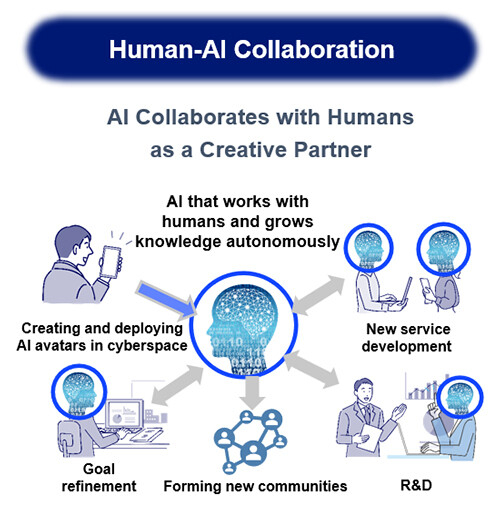
Amid fears of replacement and displacement, a more constructive narrative is gaining ground: that the most powerful outcomes emerge not from AI alone, nor from humans alone, but from the combination of both. This model — often called human-AI collaboration or augmented intelligence — is already proving its value across a wide range of fields.
The key insight is that AI and humans have complementary strengths. AI excels at processing vast datasets, identifying patterns, performing repetitive tasks without fatigue, and operating at machine speed. Humans excel at contextual understanding, ethical reasoning, creative thinking, empathy, and navigating ambiguity. The future of work, at its best, is one where each amplifies the other.
What You Can Do: Navigating an AI-Powered World
Understanding AI at a conceptual level is no longer enough. Individuals who wish to remain relevant and empowered in an AI-driven economy need to engage with it actively. This does not mean every person must learn to code or build machine learning models — but it does mean developing a working literacy around what AI can and cannot do, and where its outputs should be trusted, questioned, or verified.
The greatest risk in the age of AI is not that the technology will surpass us — it is that we will fail to engage with it thoughtfully enough to shape it in our own interest. The opportunity belongs to those who show up informed, curious, and willing to adapt. That opportunity is available to everyone willing to take it seriously.
The Industries Being Transformed
In healthcare, AI systems now detect cancers in medical imaging with accuracy that rivals specialist physicians. Drug discovery — historically a decade-long, billion-dollar process — is being compressed through AI-driven molecular simulations. The implications for global health outcomes, particularly in resource-limited settings, are profound and potentially life-saving.
In finance, algorithmic systems have long been fixtures of capital markets. Today, AI extends far deeper: into credit scoring, fraud detection, regulatory compliance, and personalized financial planning. Banks and fintech firms that fail to integrate these capabilities risk being outcompeted by those that do.
Education is undergoing a quieter but equally significant transformation. Adaptive learning platforms now personalize curricula to individual students in real time, identifying knowledge gaps and adjusting pacing accordingly. AI tutors offer one-on-one instruction at a fraction of the cost of human teachers — raising important questions about the future role of educators, while simultaneously expanding access to quality learning for millions.
The Workforce Question
No conversation about AI is complete without addressing its impact on employment. Concerns about automation displacing workers are not new — they have accompanied every major technological transition, from the industrial revolution to the rise of the internet. But there are reasons to take the current moment with particular seriousness.
Unlike previous waves of automation, which primarily affected routine physical and manual tasks, modern AI is increasingly capable of performing complex cognitive work: writing, legal analysis, medical diagnosis, financial modeling, and software engineering. The range of occupations that could be disrupted is broader than in any prior technological transition in recorded history.
Key Perspectives on AI & Employment
The optimist view: AI will create more jobs than it displaces, as new industries, roles, and economic activity emerge around the technology — just as the internet did before it.
The pessimist view: The pace and scope of disruption will outrun society’s ability to adapt, concentrating gains among capital owners and leaving displaced workers behind.
The pragmatist view: Both outcomes are possible — the determining factor will be the quality of policy responses, educational systems, and social safety nets put in place today.
The transition will almost certainly be uneven, with significant costs borne by workers in affected sectors who may lack the resources or opportunity to retrain. Proactive investment in workforce development, education reform, and social support structures is not merely good policy — it is a prerequisite for AI’s benefits to be broadly shared.
The Ethical Imperative
As AI systems become more powerful and more pervasive, the ethical questions surrounding them grow more urgent. Issues of bias, transparency, accountability, and privacy are not peripheral concerns — they are central to whether AI develops in a way that is genuinely beneficial to humanity.
Algorithmic bias is perhaps the most documented concern. Because AI systems learn from historical data, they can perpetuate and amplify existing social inequities. Facial recognition systems have been shown to perform significantly worse on darker-skinned individuals, with serious consequences when deployed in law enforcement. Hiring algorithms trained on historical employment data can embed and reproduce patterns of discrimination against women and minorities.
“Transparency is not a luxury feature. In high-stakes domains like criminal justice and healthcare, individuals deserve to understand why a decision that affects them was made.”
Transparency presents a different challenge. Many of the most capable AI systems — particularly large neural networks — are functionally opaque. Their internal reasoning is difficult or impossible to interpret, even for the engineers who built them. This creates dangerous accountability gaps in high-stakes domains where the consequences of unexplained decisions fall on real people.
Governments around the world are beginning to respond. The European Union’s AI Act — the most comprehensive AI regulation to date — establishes a risk-based framework imposing stricter requirements on high-risk applications. Similar efforts are underway in the United States, United Kingdom, China, and across Asia. The regulatory landscape remains fragmented, but the direction is clear: AI will be governed, not ungoverned.
What Comes Next
The trajectory of AI development over the next decade is uncertain in its specifics but unmistakable in its general direction. Models will become more capable, more efficient, and more deeply integrated into the infrastructure of modern life. Multimodal systems that seamlessly combine text, image, audio, and video understanding are already moving from research into commercial deployment.
Autonomous AI agents — systems capable of taking sequences of actions to accomplish complex goals with minimal human input — represent perhaps the most significant frontier. Early versions are already assisting with software engineering, scientific research, and business operations. As these systems mature, the question of human oversight and control will become increasingly central to AI governance debates.
The convergence of AI with other transformative technologies — quantum computing, biotechnology, advanced robotics, and next-generation connectivity — will create compounding effects that are difficult to predict but impossible to ignore. The organizations and societies that understand and prepare for these intersections will be far better positioned than those that wait and react.
Conclusion: A Technology That Demands Our Engagement
Artificial Intelligence is not a trend that will plateau or fade — it is a foundational shift in the nature of human capability and economic organization. Its potential to address some of humanity’s most pressing challenges, from climate change and disease to poverty and inequality, is real and significant. So too are its risks, if developed carelessly or governed inadequately.
The decisions being made today — by researchers, policymakers, business leaders, and citizens — will shape the character of this technology for decades. Will AI amplify existing inequalities or help dismantle them? Will it concentrate power in the hands of a few, or distribute its benefits broadly? Will it erode privacy and autonomy, or augment human dignity and freedom?
These are not questions with predetermined answers. They are choices — deeply political, deeply ethical, and deeply consequential. Remaining passive or disengaged from them is itself a choice, and not a neutral one.
AI is, at its heart, a tool — extraordinarily powerful, genuinely transformative, and value-neutral in itself. What it reflects back to us is a function of what we put into it, and what we collectively decide to do with what it produces. That responsibility cannot be delegated to an algorithm. It belongs to all of us.
FAQ’s
What are intelligent machines?
Intelligent machines are systems powered by AI that can learn from data, adapt to new information, and perform tasks or make decisions with minimal human intervention.
What is the age of artificial intelligence?
The Age of Artificial Intelligence refers to the current era where AI technologies are widely integrated into everyday life and business operations, transforming industries through automation, data-driven decision-making, and intelligent systems.
What are some intelligent machines?
Examples of intelligent machines include self-driving cars, virtual assistants, recommendation systems, industrial robots, and smart home devices, all of which use AI to learn, adapt, and make decisions.
What are the benefits of intelligent machines?
The benefits of intelligent machines include improved efficiency, automation of repetitive tasks, faster decision-making, reduced human error, cost savings, and enhanced productivity across various industries.
What are the 7 types of intelligence?
The seven types of intelligence are linguistic, logical-mathematical, spatial, musical, bodily-kinesthetic, interpersonal, and intrapersonal, based on the theory of multiple intelligences.